

Description
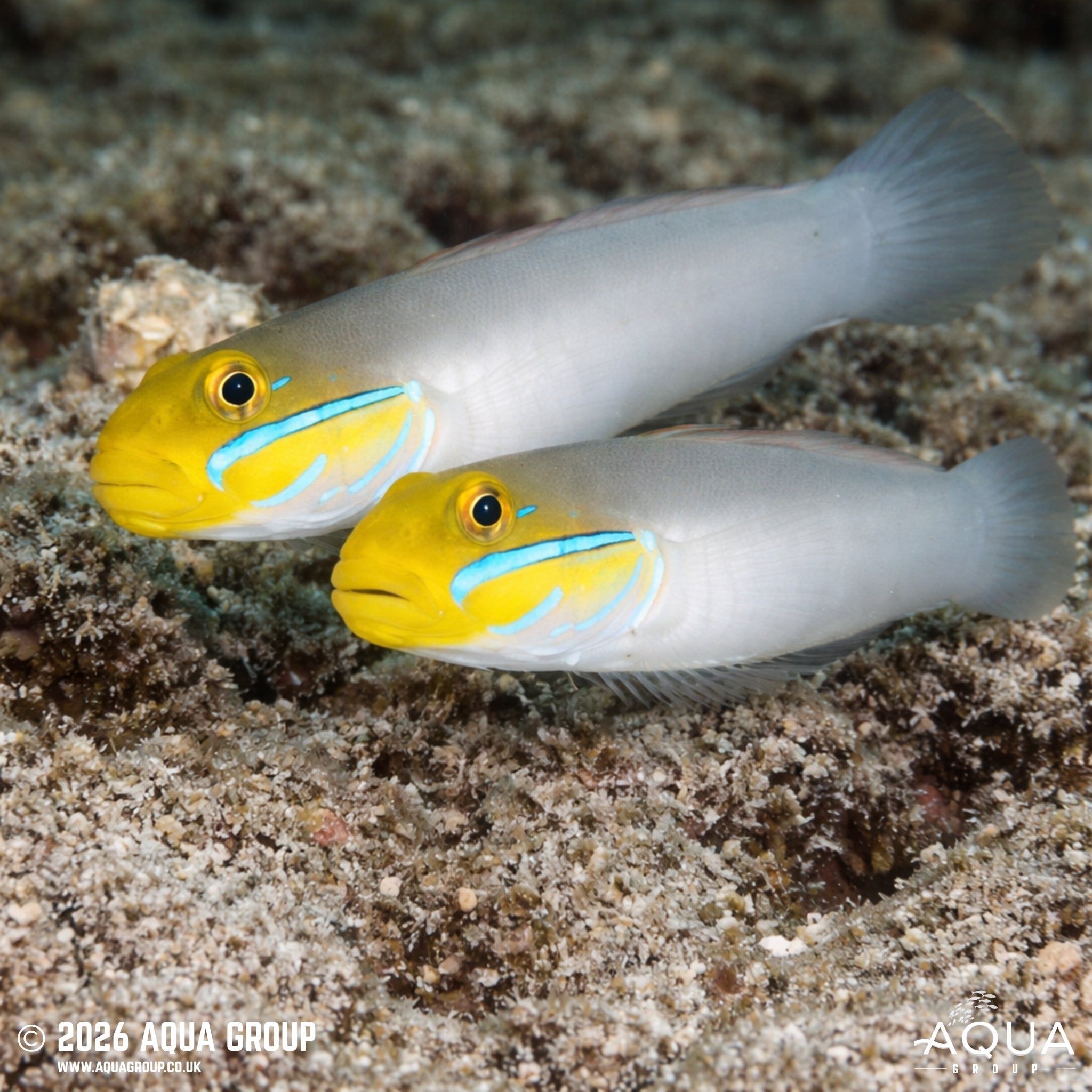
Blue Cheek Goby (Valenciennea strigata)
The Blue Cheek Goby, Valenciennea strigata, is a beautiful and highly useful marine sand-sifting goby, recognised for its bright yellow head, blue facial stripe, pale body and active substrate-cleaning behaviour. Also known as the Golden Head Sleeper Goby or Blueband Goby, this species spends much of its day taking mouthfuls of sand, filtering out tiny foods and expelling clean sand through the gills. It can be a brilliant addition to mature marine aquariums with a suitable sand bed, but it must be fed properly and should not be expected to survive on sand-sifting alone.
Common Name:
Blue Cheek Goby, Blue-Cheek Goby, Golden Head Sleeper Goby, Yellow Headed Sleeper Goby, Blueband Goby, Pennant Glider.
Scientific Name (Latin):
Valenciennea strigata
Maximum Size:
Up to around 18 cm, making it a medium-sized sand-sifting goby that needs a suitable footprint and mature substrate.
Water Type:
Marine
Origin / Natural Habitat:
Found across the Indo-Pacific, including clear outer lagoons, seaward reefs, reef crests, sandy areas and rubble zones. In the wild, Blue Cheek Gobies are usually seen in pairs hovering close to their burrows. They naturally sift mouthfuls of sand while searching for small benthic invertebrates and other tiny food items.
Water Parameters:
Temperature: 24–27°C
pH Range: 8.1–8.4
Hardness or Salinity: SG 1.020–1.025
Temperament:
Peaceful to mildly territorial. Blue Cheek Gobies are generally safe with most peaceful marine community fish, but they may defend their burrow area or quarrel with similar sand-sifting gobies, especially other Valenciennea species. They are best kept singly or as a confirmed compatible pair.
Diet:
Carnivorous sand-sifter and micro-predator. In the wild, this species feeds by sifting sand for small benthic invertebrates, tiny crustaceans and other substrate-based foods. In the aquarium, offer a varied diet including frozen mysis shrimp, enriched brineshrimp, cyclops, copepod-based foods, finely chopped meaty marine foods and quality sinking marine pellets. Food should be allowed to reach the substrate, and regular direct feeding is important, as the sand bed alone rarely provides enough nutrition in most aquariums.
Minimum Tank Size:
A practical minimum of around 250–300 litres is recommended for a single specimen, with larger aquariums preferred for pairs or long-term success. Provide a mature sand bed, open substrate areas, secure rockwork, caves and strong filtration.
Behaviour & Activity:
A bottom-dwelling sand-sifting goby that spends much of its time hovering close to the substrate, taking in mouthfuls of sand and filtering out edible particles. This behaviour can help keep the sand surface turned over, but it can also move sand around the aquarium. Low-placed corals, frags or clam mantles may become dusted with sand if placed too close to the goby’s working area. A secure lid is essential, as sleeper gobies are well known for jumping.
Reef Safe:
Reef Safe
Blue Cheek Gobies do not normally nip corals, clam mantles or sessile invertebrates. However, their sand-sifting and burrowing behaviour can disturb low-placed corals, small frags and unsecured rockwork. They are best suited to reef aquariums with open sand areas and an aquascape designed to tolerate natural sand movement.
Special Requirements or Care Notes:
Best kept in a mature aquarium with an established sand bed and enough natural microfauna to support grazing. Avoid bare-bottom systems, sterile new aquariums or tanks with very shallow, sharp or unsuitable substrate. Rockwork should be stable and ideally placed securely before sand is added, so digging does not cause collapse. This species can become thin if it is not fed enough, so body condition and feeding response should be monitored closely. Avoid keeping with aggressive feeders or multiple competing sand-sifters in smaller systems.
Suitable for:
Intermediate fishkeepers
Availability:
Regularly available in the marine aquarium trade / Availability can vary depending on size, supplier and import season
All images are a visual representation of the fish you will receive, made to be as accurate as possible. Please note that Mother Nature is a wonderful thing, and variation in patterns and colours will occur — that is part of the unique beauty of these animals.
Order and get 20 reward points
Earn points by signing up for our rewards program