

Description
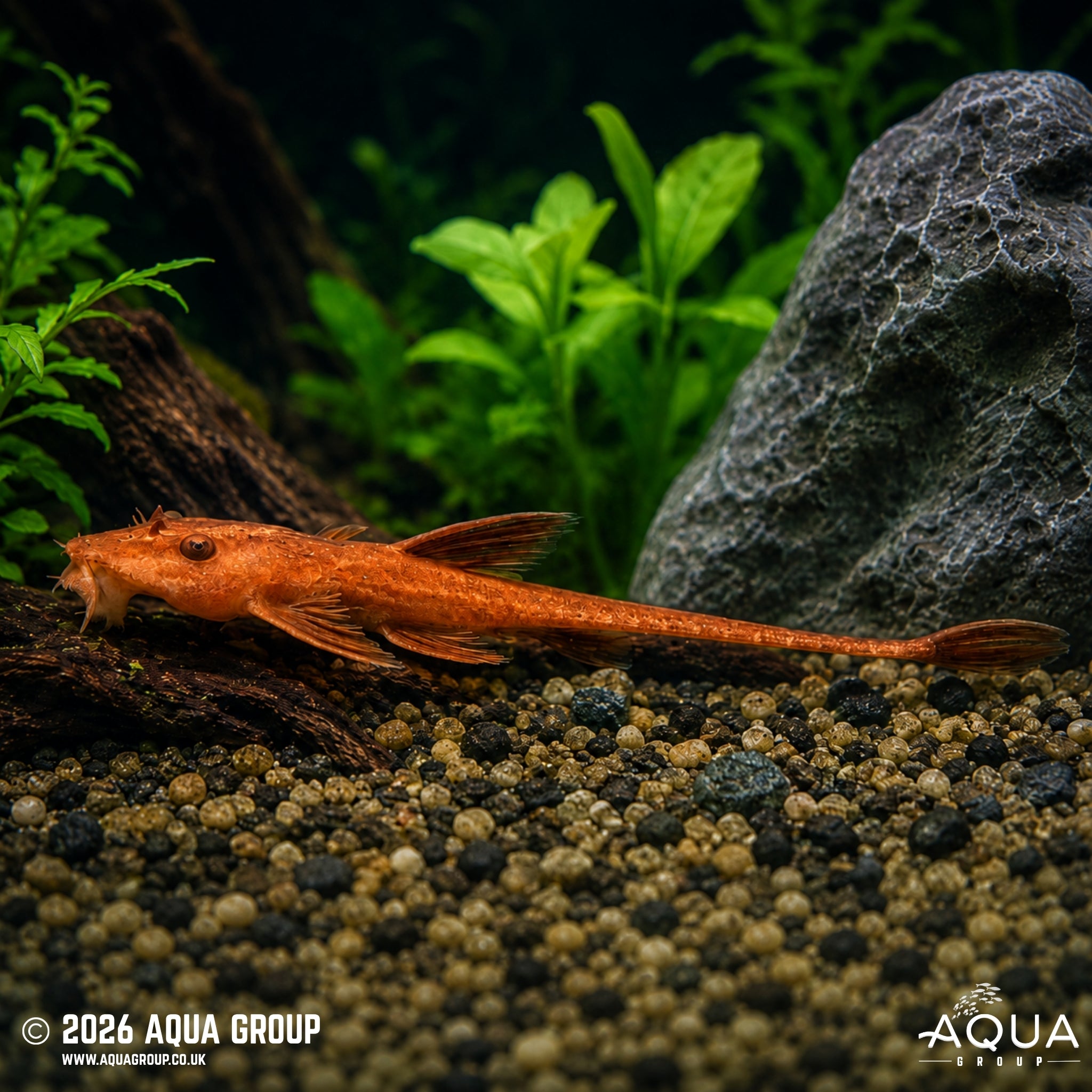
Blood Red Whiptail Catfish (Rineloricaria sp.)
The Blood Red Whiptail Catfish, Rineloricaria sp., is a peaceful and unusual loricariid catfish with a long slender body, flattened underside, sucker mouth and striking red to orange-red colouration. Also known as the Red Whiptail Catfish, Red Lizard Whiptail or L010A-type Whiptail, this delicate-looking catfish is best suited to mature, quiet community aquariums with soft sand, driftwood, caves and gentle tank mates. It is not an aggressive algae eater, but a calm bottom-dwelling grazer and scavenger that needs regular feeding and excellent water quality.
Common Name:
Blood Red Whiptail Catfish, Red Whiptail Catfish, Red Lizard Whiptail Catfish, L010A Whiptail, Red Loricaria, Whiptail Catfish.
Scientific Name (Latin):
Rineloricaria sp.
Trade form; exact species or captive-bred lineage usually unconfirmed.
Maximum Size:
Usually around 10–12 cm, depending on the exact strain or species.
Water Type:
Freshwater
Origin / Natural Habitat:
Blood red and red lizard-type whiptails are usually captive-bred trade forms rather than clearly identified wild species. Wild Rineloricaria species occur across South America, where many live close to the substrate in streams, rivers, sandy margins, leaf litter, submerged wood and quieter areas with clean, oxygenated water. In aquariums, they do best when given a similar calm, mature layout with sand, wood and sheltered resting places.
Water Parameters:
Temperature: 22–27°C
pH Range: 6.0–7.5
Hardness or Salinity: Soft to moderately hard freshwater; stable, clean and well-oxygenated water is important.
Temperament:
Peaceful and gentle. Blood Red Whiptail Catfish are suitable for calm community aquariums and can be kept singly, in pairs or in small groups if enough floor space and hiding places are provided. They are easily stressed or outcompeted by boisterous fish, aggressive bottom dwellers or fast feeders.
Diet:
Omnivorous aufwuchs grazer and bottom-feeder. Offer sinking catfish pellets, fine pleco foods, algae wafers, spirulina tablets, Repashy-style gel foods, blanched courgette, cucumber, spinach and small frozen foods such as daphnia, cyclops, brineshrimp or bloodworm. They will graze surfaces, but should not be expected to survive on natural algae alone. Feed after lights out if needed to make sure they receive enough food.
Minimum Tank Size:
A minimum of 75 litres is recommended for a single specimen or small group, with larger aquariums preferred for community setups. A long footprint with open sand patches and shaded shelters is more useful than extra height.
Behaviour & Activity:
A quiet bottom-dwelling catfish that spends much of its time resting on sand, wood, slate, leaves or broad surfaces. It is often more active at dusk, after lights out or when food is added. Males may become more territorial around spawning tubes or caves, and in breeding condition they may guard eggs laid in narrow tubes, caves or similar sheltered sites.
Aquarium Category:
Community Fish
Suitable with peaceful tetras, rasboras, pencilfish, small gouramis, Corydoras-type catfish, Otocinclus, peaceful dwarf cichlids with care, snails and other calm community species. Avoid aggressive cichlids, large predatory fish, rough bottom-dwellers, fin-nippers and very boisterous fish that may dominate feeding or harass them.
Special Requirements or Care Notes:
Provide soft sand, driftwood, smooth stones, slate caves, ceramic tubes or PVC-style breeding tubes, shaded areas and gentle to moderate filtration. Avoid sharp gravel, dirty substrate and unstable new aquariums. Although they are loricariids, they are not heavy-duty algae cleaners and need a varied sinking diet. Keep water clean with regular maintenance, as whiptail catfish can be sensitive to poor water quality and oxygen drops. Red colour intensity can vary between individuals, age, diet and breeding line.
Suitable for:
Intermediate fishkeepers
Availability:
Occasional in trade / Captive-bred or specialist import where relevant
All images are a visual representation of the fish you will receive, made to be as accurate as possible. Please note that Mother Nature is a wonderful thing, and variation in patterns and colours will occur — that is part of the unique beauty of these animals.
Order and get 18 reward points
Earn points by signing up for our rewards program