

Description
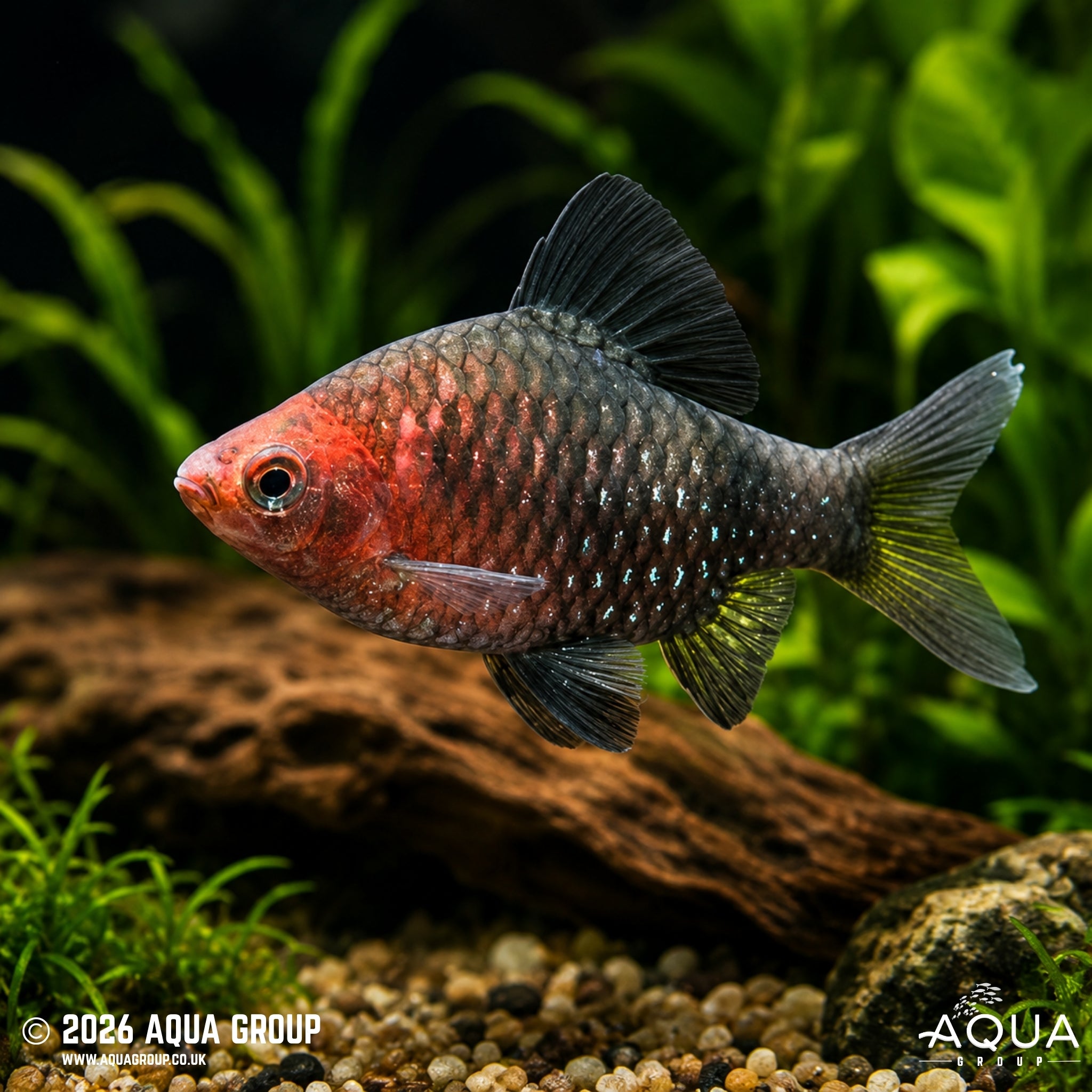
Black Ruby Barb (Pethia nigrofasciata)
The Black Ruby Barb, Pethia nigrofasciata, is a beautiful Sri Lankan barb with a peaceful nature and outstanding mature male colouration. Juveniles and females are more understated, usually showing a silvery to yellowish body with dark vertical bands, while settled adult males develop rich ruby-red to purple-black tones with darker fins. Also known as the Purple-headed Barb or Ruby Barb, this species is an excellent choice for planted community aquariums, especially when kept in a proper group where its natural colour and display behaviour can be seen.
Common Name:
Black Ruby Barb, Ruby Barb, Purple-headed Barb, Purplehead Barb.
Scientific Name (Latin):
Pethia nigrofasciata
Formerly known as Puntius nigrofasciatus or Barbus nigrofasciatus.
Maximum Size:
Usually around 5–6 cm, with some females reaching slightly larger.
Water Type:
Freshwater
Origin / Natural Habitat:
Endemic to south-western Sri Lanka. In the wild, Black Ruby Barbs inhabit clear, cool, shaded forest streams and stream margins, often over sand or gravel with leaf litter, marginal vegetation and quieter pools along flowing water. Most aquarium specimens are captive-bred.
Water Parameters:
Temperature: 20–26°C
pH Range: 6.0–7.5
Hardness or Salinity: Soft to moderately hard freshwater; adaptable when captive-bred, but avoid unstable or very warm conditions.
Temperament:
Peaceful and slightly shy. Black Ruby Barbs are calmer than many larger or more boisterous barbs and are well suited to community aquariums. Males may display to one another, especially when in breeding colour, but serious aggression is uncommon when the group is large enough.
Diet:
Omnivorous with a natural preference for algae, detritus and small invertebrate foods. In the aquarium, offer quality tropical flakes, micro pellets, small granules, frozen daphnia, brineshrimp, cyclops, bloodworm and occasional spirulina or vegetable-based foods. A varied diet with some plant matter helps support condition and colour.
Minimum Tank Size:
A minimum of 90 litres is recommended for a group, with larger planted aquariums preferred. An aquarium with at least 80 cm of swimming length is ideal for a confident, active shoal.
Behaviour & Activity:
A mid-level to lower-level shoaling barb that becomes much more confident when kept in numbers. Keep at least 6 individuals, with 8–10 or more preferred for natural behaviour and stronger male colour. Males often display by darkening and intensifying their red and black tones, especially in the presence of females. They appreciate plants, wood, shaded areas and open swimming space.
Aquarium Category:
Community Fish
Suitable with peaceful community species such as small to medium tetras, rasboras, danios, Corydoras, peaceful loaches, gouramis, rainbowfish and other calm barbs. Avoid large predatory fish, aggressive cichlids, very timid slow feeders, or long-finned fish if the group is stressed or understocked, though this species is not normally a major fin-nipper when kept correctly.
Special Requirements or Care Notes:
Keep in groups rather than singly or in pairs. A planted aquarium with darker substrate, floating plants or shaded areas will help them feel secure and show their best colour. They prefer cooler tropical conditions compared with many community fish, so avoid prolonged high temperatures. Maintain good water quality and provide regular water changes. Not suitable for brand-new, unstable aquariums.
Suitable for:
Beginner to intermediate fishkeepers
Availability:
Common in trade / Captive-bred where relevant
All images are a visual representation of the fish you will receive, made to be as accurate as possible. Please note that Mother Nature is a wonderful thing, and variation in patterns and colours will occur — that is part of the unique beauty of these animals.
Order and get 3 reward points
Earn points by signing up for our rewards program