

Description
Black Ramirezi (Mikrogeophagus ramirezi)
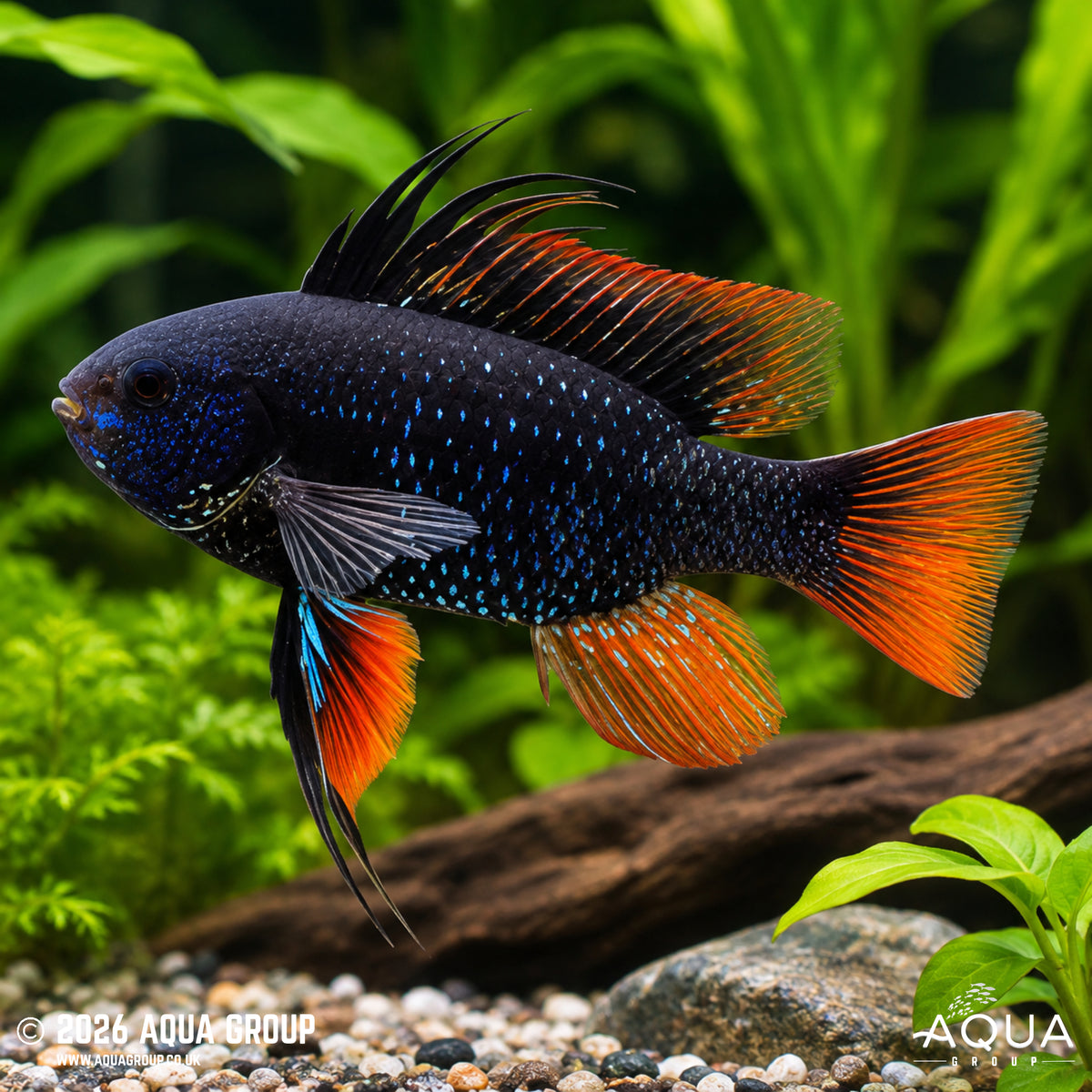
The Black Ramirezi is a stunning and unusual freshwater dwarf cichlid admired for its deep black colouration, delicate iridescent markings and fascinating personality. Also known as the Black Ram Cichlid or Black Knight Ram, this striking ornamental variety of the popular German Blue Ram develops rich charcoal to velvety black body tones, sometimes complemented by shimmering blue highlights across the scales and fins. Its compact size, graceful swimming behaviour and interesting social interactions make it a beautiful addition to established planted aquariums and carefully planned South American community setups. Although generally peaceful, Black Ramirezi require warm, exceptionally clean water and stable aquarium conditions, making them more suitable for aquarists with some previous fishkeeping experience.
Common Name:
Black Ramirezi, Black Ram Cichlid, Black Knight Ram, German Black Ram, Black German Ram
Scientific Name (Latin):
Mikrogeophagus ramirezi (formerly Microgeophagus ramirezi)
Maximum Size:
Approximately 5–6 cm, with mature males generally growing slightly larger than females
Water Type:
Freshwater
Origin / Natural Habitat:
The Black Ramirezi is a selectively bred ornamental colour variety of Mikrogeophagus ramirezi, developed through captive breeding to produce its distinctive dark body colouration.
Wild Ram Cichlids originate from northern South America, particularly the Orinoco River basin in Venezuela and Colombia.
Natural populations inhabit shallow, slow-moving waterways, seasonal floodplains and sheltered freshwater pools associated with the tropical Llanos region.
These environments typically feature warm, soft and slightly acidic water, with sandy or silty substrates, submerged vegetation, fallen leaves and natural root structures.
Wild Mikrogeophagus ramirezi spend much of their time close to the substrate, searching for tiny aquatic invertebrates and other edible organisms.
The Black Ramirezi retains the natural behaviour and general care requirements of its wild relatives, although its dark colouration has been developed through selective breeding.
Water Parameters:
Temperature: 27–30°C
pH Range: 5.5–7.0
Hardness: Soft, ideally approximately 1–8 dGH
Ammonia/Nitrite: 0 ppm
Nitrate: Kept very low and stable
Temperament:
Peaceful to Semi-Aggressive
Black Ramirezi are generally peaceful dwarf cichlids that can be maintained in carefully selected freshwater community aquariums.
They are best kept individually or as a compatible, established pair, particularly in smaller aquariums.
Although usually peaceful towards unrelated fish, mature individuals may become territorial when forming pairs or preparing to breed.
Breeding pairs can defend areas around caves, flat stones or other preferred spawning locations.
Avoid keeping multiple mature males together in smaller aquariums, as territorial disputes may result in persistent chasing and stress.
They are best housed with peaceful, similarly sized tankmates that appreciate warm, soft water.
Aggressive cichlids, highly competitive feeders and boisterous species should be avoided.
Diet:
Omnivore / Primarily Carnivorous Micropredator
Black Ramirezi naturally feed on small aquatic invertebrates, insect larvae, tiny crustaceans and other edible organisms found within the substrate.
In the aquarium, provide a varied diet of high-quality sinking micro pellets, fine cichlid granules and appropriately sized prepared foods.
Supplementary foods can include frozen or live brine shrimp, daphnia, cyclops, bloodworm and other small aquatic invertebrates.
Live and frozen foods are particularly useful for encouraging feeding in newly introduced or more delicate individuals.
Although captive-bred Black Ramirezi generally accept prepared foods, some specimens may initially be reluctant to feed when introduced into a new aquarium.
A varied feeding routine helps maintain healthy body condition, strong colouration and good breeding condition.
Offer small portions once or twice daily, ensuring food reaches the lower areas of the aquarium without excessive waste accumulating.
Minimum Tank Size:
Approximately 80 litres for a single fish or compatible pair
An aquarium measuring at least 60 cm in length is recommended, with a larger footprint preferable for established pairs.
For community aquariums or setups containing more than one pair, approximately 120 litres or more is recommended, with substantial additional space required to establish separate territories.
Provide a soft sand substrate, natural driftwood, smooth stones and sheltered areas.
Black Ramirezi spend much of their time exploring the lower regions of the aquarium, making floor space particularly important.
Although relatively small, they should not be maintained in cramped or unstable aquariums.
Behaviour & Activity:
The Black Ramirezi is an interesting bottom-to-midwater dwarf cichlid that spends much of its time exploring the substrate and investigating plants, driftwood and sheltered areas.
Its most distinctive feature is the rich dark body colouration, which may range from charcoal grey to almost completely black depending on the breeding line.
Some individuals develop attractive metallic blue or turquoise iridescent spots across the body and fins, creating a striking contrast against their dark appearance.
Mature males may develop slightly longer dorsal fin rays and more extended finnage, while females are often smaller and fuller-bodied.
Sexual differences can be less obvious in selectively bred black varieties than in standard German Blue Rams.
Black Ramirezi frequently investigate the substrate, taking small mouthfuls of fine sand while searching for edible particles.
They may establish favourite resting places beneath plants, around driftwood or near smooth stones.
During courtship, compatible pairs may display towards one another, clean potential spawning surfaces and defend a small territory.
Black Ramirezi are substrate-spawning cichlids, typically depositing eggs on flat stones, broad leaves or other suitable surfaces.
Both parents may participate in guarding the eggs and newly hatched fry, although captive-bred individuals can sometimes be inexperienced or inconsistent parents.
Their intelligent behaviour, distinctive colouration and interesting breeding displays make them particularly rewarding fish for dedicated aquarists.
Community Suitability:
Community Fish / Semi-Aggressive
Black Ramirezi can be maintained successfully in peaceful freshwater community aquariums containing carefully selected species.
Suitable companions include Cardinal Tetras, Green Neon Tetras, peaceful small pencilfish and other calm freshwater fish that appreciate similarly warm, soft-water conditions.
Carefully selected peaceful bottom dwellers may also be suitable in larger aquariums, provided they tolerate the elevated temperatures required by Ram Cichlids.
Avoid aggressive cichlids, large predatory fish, persistent fin-nippers and particularly boisterous tankmates.
Many commonly kept community fish prefer cooler conditions than Black Ramirezi, so compatibility should be assessed according to temperature and water chemistry rather than temperament alone.
Breeding pairs may defend a small territory and chase other bottom-dwelling fish away from their spawning site.
A mature planted aquarium containing natural shelter, open sandy areas and peaceful tankmates provides a suitable environment.
Special Requirements or Care Notes:
Provide a mature, well-established freshwater aquarium with stable water chemistry, excellent biological filtration and consistently high water quality.
Black Ramirezi require warmer conditions than many commonly kept tropical community fish, with a temperature of approximately 27–30°C recommended for long-term care.
Avoid maintaining them at consistently low tropical temperatures, as this may increase stress and susceptibility to illness.
Soft, slightly acidic water is preferable, and very hard or strongly alkaline conditions should be avoided.
A fine sand substrate is recommended to encourage natural foraging behaviour and protect the mouth and delicate gill structures.
Include driftwood, smooth rocks, aquarium plants and shaded areas to provide shelter and natural territorial boundaries.
Suitable plants include Java Fern, Anubias, Cryptocoryne and other varieties capable of tolerating warm aquarium conditions.
Black Ramirezi are sensitive to deteriorating water quality and should never be introduced into newly established or biologically unstable aquariums.
Maintain ammonia and nitrite at zero and keep nitrate levels as low as practically possible through effective filtration and regular partial water changes.
Avoid sudden changes in temperature, pH or hardness, as this species can be sensitive during acclimatisation.
Provide gentle to moderate water movement while maintaining good oxygenation, particularly because warmer water naturally holds less dissolved oxygen.
Feed a varied diet containing quality prepared foods alongside frozen or live aquatic invertebrates.
Newly acquired specimens should be observed carefully to ensure they are feeding confidently and maintaining good body condition.
Black Ramirezi are best maintained individually or as a compatible pair, with larger aquariums required for additional individuals.
Avoid forcing incompatible fish to remain together, as persistent aggression can result in stress and injury.
Captive-bred ornamental Rams can sometimes be more delicate than standard forms due to selective breeding, making healthy breeding stock and careful husbandry particularly important.
The Black Ramirezi is a selectively bred colour variety, and the intensity of black pigmentation, blue iridescence, fin shape and overall appearance may vary naturally between individuals.
A carefully maintained aquarium with stable water parameters, suitable feeding and peaceful surroundings is essential for long-term success.
Suitable for:
Intermediate to Experienced
Availability:
Occasional / Specialist Availability / Captive-bred Ornamental Variety
All images are a visual representation of the fish you will receive, made to be as accurate as possible. Please note that Mother Nature is a wonderful thing, and variation in patterns and colours will occur — that is part of the unique beauty of these animals.
Order and get 13 reward points
Earn points by signing up for our rewards program