

Description
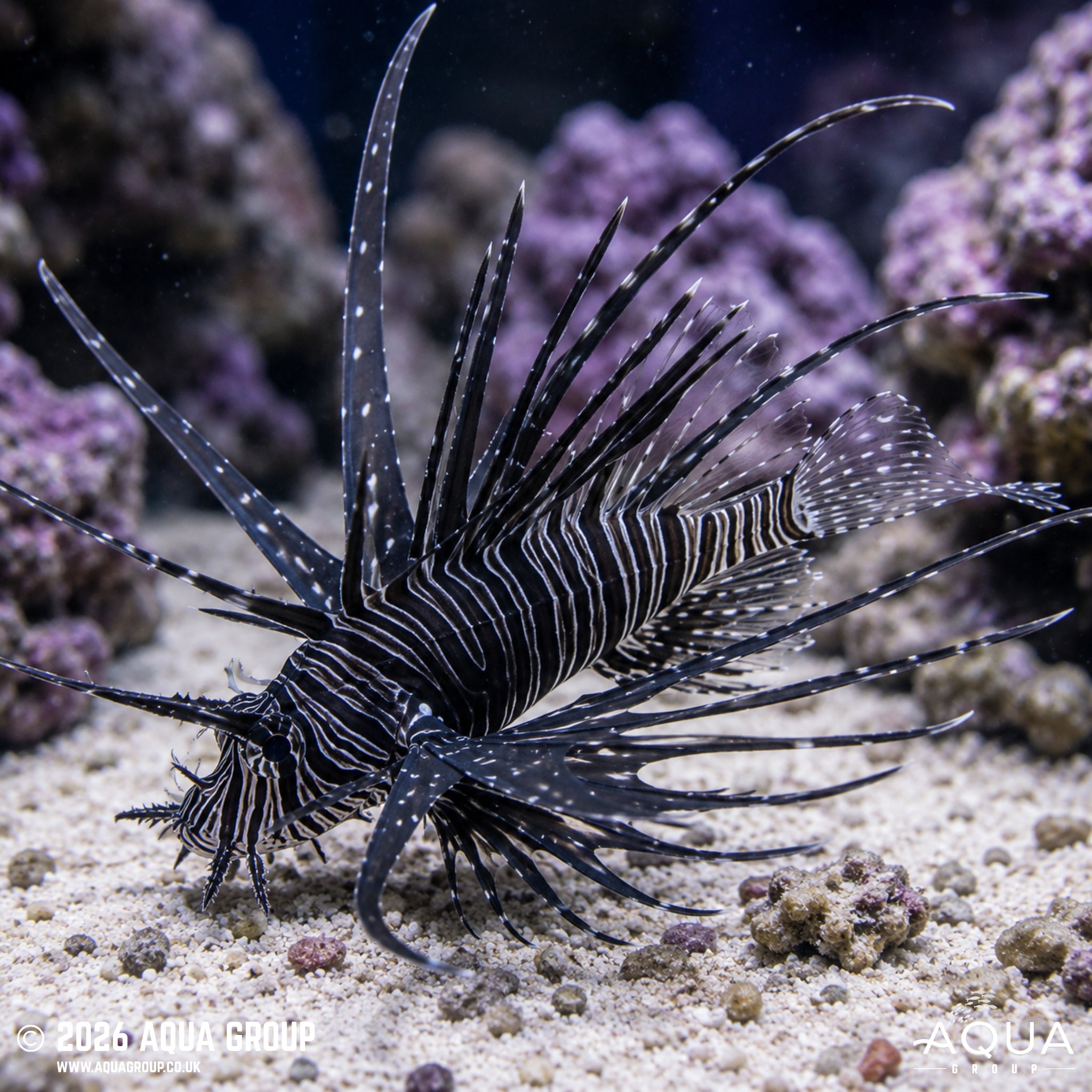
Black Peacock Lionfish (Pterois volitans)
The Black Peacock Lionfish (Pterois volitans) is a dramatic dark-coloured form of the well-known Volitan Lionfish, recognised for its broad, fan-like pectoral fins, elongated venomous spines and contrasting black, brown, cream and reddish markings. Native to tropical Indo-Pacific reefs, lagoons and rocky habitats, this imposing marine predator is highly desirable as a centrepiece fish for a large fish-only or carefully planned predator aquarium. Although usually slow-moving and composed, it will readily consume smaller fish and crustaceans and must be housed with considerable care.
Common Name:
Black Peacock Lionfish, Black Volitan Lionfish, Volitan Lionfish, Red Lionfish, Common Lionfish, Turkeyfish
Scientific Name (Latin):
Pterois volitans
Maximum Size:
Up to approximately 38 cm in total length. Its long fins and extended spines make the fish appear substantially larger, so generous swimming space is essential.
Water Type:
Marine
Origin / Natural Habitat:
Native to the tropical western and central Pacific Ocean, including areas from southern Japan and Micronesia through Indonesia and northern Australia to parts of the South Pacific. It inhabits lagoons, sheltered coastal reefs, rocky outcrops, caves and seaward reef slopes, often resting beneath ledges or in shaded areas during daylight hours. The species has also become invasive in parts of the western Atlantic, Caribbean and Gulf of Mexico, but aquarium specimens are normally sourced through the established marine ornamental trade.
Water Parameters:
Temperature: 23–27°C
pH Range: 8.1–8.4
Salinity: 1.020–1.025 SG
Temperament:
Predatory and semi-aggressive. The Black Peacock Lionfish is generally calm towards fish that are too large to swallow, but it is an efficient ambush predator with a very large mouth. Small fish, slender tank mates, ornamental shrimps and crabs are at significant risk of being eaten.
Diet:
A strict carnivore that naturally feeds on smaller fishes, shrimps and crabs, particularly during low-light periods and at night. In the aquarium, offer a varied diet of chopped prawn, mussel, clam, squid, krill and pieces of marine fish. Newly imported specimens may initially require encouragement to accept non-living foods, but they should be trained onto prepared marine foods as soon as possible. Avoid routine use of freshwater feeder fish because they provide poor long-term nutrition and may introduce parasites or disease.
Minimum Tank Size:
A minimum aquarium volume of approximately 600 litres is recommended for a single adult, with a larger aquarium strongly preferred when keeping the fish alongside other substantial marine species. The aquarium should provide both open swimming space and large shaded retreats.
Behaviour & Activity:
Usually slow-moving and deliberate, spending much of the day resting beneath overhangs, near caves or beside rock structures. It becomes more active around feeding time and during lower-light periods, spreading its broad pectoral fins to corner and capture prey. Despite its relaxed appearance, it can strike with considerable speed. It may also position itself vertically or upside down beneath ledges, which is normal behaviour for the species.
Reef Safe:
Reef Safe with Caution
The Black Peacock Lionfish does not normally eat corals, but it is unsuitable for most conventional mixed reef communities. Small reef fish, shrimps, crabs and other mobile invertebrates may be consumed. Its large adult size and expansive fins may also disturb unsecured corals or rockwork. It is best suited to a spacious fish-only, fish-only-with-live-rock or large predator aquarium.
Special Requirements or Care Notes:
The dorsal, pelvic and anal spines are venomous and can cause an extremely painful sting. Never handle the fish directly, and use exceptional care when cleaning the aquarium, moving rockwork or using nets and maintenance equipment. All household members and anyone maintaining the aquarium should be made aware of the risk.
Provide powerful biological filtration, efficient protein skimming and strong oxygenation, as this large carnivore produces a considerable waste load. Rockwork must be stable and arranged to create caves and shaded resting areas without restricting movement.
Choose tank mates according to body depth as well as length. Lionfish can swallow surprisingly large prey, and any fish capable of fitting into its mouth should be considered at risk. Avoid aggressive fin-nipping species that may damage its long fins, as well as other venomous predators in cramped aquariums.
Feed controlled portions several times per week rather than excessively feeding every day. Overfeeding can lead to obesity and declining water quality.
Suitable for:
Experienced fishkeepers
Availability:
Occasional in trade
All images are a visual representation of the fish you will receive, made to be as accurate as possible. Please note that Mother Nature is a wonderful thing, and variation in patterns and colours will occur — that is part of the unique beauty of these animals.
Order and get 80 reward points
Earn points by signing up for our rewards program