

Description
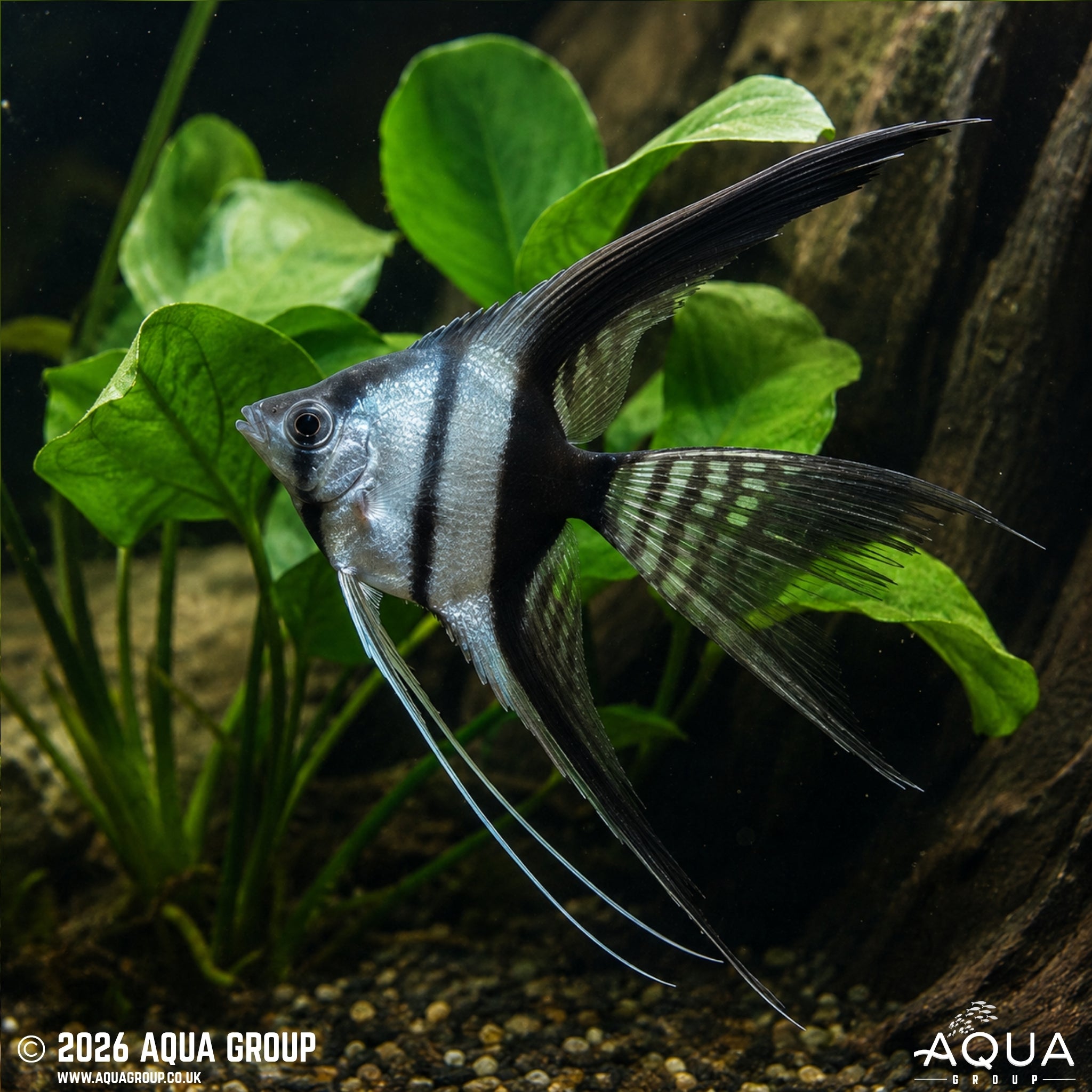
Black and White Veil Tail Angelfish (Pterophyllum scalare)
The Black and White Veil Tail Angelfish, Pterophyllum scalare, is a striking captive-bred form of the freshwater angelfish, bred for dramatic black-and-white patterning and long, flowing veil fins. Its tall body shape, graceful movement and bold contrast make it an impressive centrepiece fish for a mature tropical aquarium. Like all freshwater angelfish, it is generally peaceful for a cichlid, but adults can become territorial when pairing or breeding, and very small tank mates may be eaten.
Common Name:
Black and White Veil Tail Angelfish, Black and White Veil Angelfish, Veiltail Angelfish, Freshwater Angelfish.
Scientific Name (Latin):
Pterophyllum scalare
Captive-bred black and white veil tail variety.
Maximum Size:
Usually around 12–15 cm body length, with a much taller overall profile when the extended dorsal, anal and tail fins are included.
Water Type:
Freshwater
Origin / Natural Habitat:
This black and white veil tail form is a captive-bred ornamental strain and is not found as a natural wild population. The wild species, Pterophyllum scalare, is native to tropical South America, where it inhabits densely vegetated swamps, flooded forest margins and slow-moving waters that may be clear or silty.
Water Parameters:
Temperature: 24–28°C
pH Range: 6.0–7.5
Hardness or Salinity: Soft to moderately hard freshwater; captive-bred angelfish are adaptable, but stable water quality is essential.
Temperament:
Peaceful to semi-territorial. Young angelfish are often sociable, while adults may form pairs and defend a chosen area. They are not suitable with tiny fish that can fit in their mouths, and long-finned veil forms should not be mixed with fin-nipping species.
Diet:
Omnivorous with a strong carnivorous element. Feed quality tropical flakes, cichlid granules, micro pellets, frozen bloodworm, brineshrimp, mysis, daphnia and mosquito larvae. Occasional vegetable or spirulina-based foods can be offered for variety. A mixed diet helps maintain body condition, colour and fin quality.
Minimum Tank Size:
A minimum of 180 litres is recommended for a pair or small group of juveniles, with larger aquariums preferred for adult groups. A tall aquarium is especially important for veil tail angelfish so their extended fins have room to develop and move naturally.
Behaviour & Activity:
A graceful mid-water cichlid that cruises steadily through plants, wood and open swimming areas. Juveniles may live well in groups, but adults often pair off and become more territorial. Breeding pairs may lay eggs on broad leaves, vertical wood, filter pipes or aquarium glass and guard the site closely.
Aquarium Category:
Community Fish
Best kept with calm, non-nipping tank mates such as larger tetras, peaceful rasboras, Corydoras, small to medium gouramis, rainbowfish, non-aggressive catfish and other suitable community fish. Avoid tiger barbs and other fin-nippers, very small fish such as tiny tetras, and aggressive cichlids that may stress or damage the long fins.
Special Requirements or Care Notes:
Provide a mature, well-filtered aquarium with stable water conditions, gentle to moderate flow and plenty of vertical cover. Tall plants, bogwood, roots and shaded areas help them feel secure. The extended veil fins are delicate, so avoid sharp rocks, rough ornaments and boisterous tank mates. Regular water changes are important, as angelfish do best in clean, stable aquariums.
Suitable for:
Beginner to intermediate fishkeepers
Availability:
Common in trade / Captive-bred
All images are a visual representation of the fish you will receive, made to be as accurate as possible. Please note that Mother Nature is a wonderful thing, and variation in patterns and colours will occur — that is part of the unique beauty of these animals.
Order and get 10 reward points
Earn points by signing up for our rewards program