
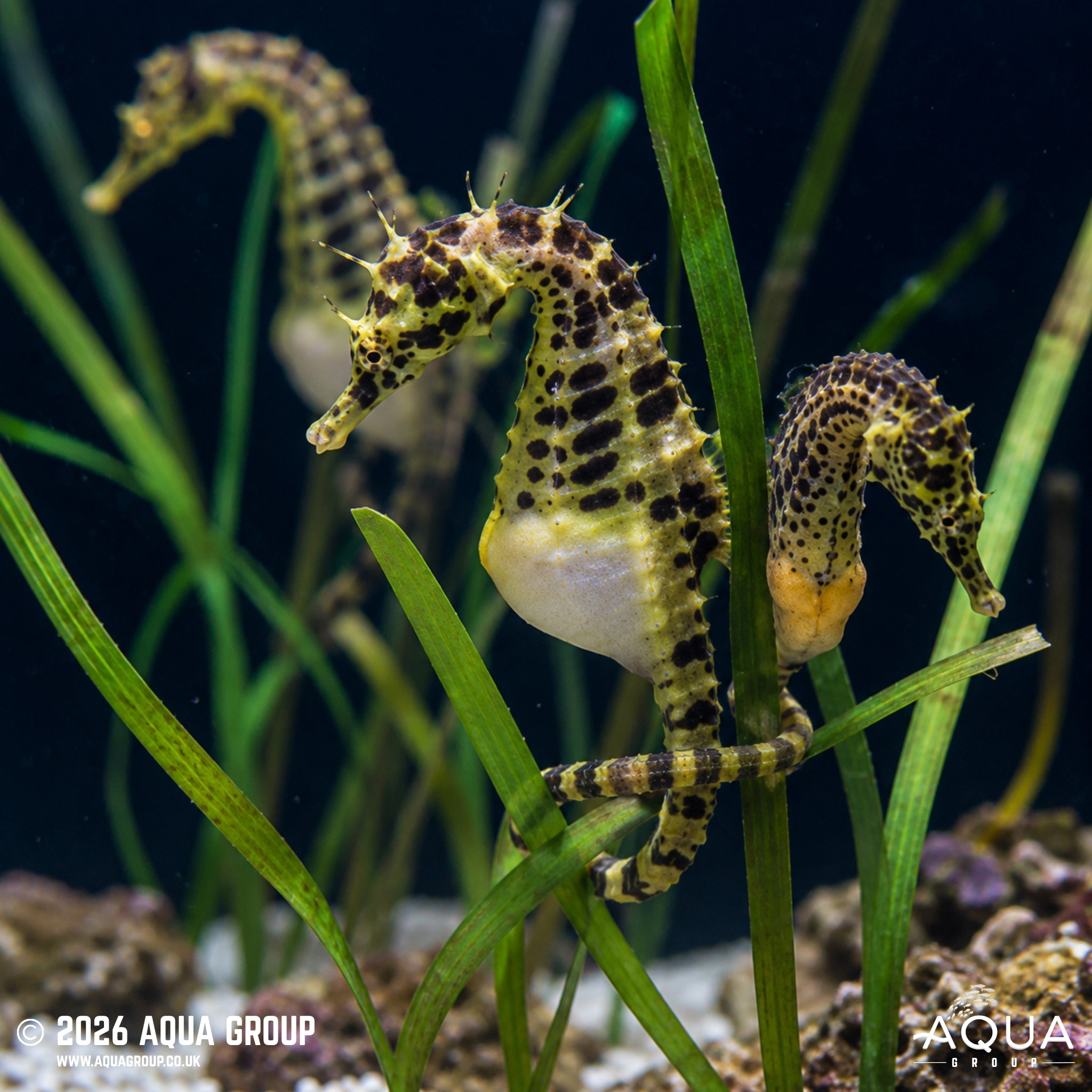

Description
Big-bellied Seahorse (Hippocampus abdominalis)
The Big-bellied Seahorse, Hippocampus abdominalis, is an impressive cool-water marine seahorse recognised by its substantial rounded abdomen, long coiled tail and highly variable yellow, brown, cream or mottled colouration. Also known as the Big-belly Seahorse or Pot-bellied Seahorse, it naturally inhabits sheltered coastal habitats around southern Australia and New Zealand, where it anchors to seagrass, algae, sponges and other structures using its prehensile tail. Its large adult size, fascinating courtship behaviour and calm nature make it highly desirable, but it requires specialist feeding, cooler water and a peaceful aquarium designed specifically around seahorse care.
Common Name:
Big-bellied Seahorse, Big-belly Seahorse, Pot-bellied Seahorse, Eastern Pot-bellied Seahorse, Large Seahorse.
Scientific Name (Latin):
Hippocampus abdominalis
Maximum Size:
Commonly around 18–25 cm in captivity, although exceptionally large wild specimens may reach approximately 35 cm in height.
Water Type:
Marine
Origin / Natural Habitat:
Temperate coastal waters of southern and south-eastern Australia and New Zealand. Big-bellied Seahorses inhabit sheltered bays, harbours, estuaries, large rock pools, seagrass beds, macroalgae growth and deeper sponge gardens. They may also occur around jetties, pilings and other artificial structures where suitable holdfasts and abundant small crustaceans are available.
Water Parameters:
Temperature: 16–22°C
pH Range: 8.0–8.4
Hardness or Salinity: Marine salinity 1.022–1.026 specific gravity; stable salinity, efficient biological filtration and strong oxygenation are essential. Avoid prolonged exposure to typical tropical reef temperatures.
Temperament:
Peaceful, slow-moving and easily outcompeted. Big-bellied Seahorses should be housed with their own species or carefully selected calm tank mates that will not harass them, nip at their fins or consume food before they can feed. Avoid aggressive fish, fast feeders, stinging tank mates and species likely to compete for the same perching areas.
Diet:
Carnivorous suction feeder. In the wild, this species consumes copepods, amphipods, mysid shrimps and other small crustaceans captured by rapidly drawing them through its tubular snout.
Captive-bred specimens should be offered enriched frozen mysis shrimp as the main diet, supplemented with suitable marine copepods, Artemia and other nutritionally varied small crustacean foods. Feed measured portions two or three times daily and remove uneaten food promptly. Target feeding or a dedicated feeding station can help ensure every seahorse receives enough food.
Minimum Tank Size:
A minimum aquarium volume of approximately 300 litres is recommended for a compatible pair, with sufficient vertical height and open space for normal swimming and courtship behaviour. Larger accommodation is preferable for a group or for fully grown adults.
Behaviour & Activity:
A deliberate, upright-swimming fish that spends much of its time wrapped around seagrass, macroalgae, branching structures or other suitable holdfasts using its prehensile tail. It moves slowly between perches while watching for passing crustaceans and may become more active around feeding time and during courtship.
Big-bellied Seahorses can display complex social and reproductive behaviour. Males possess a prominent brood pouch on the abdomen and carry the developing young after receiving eggs from the female. A bonded pair may perform regular greeting or courtship displays, often involving colour changes and synchronised swimming.
Reef Safe:
Reef Safe
Big-bellied Seahorses do not normally damage corals, anemones or established sessile invertebrates. However, they may wrap their tails around unsuitable or stinging corals and can suffer tissue damage as a result. Small crustaceans, copepods and shrimp larvae may be eaten. They are best maintained in a dedicated seahorse aquarium rather than a conventional high-flow mixed reef.
Special Requirements or Care Notes:
This is a temperate, cool-water species and should not be kept continuously at standard tropical reef temperatures. A reliable aquarium chiller may be required, particularly during warm weather. Maintain excellent oxygenation while avoiding powerful, direct currents that prevent the seahorse from swimming or feeding comfortably.
Provide numerous smooth, non-stinging holdfasts at different heights. Suitable options include seagrass-style artificial plants, branching macroalgae and securely positioned smooth structures. Avoid sharp decorations, exposed heater surfaces, stinging corals and strong pump intakes. All intakes should be protected so the seahorse’s tail cannot become trapped.
A species-focused aquarium is strongly recommended. Suitable companions must be peaceful, slow-feeding and tolerant of the same cooler conditions. Avoid clownfish, damsels, aggressive wrasses, triggerfish, puffers, large crabs, predatory shrimps and powerful stinging anemones or corals.
Purchase captive-bred specimens whenever available. Captive-bred seahorses are generally better adapted to aquarium life and more likely to accept frozen foods than wild-caught animals. Quarantine carefully, avoid exposure to sudden temperature or salinity changes and monitor feeding, respiration, buoyancy and tail condition closely.
Seahorses are sensitive to declining water quality and bacterial problems associated with excess organic waste. Use efficient filtration, remove uneaten food after feeding and carry out consistent maintenance without creating excessive flow. Avoid copper-based medication unless treatment is directed by an aquatic veterinarian or experienced seahorse specialist.
Suitable for:
Experienced fishkeepers
Availability:
Occasional in trade / Captive-bred where available
All images are a visual representation of the fish you will receive, made to be as accurate as possible. Please note that Mother Nature is a wonderful thing, and variation in patterns and colours will occur — that is part of the unique beauty of these animals.
Order and get 180 reward points
Earn points by signing up for our rewards program