

Description
Bicolour Blenny (Ecsenius bicolor)
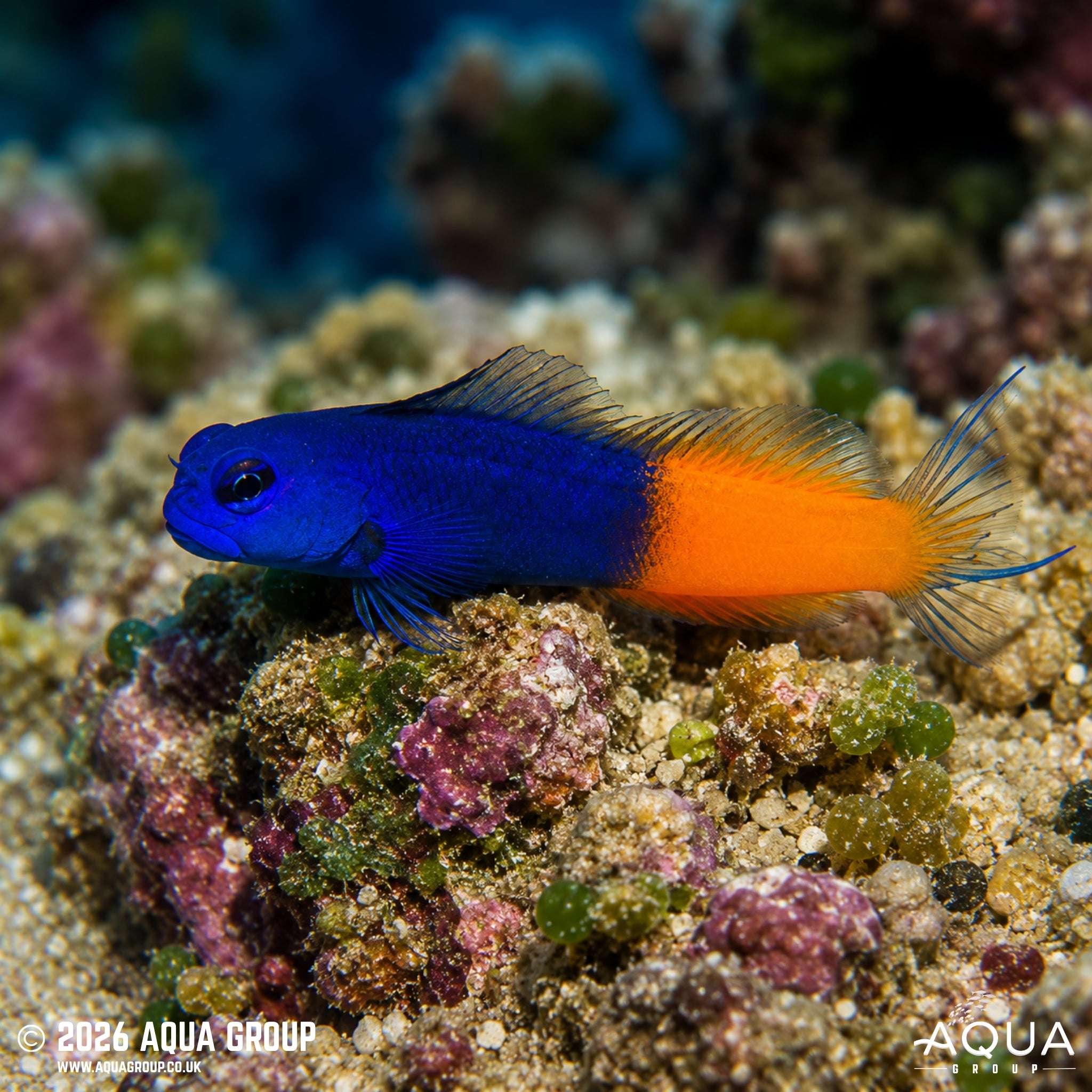
The Bicolour Blenny, Ecsenius bicolor, is a charming and characterful marine blenny, instantly recognised by its two-tone colouration, with a darker blue-brown front half and a bright orange to yellow rear body. Also known as the Bicolor Blenny or Flame Tail Blenny, this species is popular in mature marine aquariums thanks to its algae-grazing behaviour, comical expression and watchful perching habits. It is generally hardy, peaceful and reef safe with caution, making it a brilliant choice for aquarists wanting a useful, colourful and personality-filled addition to the rockwork.
Common Name:
Bicolour Blenny, Bicolor Blenny, Flame Tail Blenny, Two-Tone Blenny, Bicolour Combtooth Blenny.
Scientific Name (Latin):
Ecsenius bicolor
Maximum Size:
Up to around 11 cm, though many aquarium specimens are usually closer to 8–10 cm.
Water Type:
Marine
Origin / Natural Habitat:
Found across the Indo-Pacific, including reef regions from the Indian Ocean through to the Western Pacific. In the wild, Bicolour Blennies inhabit clear lagoon reefs and seaward reefs with mixed coral growth, algae-covered rocks and natural crevices. They are usually seen perched on rockwork, retreating quickly into holes, tubes or small caves when threatened.
Water Parameters:
Temperature: 24–27°C
pH Range: 8.1–8.4
Hardness or Salinity: SG 1.020–1.025
Temperament:
Peaceful to mildly territorial. Bicolour Blennies are generally safe with most peaceful and moderately active marine fish, but they may defend a favourite hole, perch or section of rockwork. They can be territorial towards similar-shaped blennies, gobies or other small algae-grazing fish, especially in smaller aquariums. Best kept as a single specimen unless the aquarium is large and compatibility is carefully planned.
Diet:
Herbivorous grazer with omnivorous tendencies. In the wild, this species grazes algae, biofilm and reef-surface growths. In the aquarium, provide mature rockwork with natural algae growth and supplement with marine algae sheets, nori, spirulina flakes, herbivore pellets, algae-based frozen foods and quality marine foods. It may also accept frozen mysis shrimp, enriched brineshrimp and finely chopped meaty foods, but the diet should include plenty of vegetable-based nutrition.
Minimum Tank Size:
A practical minimum of around 100–150 litres is recommended for a single specimen, with larger aquariums preferred for mixed reef communities. Provide mature rockwork, caves, ledges, grazing surfaces and secure hiding places.
Behaviour & Activity:
A characterful perching blenny that spends much of its time resting on rockwork, watching the aquarium and hopping between surfaces. It will often claim a favourite hole or crevice and retreat there when startled. Bicolour Blennies are not constant open-water swimmers, but they are active grazers and need plenty of established surfaces to explore. A secure lid is recommended, as blennies can jump when startled.
Reef Safe:
Reef Safe with Caution
Bicolour Blennies are generally considered reef safe and are often kept successfully in reef aquariums. However, occasional specimens may nip at SPS corals, fleshy LPS corals or clam mantles, especially if underfed or lacking natural grazing. Keeping the fish well fed and providing mature algae-covered rockwork can reduce this risk, but it cannot remove it completely.
Special Requirements or Care Notes:
Best kept in a mature aquarium with established algae and biofilm growth. Avoid adding to very sterile new systems where little natural grazing is available. Supplement feeding regularly, especially once visible algae levels are reduced. Monitor body condition, as underfed blennies can become thin if they do not accept prepared foods. Avoid housing with aggressive tank mates or very similar blenny species unless the aquarium is large enough to provide separate territories.
Suitable for:
Beginner to Intermediate fishkeepers
Availability:
Common in trade / Availability can vary depending on size, supplier and import season
All images are a visual representation of the fish you will receive, made to be as accurate as possible. Please note that Mother Nature is a wonderful thing, and variation in patterns and colours will occur — that is part of the unique beauty of these animals.
Order and get 20 reward points
Earn points by signing up for our rewards program