

Description
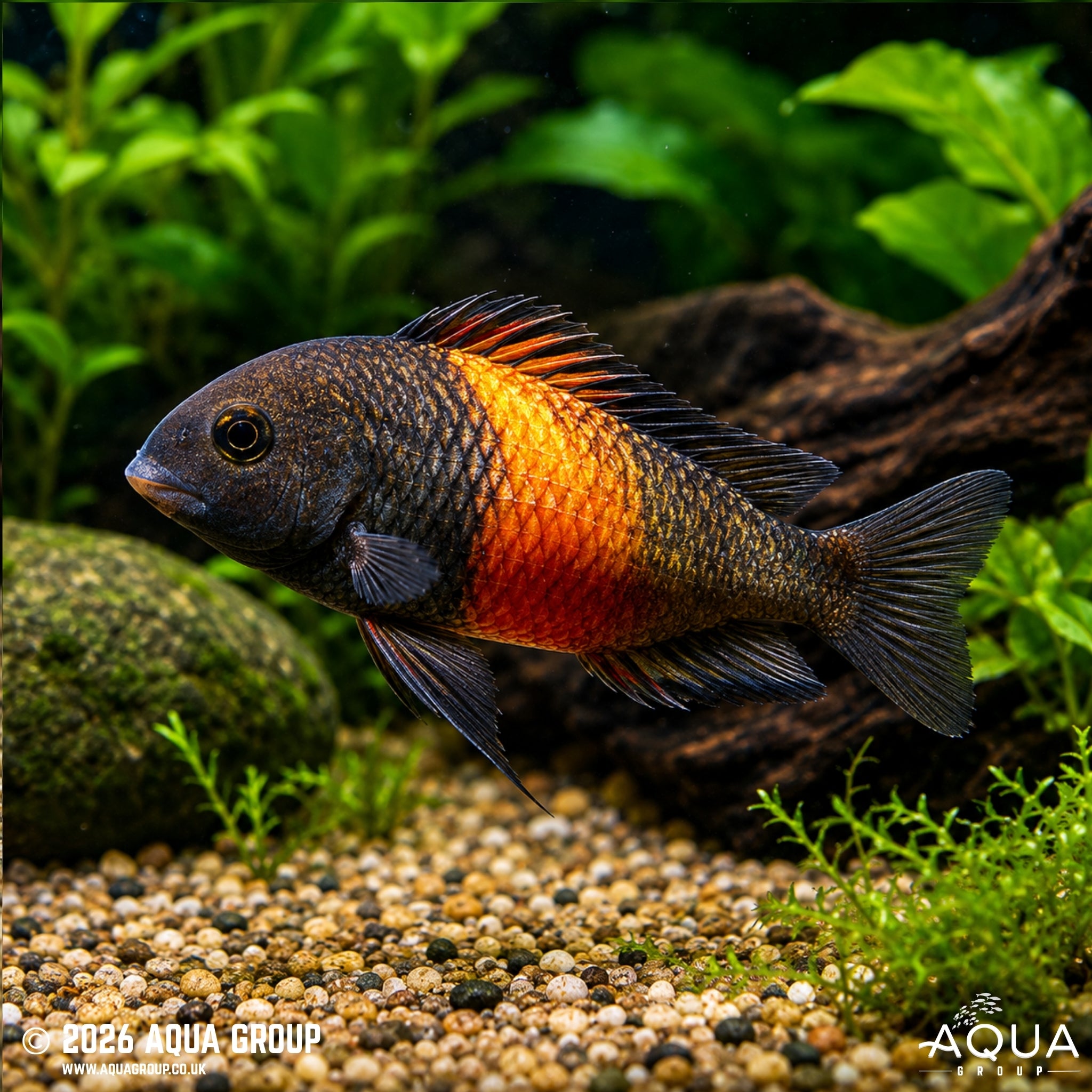
Bemba Orange Flame Tropheus - Tropheus moorii
The Bemba Orange Flame Tropheus is a striking Lake Tanganyika cichlid with a dark body and a vivid orange to flame-coloured central band, making it one of the most recognisable Tropheus locality forms. Often sold as Tropheus Bemba, Tropheus sp. “Black” Bemba or Orange Flame Tropheus, this active rock-grazing cichlid is best suited to experienced keepers who understand Tropheus behaviour, strict diet and group management. It is a beautiful but demanding fish that needs a spacious Tanganyikan setup, hard alkaline water, strong filtration and a carefully maintained colony.
Common Name:
Bemba Orange Flame Tropheus, Tropheus Bemba, Orange Flame Tropheus, Bemba Orange, Tropheus sp. “Black” Bemba.
Scientific Name (Latin):
Tropheus sp. “Bemba Orange”
Often traded as Tropheus moorii or Tropheus sp. “Black” Bemba.
Maximum Size:
Usually around 12–14 cm, with FishBase listing Tropheus moorii forms up to 14.5 cm total length.
Water Type:
Freshwater
Origin / Natural Habitat:
Endemic to Lake Tanganyika, East Africa. The Bemba Orange form is associated with the northern coast of Lake Tanganyika, where Tropheus live among rocky, sunlit shallows and graze algae and aufwuchs from hard surfaces. They naturally inhabit clear, oxygen-rich, mineral-heavy water with rocky structure rather than planted or soft-water habitats.
Water Parameters:
Temperature: 24–27°C
pH Range: 8.0–9.0
Hardness or Salinity: Hard, alkaline freshwater; stable Lake Tanganyika-style mineral content is essential.
Temperament:
Aggressive and highly territorial with its own kind, but usually not predatory. Tropheus are social cichlids that must be managed carefully in groups to spread aggression. They should not be kept as single casual community fish, pairs, or small mixed groups. Avoid mixing different Tropheus colour forms unless breeding purity is not a concern, as hybridisation can occur.
Diet:
Primarily herbivorous aufwuchs and algae grazer. Feed a vegetable-based diet built around high-quality spirulina flakes, herbivore pellets, algae-based foods and occasional blanched greens such as spinach or courgette. Avoid rich, protein-heavy foods such as large amounts of bloodworm, beef heart, mussel or meaty cichlid diets, as these can contribute to digestive problems and bloat in Tropheus.
Minimum Tank Size:
A minimum of 300 litres is recommended for a colony, with a tank length of at least 150 cm strongly preferred. Larger aquariums are much easier for long-term aggression management and water stability.
Behaviour & Activity:
A very active rock-dwelling cichlid that spends much of its time grazing surfaces, defending space and interacting with the colony. Best kept in a larger group, often 12 or more individuals, to prevent aggression being focused on one fish. Provide extensive rockwork, caves, visual barriers and open swimming areas, but keep the layout secure because fish may dig around rock bases. Females are maternal mouthbrooders and may carry eggs and fry in the mouth.
Aquarium Category:
Semi-Aggressive
Best suited to a specialist Lake Tanganyika cichlid aquarium. Suitable tank mates may include carefully chosen Tanganyikan species that can tolerate hard alkaline water and assertive tank dynamics, but many keepers prefer Tropheus-only colonies. Avoid soft-water community fish, slow or delicate species, aggressive predators, mixed random Malawi cichlids and any fish needing a protein-rich diet.
Special Requirements or Care Notes:
This is a specialist cichlid and not a beginner community fish. Stable water chemistry, excellent oxygenation, strong filtration and regular water changes are essential. Keep nitrate low, avoid sudden changes and feed small vegetable-based meals rather than heavy meaty feeds. Maintain one locality form per group if breeding or selling fry, as Tropheus variants can hybridise. Introduce groups together where possible, and avoid adding single new fish into an established colony without careful planning.
Suitable for:
Experienced fishkeepers
Availability:
Occasional in trade / Specialist Lake Tanganyika cichlid import or captive-bred locality form
All images are a visual representation of the fish you will receive, made to be as accurate as possible. Please note that Mother Nature is a wonderful thing, and variation in patterns and colours will occur — that is part of the unique beauty of these animals.
Order and get 10 reward points
Earn points by signing up for our rewards program