


Description
Belted Wrasse (Stethojulis balteata)
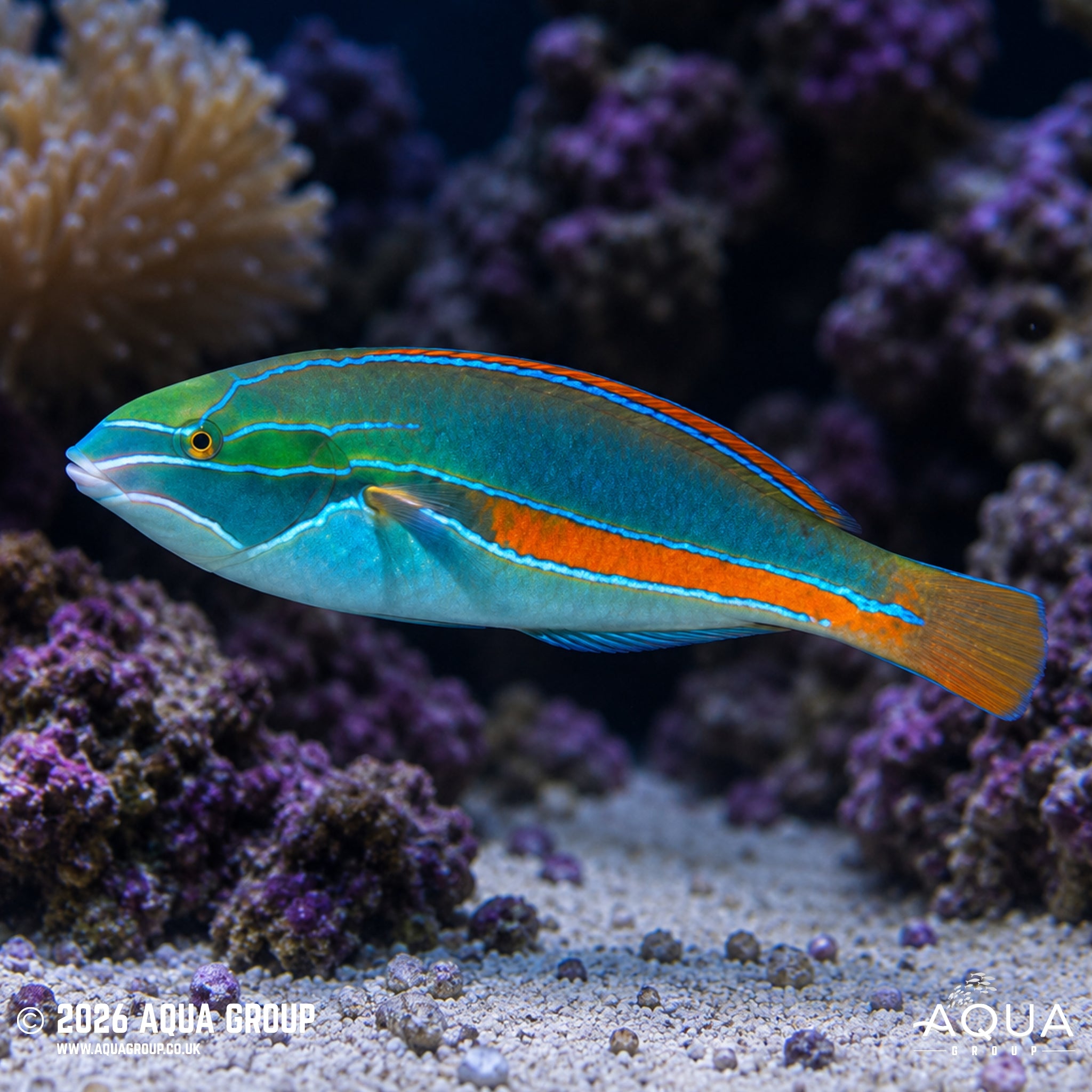
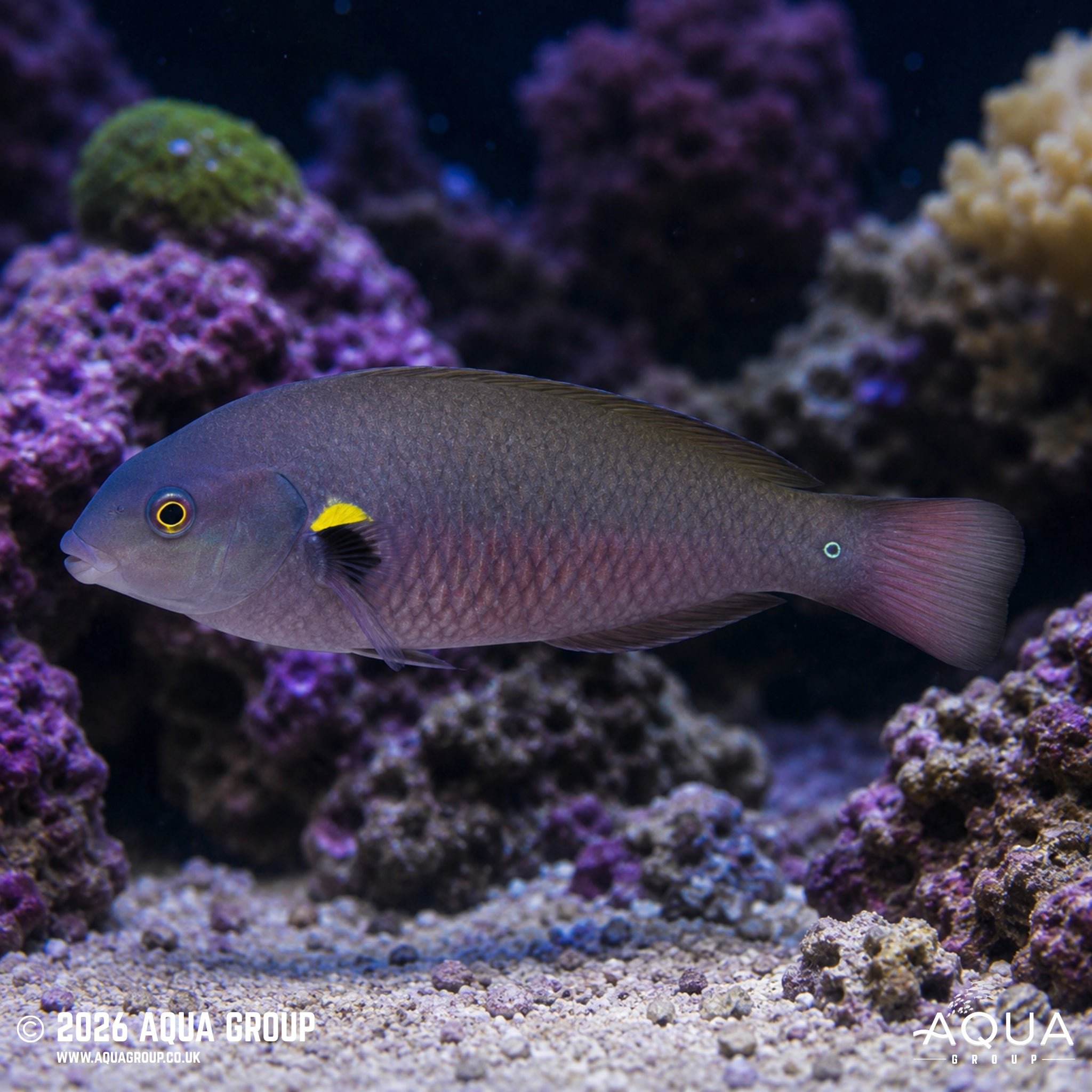
The Belted Wrasse, Stethojulis balteata, is an active and unusually patterned Hawaiian reef fish that changes dramatically in appearance as it matures. Juveniles and females are generally brown, olive or greenish with pale crosshatched markings and fine white spots, while mature males develop brighter green and blue colouration with a prominent orange band along the side. Also known as the Orange-band Wrasse or Hawaiian Belted Wrasse, this energetic species spends much of the day searching sandy and algae-covered reef surfaces for small invertebrates. Although attractive, it has demanding feeding and space requirements and is best suited to a mature aquarium managed by an experienced marine fishkeeper.
Common Name:
Belted Wrasse, Hawaiian Belted Wrasse, Orange-band Wrasse, Orange Line Wrasse.
Scientific Name (Latin):
Stethojulis balteata
Maximum Size:
Approximately 15 cm when fully grown.
Water Type:
Marine
Origin / Natural Habitat:
Eastern Central Pacific, where the species is endemic to the Hawaiian Islands and Johnston Atoll. Belted Wrasses are common in shallow reef habitats, usually over areas of sand, algae-covered rock and mixed reef substrate. They occur from very shallow water to depths of approximately 22 metres and may forage alongside other small wrasses and parrotfish.
Water Parameters:
Temperature: 24–28°C
pH Range: 8.1–8.4
Hardness or Salinity: Marine salinity 1.023–1.026 specific gravity; stable salinity, strong oxygenation, brisk water movement and consistently high water quality are important.
Temperament:
Generally peaceful to moderately assertive. Belted Wrasses usually ignore unrelated reef fish but may become territorial towards other Stethojulis wrasses or similarly shaped species. Their constant swimming and rapid feeding behaviour may intimidate very timid fish, although they can themselves be unsettled by large or aggressive tank mates.
Diet:
Carnivorous benthic forager. In the wild, this species feeds on bivalves, gastropods, polychaete and peanut worms, small crustaceans, foraminiferans and other tiny invertebrates collected from the substrate.
In the aquarium, offer enriched mysis shrimp, Artemia, copepods, finely chopped krill, prawn, clam, mussel and small high-quality marine pellets. Feed small portions at least two or three times daily. A mature aquarium containing natural microfauna is highly beneficial, as this active species has substantial energy requirements and may lose weight if feeding is insufficient.
Minimum Tank Size:
A minimum aquarium volume of approximately 300 litres is recommended for one adult, with a long swimming area, mature rockwork and an open section of fine sand. Larger accommodation is advisable when maintaining the species alongside other active wrasses.
Behaviour & Activity:
A fast-moving daytime wrasse that spends most of its active period swimming close to the reef and taking quick bites from sand, algae-covered rock and other surfaces. Sand may be expelled through the gill openings as the fish sorts edible invertebrates from the substrate.
Juveniles and females display subdued brown, olive or green colouration with pale markings. Mature males become more vividly coloured, developing a green body with fine blue lines and a noticeable orange lateral band. An orange marking above the base of the pectoral fin may remain visible through the different life stages.
Reef Safe:
Reef Safe with Caution
Belted Wrasses do not normally consume coral tissue, but small ornamental shrimps, tiny crabs, snails, tubeworms, bivalves and other small invertebrates may be hunted. They may also reduce populations of copepods, worms and other beneficial reef microfauna. Compatibility with valuable ornamental invertebrates cannot be guaranteed.
Special Requirements or Care Notes:
Provide a mature aquarium with extensive secure rockwork, open swimming space and a bed of fine, soft sand. Avoid coarse or sharp substrates that could damage the fish when it retreats near or beneath the seabed.
A tightly fitted aquarium cover or fine mesh lid is essential, as Belted Wrasses are fast, nervous swimmers and highly capable jumpers. Select only an alert specimen that is already feeding reliably. This species may adapt poorly to captivity and can lose condition quickly if offered too little food or housed with dominant competitors.
Offer several varied meals throughout the day and monitor the abdomen and overall body condition closely. Avoid aggressive tank mates, introduce competing wrasses carefully and provide strong oxygenation and efficient filtration. Quarantine and slow acclimation are strongly recommended.
Suitable for:
Experienced fishkeepers
Availability:
Rare
All images are a visual representation of the fish you will receive, made to be as accurate as possible. Please note that Mother Nature is a wonderful thing, and variation in patterns and colours will occur — that is part of the unique beauty of these animals.
Order and get 60 reward points
Earn points by signing up for our rewards program