

Description
Asfur Angelfish (Pomacanthus asfur)
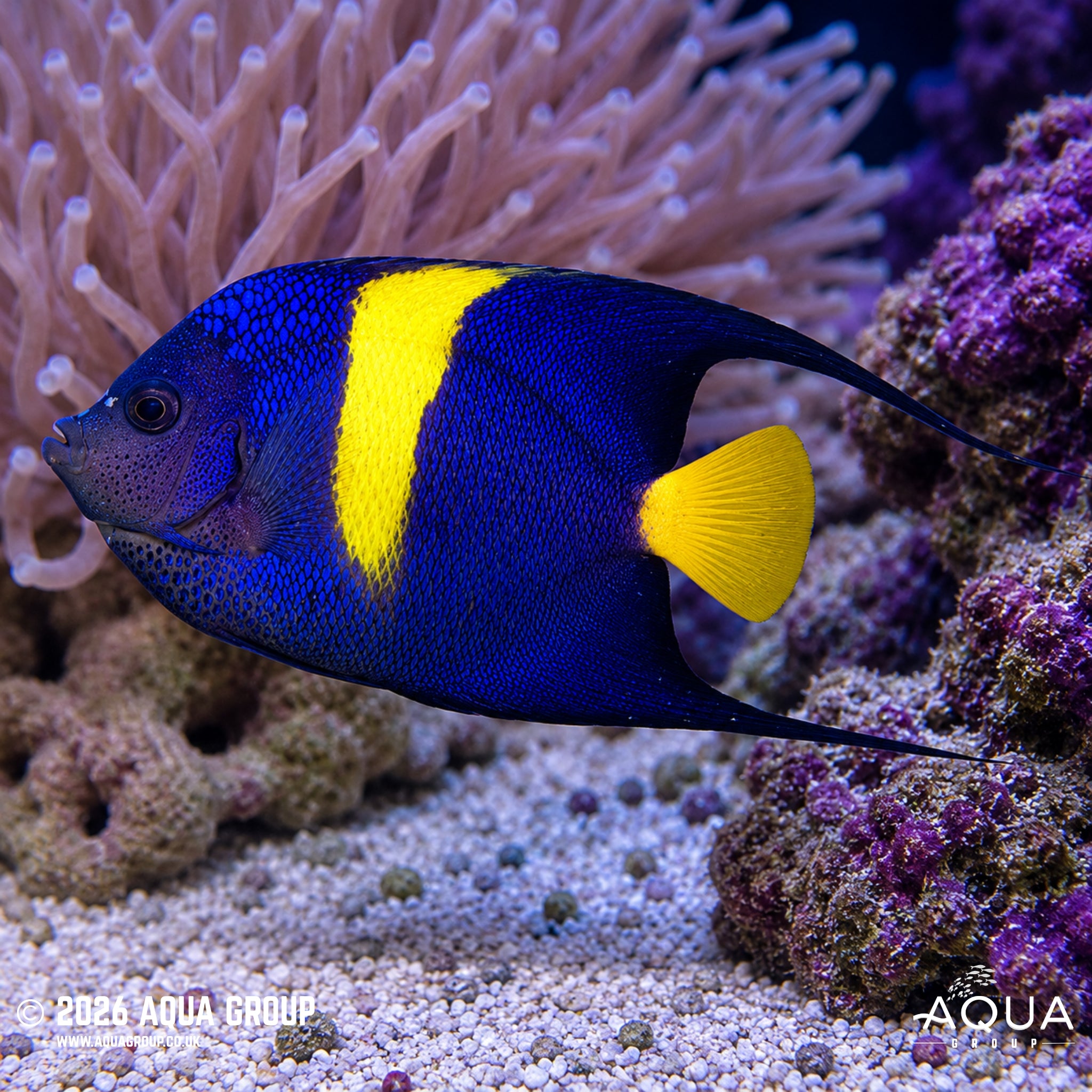
The Asfur Angelfish (Pomacanthus asfur) is a magnificent large marine angelfish recognised by its deep blue to blue-black body, brilliant yellow tail and bold yellow crescent-shaped band across the flanks. Also known as the Arabian Angelfish or Crescent Angelfish, it originates from coral-rich reefs of the Red Sea and surrounding western Arabian region. Intelligent, imposing and highly territorial once established, this striking centrepiece fish requires a very large, mature marine aquarium, substantial rockwork and an experienced keeper able to provide its specialised diet and long-term care.
Common Name:
Asfur Angelfish, Arabian Angelfish, Crescent Angelfish, Asfur Angel
Scientific Name (Latin):
Pomacanthus asfur
Maximum Size:
Up to approximately 40 cm in total length. Aquarium specimens may remain somewhat smaller, but permanent accommodation should be planned around a large, deep-bodied and territorial adult.
Water Type:
Marine
Origin / Natural Habitat:
Native primarily to the Red Sea, Gulf of Aden and nearby western Arabian waters.
It inhabits coral and rocky reefs, reef faces, caves, ledges and sheltered coastal areas. Adults are usually encountered alone or as established pairs and remain closely associated with substantial reef structure containing sponges, tunicates and other encrusting organisms.
Water Parameters:
Temperature: 24–28°C
pH Range: 8.1–8.4
Salinity: 1.020–1.025 SG
Temperament:
Semi-aggressive, territorial and potentially dominant. The Asfur Angelfish can be relatively reserved when first introduced but often becomes increasingly assertive as it settles into the aquarium.
Aggression may be directed towards other large angelfish, similarly shaped fish and newly introduced tank mates. It is normally best maintained as the only large Pomacanthus angelfish unless the aquarium is exceptionally spacious.
Diet:
An omnivorous reef grazer that naturally consumes sponges, tunicates, algae and other encrusting organisms.
In the aquarium, provide specialist marine angelfish foods containing sponge material alongside mysis shrimp, chopped prawn, mussel, clam, squid, krill and other marine-origin foods. Spirulina, marine algae and dried seaweed should also be offered regularly.
Feed at least two or three modest meals daily. A varied diet containing sponge material, marine protein and vegetable matter is essential for maintaining healthy body condition, strong coloration and long-term nutritional health.
Minimum Tank Size:
A minimum aquarium volume of approximately 1,000 litres is recommended for long-term care, with a tank length of at least 200 cm strongly preferred.
A substantially larger aquarium is advisable when the fish is maintained alongside other large or territorial marine species.
Behaviour & Activity:
An active daytime swimmer that patrols the middle and lower areas of the aquarium, regularly investigating rockwork and picking at encrusting growth.
Newly introduced specimens may initially remain close to caves or overhangs. Once established, the Asfur Angelfish usually becomes confident, visible and highly responsive at feeding time.
Adults may defend a large section of the aquarium and can produce audible grunting or knocking sounds when alarmed, displaying or challenging another fish.
Juveniles display curved blue and white bands over a darker body and can resemble young Emperor Angelfish. As they mature, the juvenile pattern gradually changes into the characteristic dark adult coloration with a broad yellow crescent and bright yellow tail.
Reef Safe:
Reef Safe with Caution
The Asfur Angelfish is likely to nip large-polyp and small-polyp stony corals, soft corals, zoanthids, sponges, tunicates and clam mantles. Ornamental tube worms and other sessile invertebrates may also be investigated.
Although individual behaviour varies, this species should not be considered reliably compatible with a valuable mixed reef aquarium. It is best maintained in a large fish-only or fish-only-with-live-rock system.
Special Requirements or Care Notes:
Introduce only to a mature, fully cycled marine aquarium containing extensive established rockwork, natural grazing surfaces and several caves large enough to accommodate a full-grown adult.
Powerful biological filtration, efficient protein skimming, strong circulation and excellent oxygenation are essential. Large angelfish produce a considerable waste load and respond poorly to unstable or deteriorating water quality.
Offer food several times throughout the day rather than relying on one large meal. Natural sponge, algae and biofilm growing on mature live rock can help newly introduced specimens begin feeding confidently.
Avoid keeping it with other large Pomacanthus angelfish unless the aquarium is exceptionally spacious and arranged to provide separate territories. The Asfur Angelfish should generally be introduced after peaceful species but before highly aggressive tank mates.
This species may be susceptible to marine white spot, velvet, flukes and other external parasites following collection and transport. A carefully managed quarantine period is strongly recommended.
Select an alert specimen with clear eyes, intact fins, normal breathing and a rounded body profile. Avoid fish with a pinched abdomen, cloudy eyes or persistent refusal of food.
The cheek carries a strong preopercular spine that can become caught in conventional aquarium nets. A suitable rigid submerged container is preferable when transferring the fish.
Suitable for:
Beginner fishkeepers
Availability:
Occasional in trade
All images are a visual representation of the fish you will receive, made to be as accurate as possible. Please note that Mother Nature is a wonderful thing, and variation in patterns and colours will occur — that is part of the unique beauty of these animals.
Order and get 99 reward points
Earn points by signing up for our rewards program