

Description
Arc Eye Hawkfish - Paracirrhites arcatus
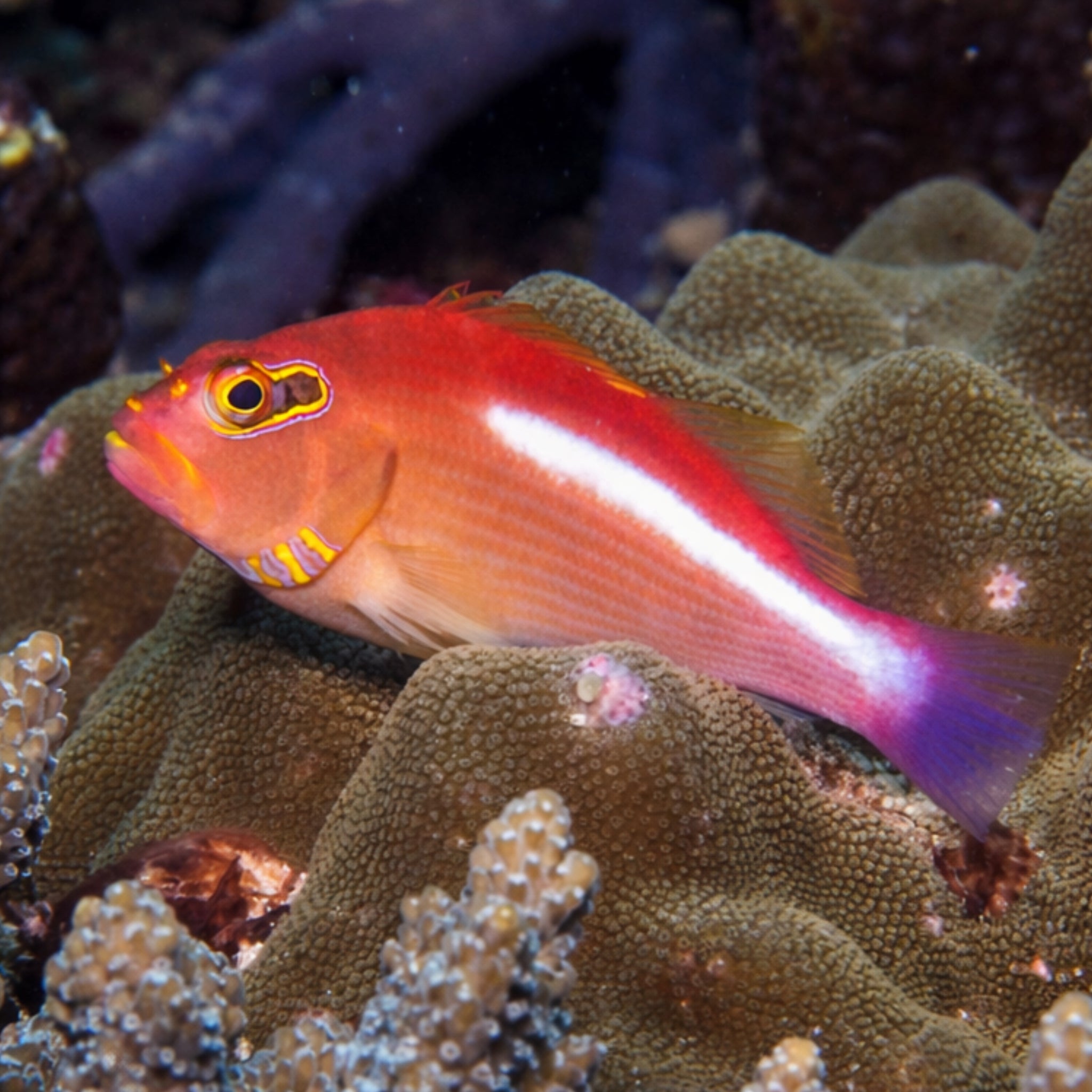
The Arc Eye Hawkfish is a bold, characterful marine fish known for its warm tan to orange body, pale lateral marking and the distinctive arched ring behind the eye that gives the species its name. In the wild it lives around lagoon and seaward reefs, often perched on branching corals where it watches for prey. In the aquarium it is hardy and full of personality, but its territorial nature and appetite for small crustaceans mean it is better suited to a carefully planned marine setup than a delicate mixed reef community.
Common Name:
Arc Eye Hawkfish. It is also sometimes referred to as the Ring-eyed Hawkfish.
Scientific Name (Latin):
Paracirrhites arcatus
Maximum Size:
Up to 20 cm in length.
Water Type:
Marine.
Origin / Natural Habitat:
Found across the Indo-Pacific, including the Red Sea and wider tropical reef regions. It occurs on lagoon and seaward reefs from very shallow water to at least 33 metres, commonly perched on heads of small branching corals such as Stylophora, Pocillopora and Acropora.
Water Parameters:
Temperature: 22–27°C
pH Range: 8.1–8.4
Salinity: 1.020–1.025 SG
Temperament:
Semi-aggressive to aggressive. This species is territorial, especially towards similar perchers or other hawkfish, and can also be a risk to very small fish in tighter systems.
Diet:
Carnivorous. In the wild it feeds mainly on shrimps, small fishes, crabs and other crustaceans. In captivity it should be offered a varied diet of meaty marine foods such as mysis, chopped crustacean foods and other quality frozen or prepared carnivore feeds.
Minimum Tank Size:
Around 150–190 litres minimum is a sensible long-term recommendation, with larger aquaria preferred for adult specimens or mixed communities.
Behaviour & Activity:
A perch-and-ambush predator, this fish spends much of the day sitting on rockwork or coral branches, watching its surroundings before darting out to snatch prey. It is generally solitary, diurnal and highly observant, which makes it a very engaging species to watch.
Reef Safe:
Reef Safe with Caution
It is usually safe with corals, but caution is needed around ornamental shrimps, tiny crabs and very small fish, which may be treated as prey. Some care references also note possible issues with anemones. Monitor carefully in mixed reef systems with decorative mobile invertebrates.
Special Requirements or Care Notes:
Best kept in a well-established marine aquarium with plenty of rockwork, ledges and perching points. It appreciates a layout that allows it to observe its surroundings from elevated spots. Choose tankmates carefully, and avoid combining it with very small crustaceans unless you are prepared for losses.
Suitable for:
Intermediate fishkeepers. It is generally hardy once settled, but its territorial behaviour and predatory tendencies make it better suited to aquarists who can plan livestock compatibility carefully. This is an inference based on its reported hardiness and behaviour.
Availability:
Regular in trade. This is an inference based on multiple aquarium-trade references describing it as commonly or routinely seen.
All images are a visual representation of the fish you will receive, made to be as accurate as possible. Please note that Mother Nature is a wonderful thing, and variation in patterns and colours will occur — that is part of the unique beauty of these animals.
Order and get 30 reward points
Earn points by signing up for our rewards program