

Description
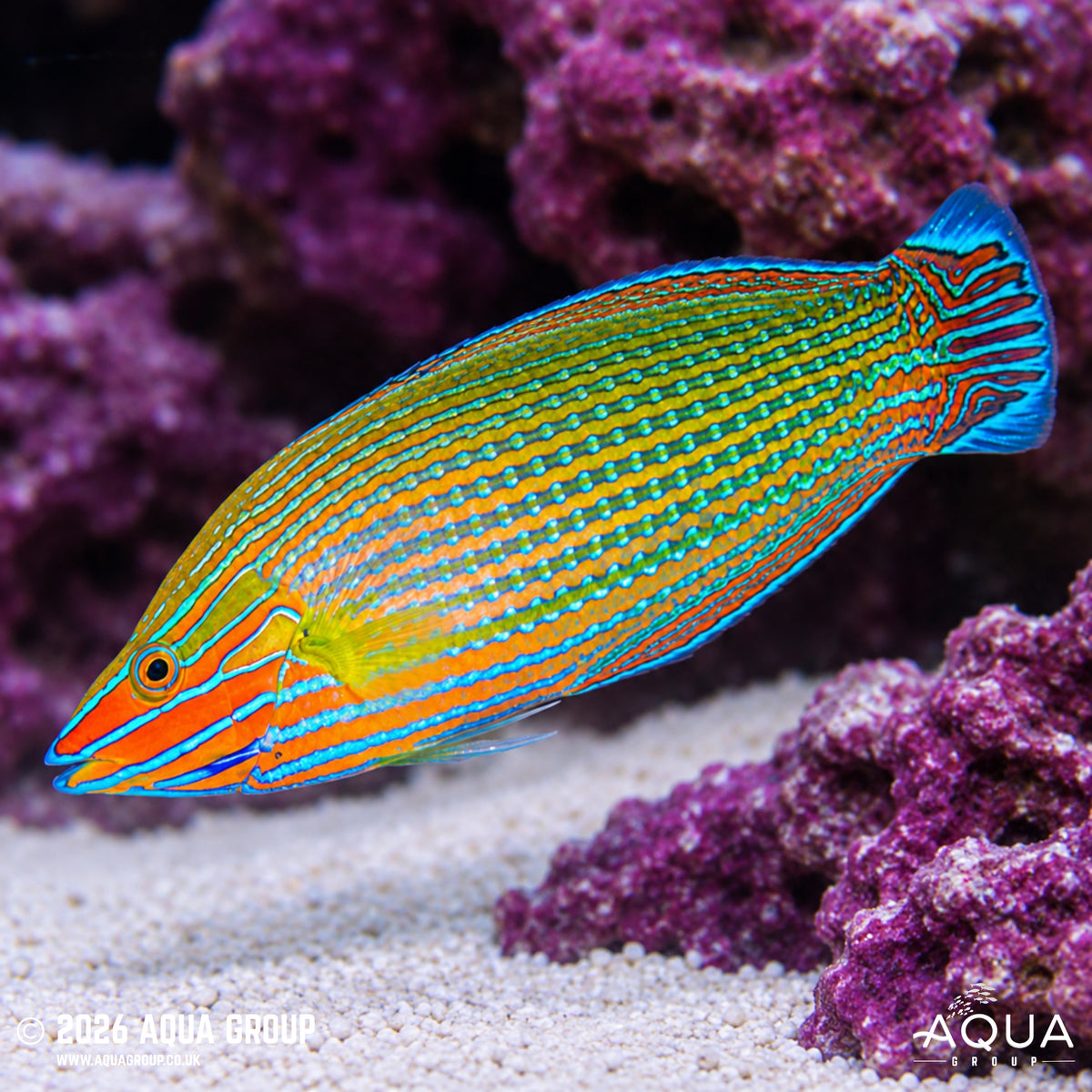
Richmond's Wrasse (Halichoeres richmondi)
Richmond's Wrasse is an attractive and active marine wrasse recognised for its elongated body shape, intricate patterning and lively foraging behaviour. Like other Halichoeres species, it spends much of the day searching rockwork and substrate for small invertebrates before burying itself in the sand to rest. It is best suited to mature marine aquariums with a fine sandbed, secure rockwork and appropriately selected tankmates.
Common Name:
Richmond's Wrasse
Scientific Name (Latin):
Halichoeres richmondi
Maximum Size:
Approximately 15–18 cm
Water Type:
Marine
Origin / Natural Habitat:
Richmond's Wrasse is associated with tropical Indo-Pacific reef environments, where it inhabits coral-rich reefs, rubble zones and sandy areas close to established reef structure.
It spends much of its time actively foraging around rockwork and across the substrate in search of small crustaceans, worms and other reef-associated prey.
Water Parameters:
Temperature: 24–26°C
pH Range: 8.1–8.4
Salinity: SG 1.024–1.026
Nitrate: Low and stable
Ammonia/Nitrite: 0 ppm
Temperament:
Peaceful to Semi-Aggressive
Richmond's Wrasse is generally peaceful towards unrelated marine fish but may become assertive towards similar wrasses or smaller species.
It is best housed with calm to moderately robust tankmates in a suitably spacious aquarium.
Diet:
Carnivore / Micro-Predator
Offer a varied diet including frozen mysis, enriched brine shrimp, krill, finely chopped prawn and quality marine pellets.
It will also naturally forage for small crustaceans, worms and other invertebrates within mature rockwork and substrate.
Minimum Tank Size:
Approximately 250 litres
A mature aquarium with plenty of swimming space, secure rockwork and a soft sandbed is recommended.
Behaviour & Activity:
Richmond's Wrasse is an active daytime swimmer that spends much of its time exploring rockwork and searching the substrate for food.
At night, or when frightened, it naturally buries itself beneath the sand.
A soft, fine sandbed several centimetres deep is therefore essential.
Once established, it can become a confident and highly visible aquarium inhabitant.
Reef Safe:
With Caution
Richmond's Wrasse does not normally damage healthy coral tissue.
However, it may prey on small shrimp, crabs, snails, worms and other mobile invertebrates.
It is therefore best considered reef safe with caution, particularly in aquariums containing small ornamental crustaceans.
Special Requirements or Care Notes:
Provide a mature marine aquarium with stable water chemistry, good filtration and strong oxygenation.
A soft, fine sandbed is essential for natural sleeping and refuge behaviour.
Avoid coarse or sharp substrate that could injure the fish while burying.
A tightly fitted aquarium lid is essential, as Halichoeres wrasses are capable jumpers.
Provide substantial secure rockwork with plenty of hiding areas and natural foraging surfaces.
Avoid housing with very small ornamental crustaceans if these are a priority within the aquarium.
Regular varied feeding helps maintain strong colouration and good body condition.
Suitable for:
Intermediate
Availability:
Availability can vary depending on season, collection area and supplier.
All images are a visual representation of the fish you will receive, made to be as accurate as possible. Please note that Mother Nature is a wonderful thing, and variation in patterns and colours will occur — that is part of the unique beauty of these animals.
Order and get 199 reward points
Earn points by signing up for our rewards program