

Description
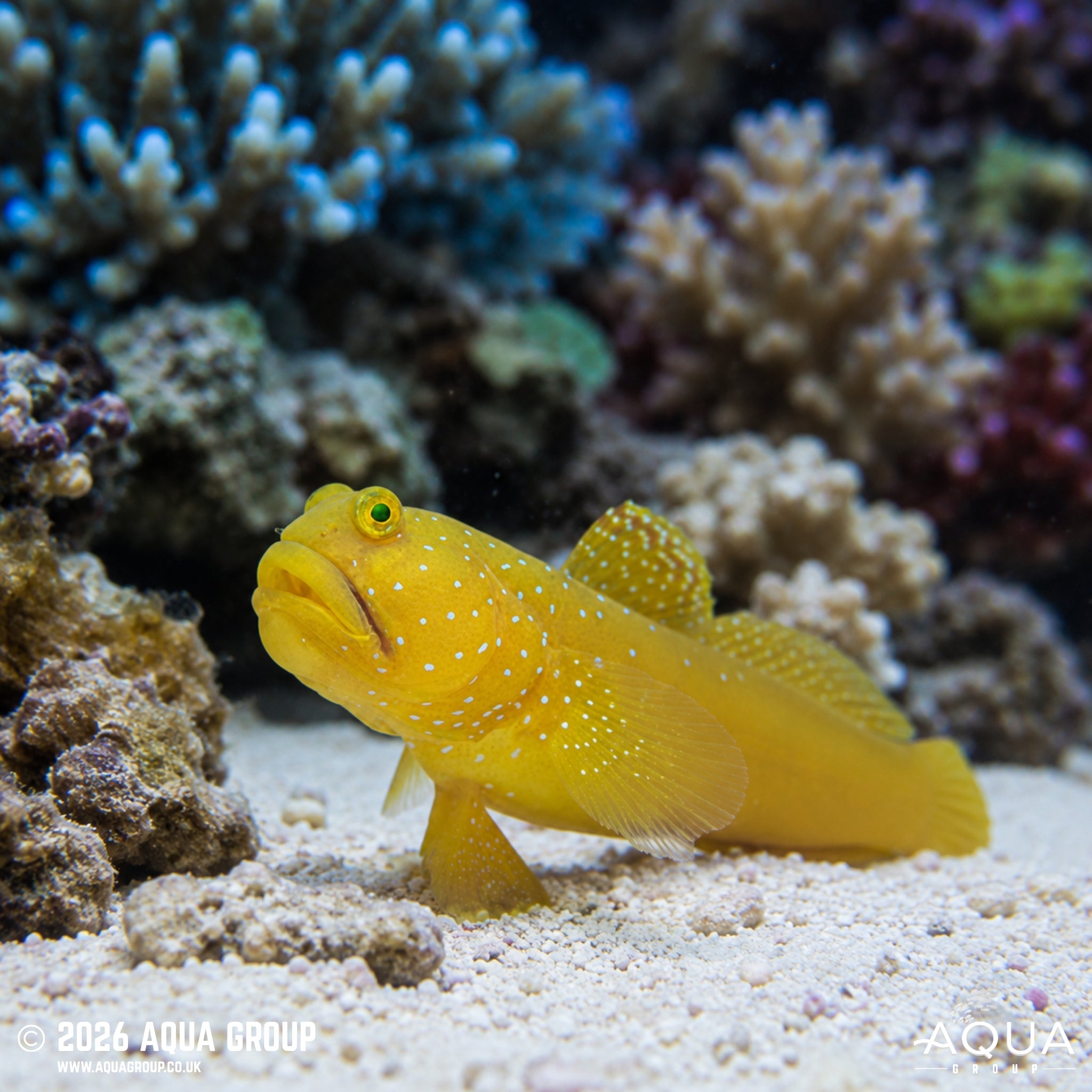
Sulphur Goby (Cryptocentrus cinctus)
The Sulphur Goby, Cryptocentrus cinctus, is a hardy and characterful marine goby, best known for its bright yellow colouration, watchful behaviour and fascinating relationship with pistol shrimps. Also commonly known as the Yellow Watchman Goby or Yellow Prawn Goby, this species is often seen perched near its burrow entrance, keeping guard while observing the aquarium around it. Peaceful, reef safe and full of personality, it is a brilliant choice for mature reef aquariums, especially for aquarists wanting a small bottom-dwelling fish with natural behaviour and plenty of character.
Common Name:
Sulphur Goby, Yellow Watchman Goby, Yellow Prawn Goby, Yellow Shrimp Goby, Yellow Watchman Prawn Goby.
Scientific Name (Latin):
Cryptocentrus cinctus
Maximum Size:
Up to around 10 cm, though many aquarium specimens are usually closer to 7–9 cm.
Water Type:
Marine
Origin / Natural Habitat:
Found across the Western Pacific, including areas from southern Japan and Singapore through to the southern Great Barrier Reef, Palau and Micronesia. In the wild, Sulphur Gobies inhabit sandy areas of shallow lagoons, protected coastal bays, clear coastal sand slopes and rubble zones. They often live in shared burrows with alpheid pistol shrimps, where the shrimp maintains the burrow and the goby acts as a lookout for danger.
Water Parameters:
Temperature: 24–27°C
pH Range: 8.1–8.4
Hardness or Salinity: SG 1.020–1.025
Temperament:
Peaceful to mildly territorial. Sulphur Gobies are usually safe with most peaceful marine community fish, but they may defend their burrow area and can be territorial towards similar gobies, especially in smaller aquariums. They should not be kept with aggressive predators or fish that may harass them while they are resting near the substrate.
Diet:
Carnivorous. Offer a varied diet of frozen mysis shrimp, enriched brineshrimp, cyclops, copepod-based foods, finely chopped meaty marine foods and quality small marine pellets. Most settled specimens feed readily, but food should be allowed to reach the lower areas of the aquarium where the goby spends much of its time.
Minimum Tank Size:
A practical minimum of around 75–100 litres is recommended for a single specimen, with larger aquariums preferred if keeping with a pistol shrimp or other bottom-dwelling fish. Provide a sand bed, small rubble pieces, rockwork and secure hiding places.
Behaviour & Activity:
A bottom-dwelling watchman goby that spends much of its time perched near a burrow, cave or chosen shelter. It may form a natural partnership with a suitable pistol shrimp, sharing a burrow while the goby watches for danger and the shrimp maintains the tunnel. This relationship is one of the most interesting behaviours to observe in a reef aquarium. A secure lid is recommended, as gobies can jump when startled.
Reef Safe:
Reef Safe
Sulphur Gobies are considered reef safe and do not normally nip corals, clam mantles or sessile invertebrates. They are suitable for peaceful reef aquariums and can be kept with many common reef-safe fish and invertebrates. If paired with a pistol shrimp, some sand movement around the burrow should be expected.
Special Requirements or Care Notes:
Best kept in a mature, stable marine aquarium with a suitable sand bed and secure rockwork. Rock structures should be placed safely so they cannot collapse if the goby or pistol shrimp digs underneath them. This species may be kept singly or with a compatible pistol shrimp, but avoid mixing with similar gobies unless the aquarium is large enough to provide separate territories. Colour can vary between individuals, with some specimens showing brighter yellow and others appearing more muted, greyish or brownish.
Suitable for:
Beginner to Intermediate fishkeepers
Availability:
Common in trade / Availability can vary depending on colour form, size and supplier
All images are a visual representation of the fish you will receive, made to be as accurate as possible. Please note that Mother Nature is a wonderful thing, and variation in patterns and colours will occur — that is part of the unique beauty of these animals.
Order and get 25 reward points
Earn points by signing up for our rewards program