

Description
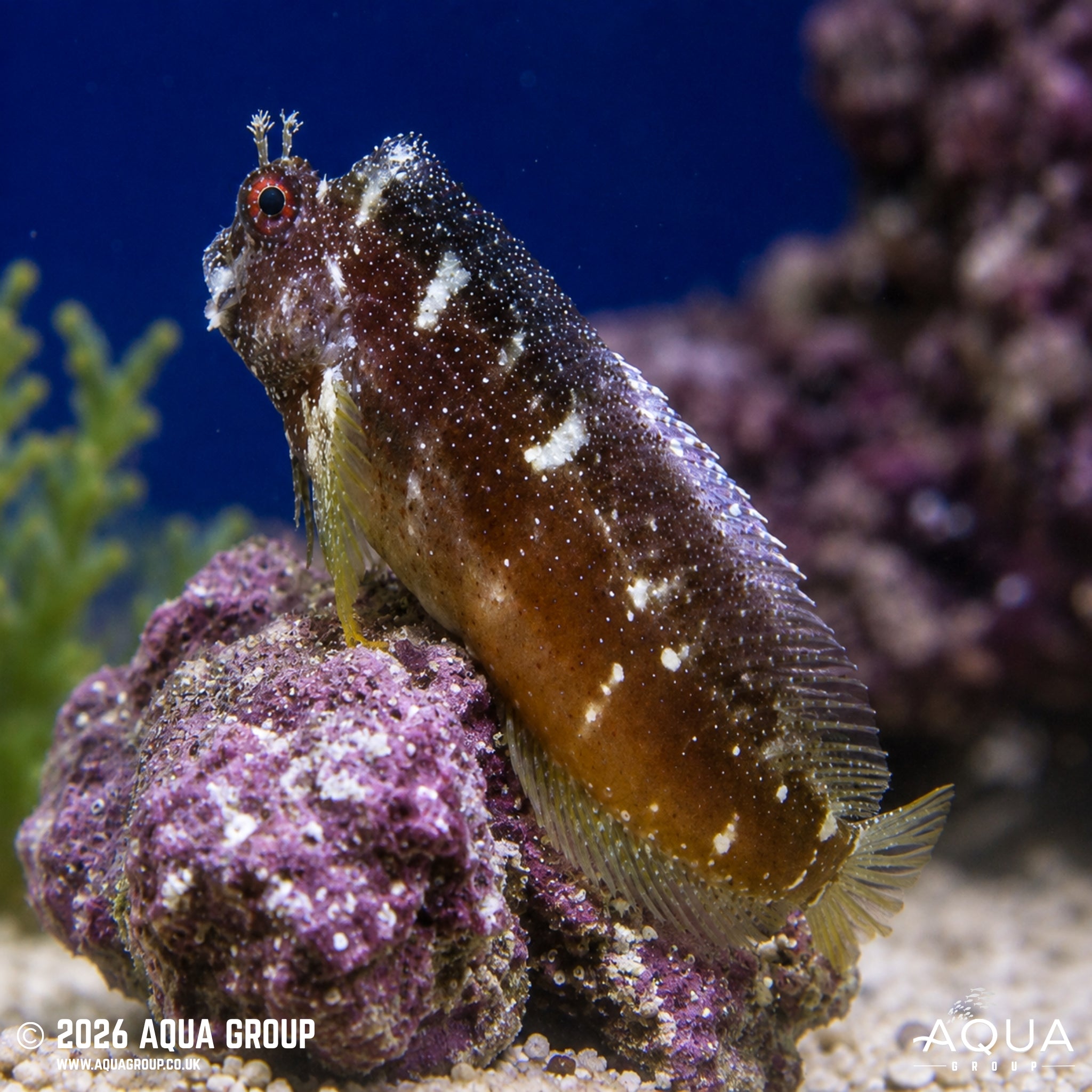
Starry Algae Blenny (Salarias ramosus)
The Starry Algae Blenny, Salarias ramosus, is a characterful marine fish recognised by its mottled brown to olive body, numerous pale blue-white spots and distinctive branching cirri above the eyes. Also known as the Starry Blenny or Snowflake Blenny, this active reef grazer spends much of the day perched on rockwork and browsing algae-covered surfaces. Its engaging personality, useful grazing behaviour and unusual star-like pattern make it a popular addition to mature marine aquariums, although it requires reliable access to marine algae and may become territorial towards similar bottom-dwelling fish.
Common Name:
Starry Algae Blenny, Starry Blenny, Snowflake Blenny, Starry Lawnmower Blenny.
Scientific Name (Latin):
Salarias ramosus
Maximum Size:
Usually around 12–14 cm when fully grown.
Water Type:
Marine
Origin / Natural Habitat:
Western Central Pacific, ranging from the Philippines and Indonesia southwards to north-western Australia.
Starry Algae Blennies inhabit shallow coastal reefs, lagoons, rocky shorelines and coral-rubble habitats with abundant algae-covered surfaces. They remain close to the seabed and reef structure, using holes, caves and crevices as shelter while grazing across exposed rock.
Water Parameters:
Temperature: 24–28°C
pH Range: 8.1–8.4
Hardness or Salinity: Marine salinity 1.023–1.026 specific gravity; stable salinity, good oxygenation and consistently high water quality are important.
Temperament:
Generally peaceful but potentially territorial towards other blennies and fish with a similar shape or feeding niche. Starry Algae Blennies usually coexist well with unrelated community reef fish but may chase gobies, lawnmower blennies or other algae grazers that enter their chosen territory.
Only one Salarias blenny is normally recommended unless the aquarium is exceptionally spacious and the individuals are known to be compatible.
Diet:
Primarily herbivorous algae grazer, although it also consumes detritus, microorganisms and small amounts of animal material associated with reef surfaces.
Provide mature live rock with natural film algae and fine algal growth. Supplement with marine algae sheets, nori, spirulina flakes, herbivore pellets and frozen foods containing marine algae. Small portions of enriched mysis shrimp, Artemia and finely chopped marine foods may also be accepted.
Vegetable-based marine foods should form the foundation of the aquarium diet. Do not assume that visible nuisance algae alone will provide complete or reliable nutrition.
Minimum Tank Size:
A minimum aquarium volume of approximately 200 litres is recommended for one adult, with extensive mature rockwork, several sheltered caves and established grazing surfaces.
Larger accommodation is advisable when keeping it with other territorial bottom-dwelling fish or species that compete heavily for algae.
Behaviour & Activity:
A bottom-oriented daytime fish that spends much of its time perched on live rock, caves and ledges while watching its surroundings. It moves between grazing areas with short bursts of swimming and uses its comb-like teeth to rasp algae and organic films from hard surfaces.
Starry Algae Blennies frequently rest with the front of the body raised and may retreat backwards into a chosen hole or narrow crevice when alarmed. Once established, they often become confident, inquisitive fish that recognise feeding routines and observe activity outside the aquarium.
Their mottled colouration can change in intensity depending on surroundings, mood and lighting, helping them blend into algae-covered rockwork.
Reef Safe:
Reef Safe
Starry Algae Blennies do not normally damage healthy corals, anemones, clams or established ornamental invertebrates. Their grazing can help control soft film algae on rockwork.
Occasional picking at clam mantles or fleshy coral tissue is possible, particularly when natural algae and suitable vegetable foods are limited. Persistent coral or clam nipping is uncommon but cannot be completely ruled out.
Special Requirements or Care Notes:
Introduce the Starry Algae Blenny to a mature aquarium containing established live rock and natural grazing surfaces. Newly set-up, sterile or heavily cleaned systems may not provide sufficient algae and associated microorganisms.
Confirm that the fish accepts supplementary aquarium foods before purchase whenever possible. Some individuals rely heavily on natural grazing and may gradually lose weight after visible algae becomes scarce.
Monitor the abdomen and area behind the head closely. A healthy specimen should have a gently rounded body profile. A hollow abdomen, reduced grazing or prominent head structure may indicate inadequate nutrition.
Offer marine algae and herbivore foods regularly, even when algae remains visible in the aquarium. Attach nori close to the fish’s preferred grazing territory or place sinking algae foods near the rockwork.
Provide numerous caves, holes and ledges. Rockwork should be firmly secured, and pump or overflow intakes should be protected because curious blennies may enter narrow openings.
Avoid keeping with highly aggressive fish or several similar algae-grazing blennies in limited space. Although this species may assist with algae management, it should not be purchased as a guaranteed solution for severe nuisance algae.
A tightly fitted aquarium cover is essential because Starry Algae Blennies can jump, particularly during introduction or territorial disputes. Cover openings around cables, pipework and feeding hatches.
Slow acclimation and quarantine are recommended. Include inert caves or pipe sections in quarantine so the fish has secure shelter, and provide algae-based foods from the beginning.
Suitable for:
Beginner to intermediate marine fishkeepers
Availability:
Common in trade
All images are a visual representation of the fish you will receive, made to be as accurate as possible. Please note that Mother Nature is a wonderful thing, and variation in patterns and colours will occur — that is part of the unique beauty of these animals.
Order and get 30 reward points
Earn points by signing up for our rewards program