


Description
Longfin Snapper (Symphorichthys spilurus)
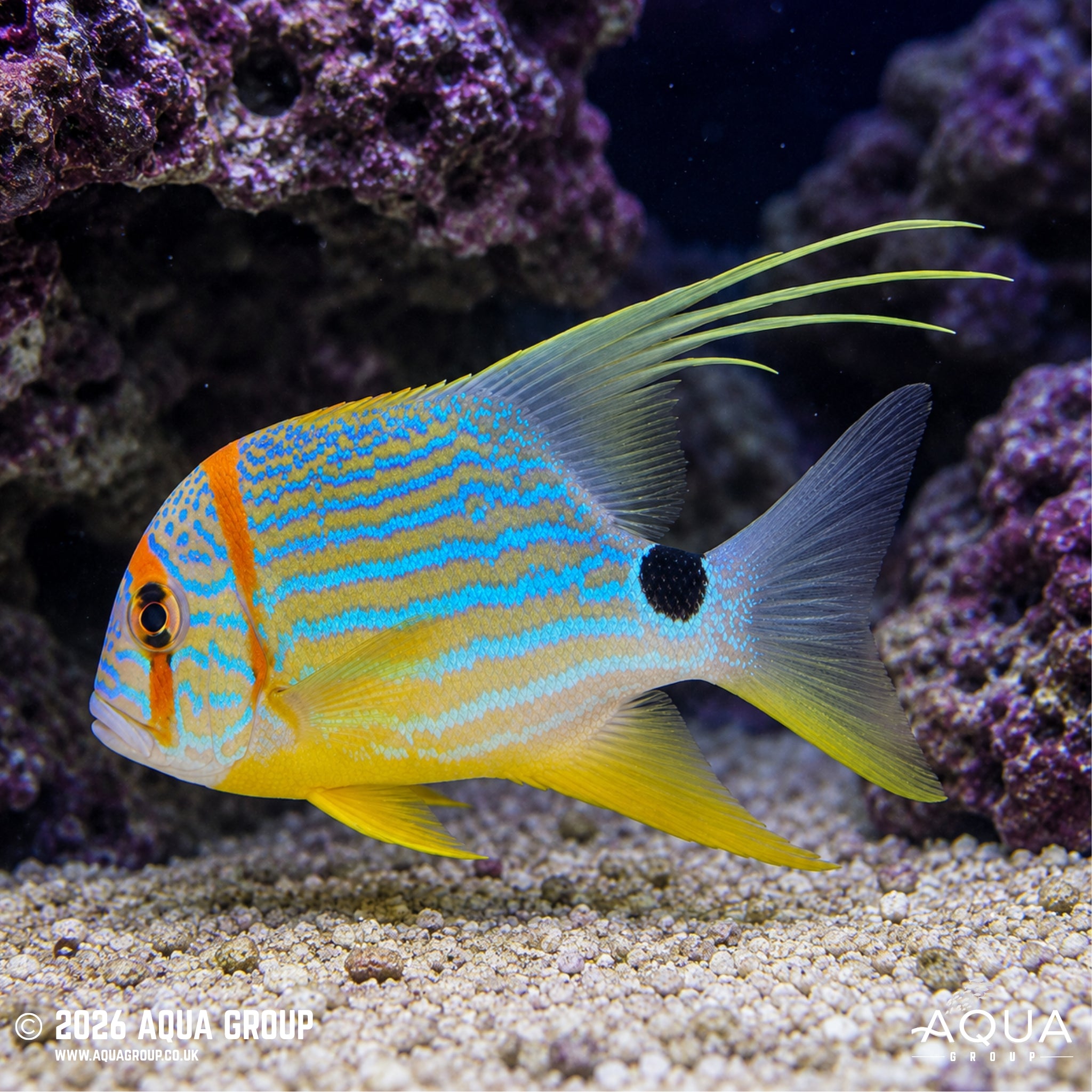
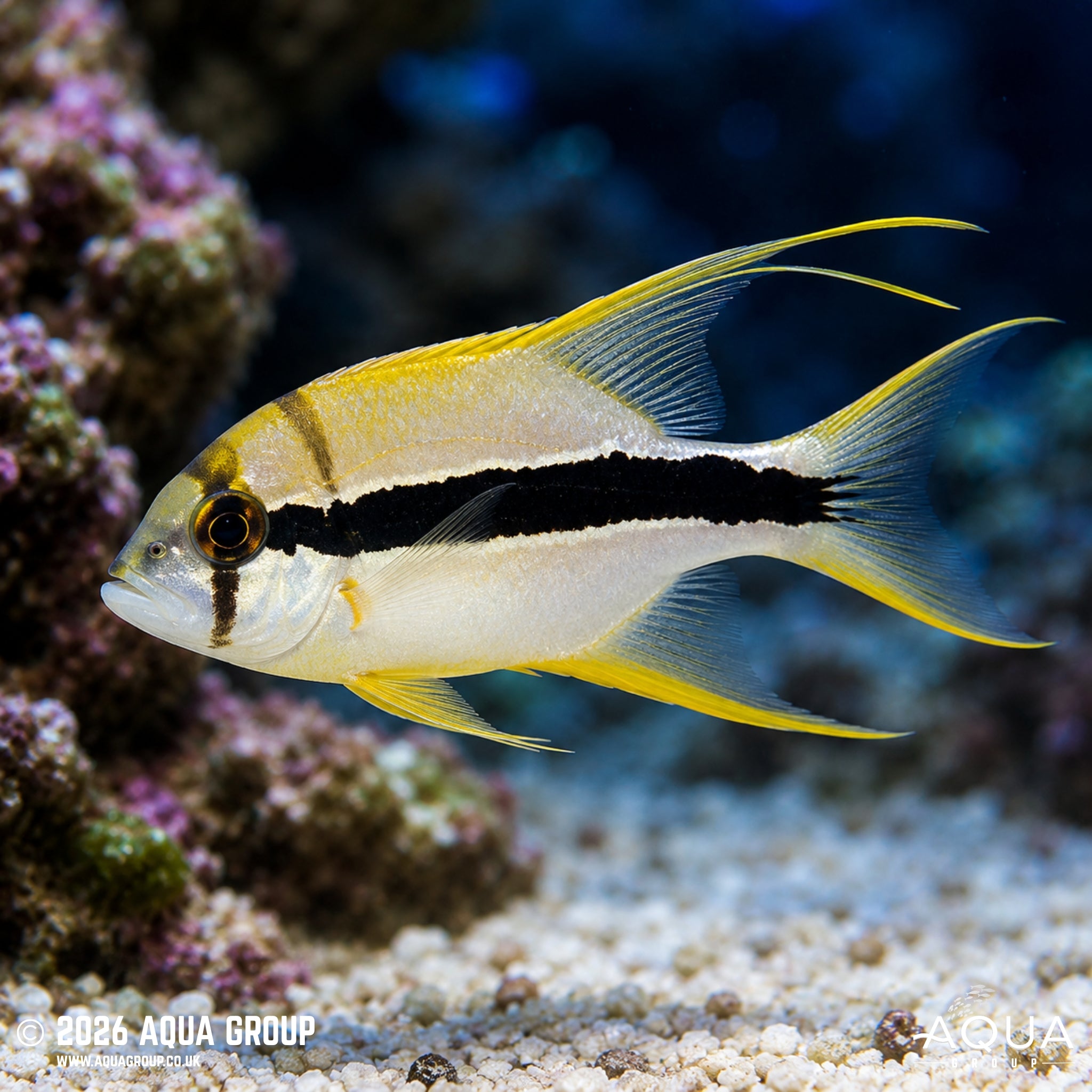
The Longfin Snapper (Symphorichthys spilurus) is an impressive Indo-Pacific marine predator also known as the Sailfin Snapper, Threadfin Snapper or Blue-Lined Seabream. Juveniles display elegant, extended dorsal and anal-fin filaments with contrasting dark body markings, while mature fish develop a deep golden-yellow body decorated with vivid blue lines, orange facial bars and a prominent black mark near the tail. Its dramatic transformation and unusual appearance make it highly desirable, but its rapid growth, substantial adult size and predatory feeding habits restrict it to exceptionally large marine systems.
Common Name:
Longfin Snapper, Sailfin Snapper, Threadfin Snapper, Highfin Snapper, Blue-Lined Seabream, Blue-Lined Sea Perch
Scientific Name (Latin):
Symphorichthys spilurus
Maximum Size:
Up to approximately 60 cm in total length. Juveniles sold for aquariums are often relatively small, but they grow into deep-bodied, powerful adults requiring public-aquarium-scale accommodation.
Water Type:
Marine
Origin / Natural Habitat:
Native to the eastern Indian Ocean and western Pacific, with a range extending from western Australia and parts of Southeast Asia northwards to the Ryukyu Islands, east towards Fiji and Tonga, and south to New Caledonia and the Great Barrier Reef.
Adults are generally encountered singly over sandy areas close to coral reefs, including lagoons, outer-reef slopes and seaward reefs. They forage over and within the substrate for fish, crustaceans and molluscs. Mature fish may gather temporarily in groups at outer reefs to spawn.
Water Parameters:
Temperature: 23–27°C
pH Range: 8.1–8.4
Salinity: 1.020–1.025 SG
Temperament:
Predatory and potentially aggressive. Although established adults may appear relatively composed around similarly sized fish, the Longfin Snapper will consume smaller fish and mobile invertebrates. It may also become territorial or intimidating as it matures, particularly in an aquarium that does not provide sufficient swimming space.
Tank mates should be robust, similarly sized marine fish that cannot fit inside its mouth. Small, slender, timid or slow-feeding species are unsuitable.
Diet:
A carnivore that naturally feeds on fish and sand-dwelling crustaceans and molluscs. In the aquarium, provide a varied diet of chopped prawn, mussel, clam, cockle, squid, krill and pieces of marine fish.
Young specimens should receive appropriately sized meals regularly to support healthy development, while adults should be offered controlled portions to prevent obesity and excessive waste production. Vitamin-enriched foods are beneficial. Avoid routinely using live freshwater feeder fish, which are nutritionally unsuitable and may introduce parasites or disease.
Minimum Tank Size:
A minimum aquarium volume of approximately 2,000 litres is recommended for long-term private care, with a substantially larger system preferable for a fully grown adult or when keeping it with other large marine fish.
The aquarium must have a long, wide footprint with extensive open swimming space. Smaller temporary aquariums are not suitable as permanent accommodation, even when the fish is purchased as a juvenile.
Behaviour & Activity:
Juveniles may initially remain close to caves, overhangs or rock structures, displaying their elongated dorsal and anal fins as they move through the aquarium. As the fish matures, its body becomes deeper, its fin filaments become less exaggerated and its adult yellow-and-blue coloration develops.
Adults are active during daylight hours and typically swim above sandy areas near reef structures. They may search or blow through the substrate while looking for crustaceans and molluscs. The species is generally solitary outside spawning gatherings and should usually be maintained as a single specimen in private aquariums.
When startled, this large and powerful fish may accelerate suddenly. Rockwork must therefore be stable, and sufficient unobstructed swimming space should be maintained to reduce the risk of injury.
Reef Safe:
Not Reef Safe
The Longfin Snapper is unsuitable for a conventional reef aquarium. It will prey upon ornamental shrimps, crabs, snails, small bivalves, worms and smaller reef fish. Large adults may also disturb unsecured corals and rockwork through their swimming, feeding and substrate-searching behaviour.
Although it does not primarily feed on coral tissue, its size, diet and impact on mobile invertebrates make it best suited to an exceptionally large fish-only or fish-only-with-live-rock aquarium.
Special Requirements or Care Notes:
This species is frequently offered as an attractive juvenile without adequate consideration for its adult size. Prospective keepers must have permanent accommodation capable of supporting a fish approaching 60 cm before purchasing it.
Provide powerful biological filtration, efficient protein skimming, strong water movement and high dissolved oxygen levels. Large predatory fish produce considerable quantities of waste, so regular water changes and close monitoring of nitrate and phosphate are essential.
The aquascape should include a large cave or shaded overhang for security, together with broad open areas and a sandy substrate. All rocks and decorative structures must be secured against movement.
Avoid keeping it with ornamental crustaceans, small fish or species likely to nip its extended juvenile fins. Very aggressive fish that may harass it should also be avoided.
The Longfin Snapper may grow rapidly when well fed. Aquarium size, filtration capacity and future compatibility must be reassessed as the fish develops rather than waiting until it visibly outgrows the system.
Suitable for:
Expert only
Availability:
Rare or occasional in trade
All images are a visual representation of the fish you will receive, made to be as accurate as possible. Please note that Mother Nature is a wonderful thing, and variation in patterns and colours will occur — that is part of the unique beauty of these animals.
Order and get 125 reward points
Earn points by signing up for our rewards program