

Description
Strawberry Conch (Conomurex luhuanus)
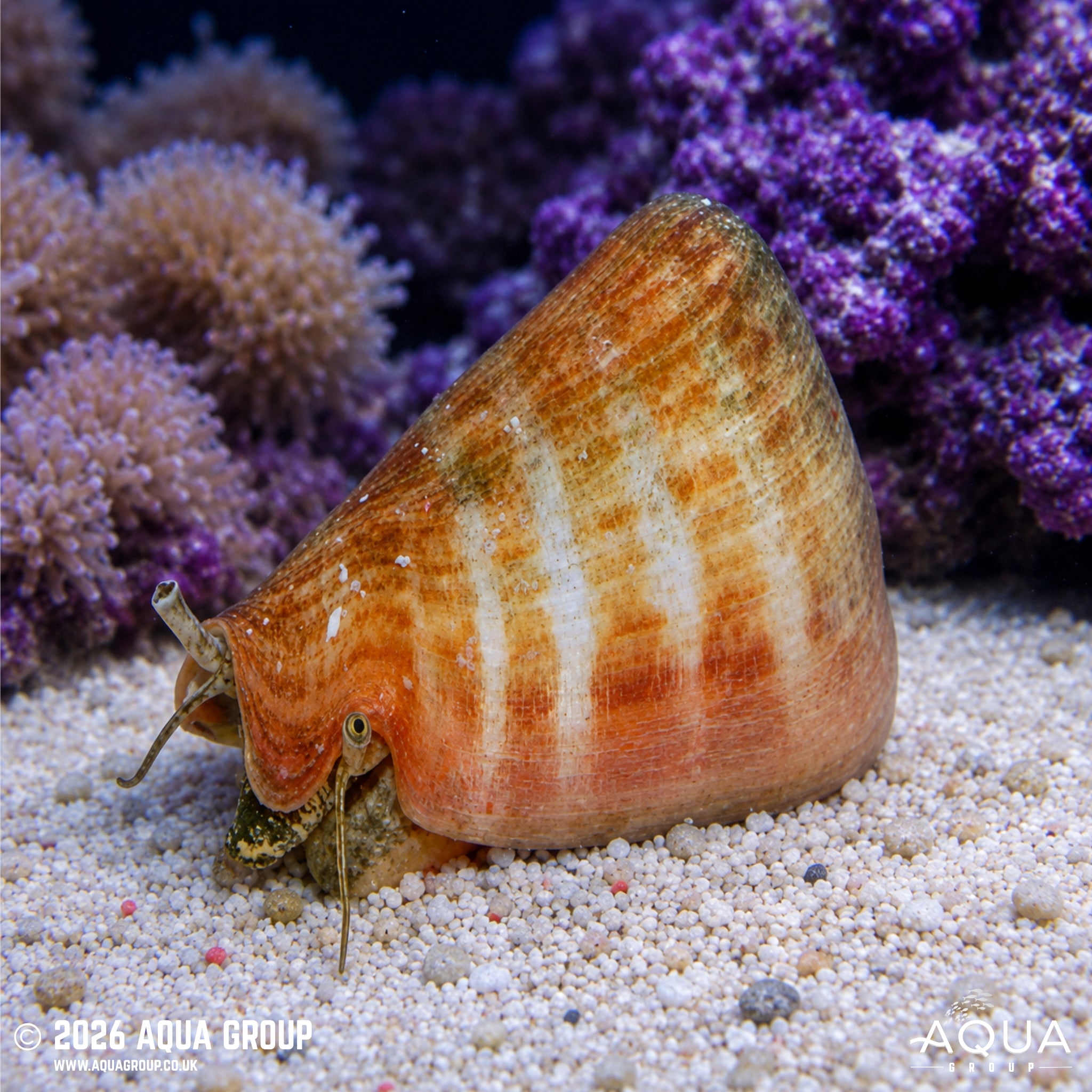
The Strawberry Conch (Conomurex luhuanus) is an attractive marine snail recognised by its patterned cream, brown and reddish shell and characteristic pink to deep red aperture. Also known as the Tiger Conch or Blood-Mouth Conch, it originates from sandy Indo-Pacific reef habitats, where it grazes algae, biofilm and organic material from the substrate. Peaceful, reef safe and highly active for a marine snail, it is a useful addition to a mature aquarium with a broad area of established live sand.
Common Name:
Strawberry Conch, Tiger Conch, Blood-Mouth Conch, Luhuanus Conch
Scientific Name (Latin):
Conomurex luhuanus
Formerly classified as Strombus luhuanus.
Maximum Size:
Up to approximately 8 cm in shell length, although many specimens remain closer to 5–7 cm.
Water Type:
Marine
Origin / Natural Habitat:
Widely distributed throughout the tropical Indo-Pacific, including parts of the Indian Ocean, Southeast Asia, southern Japan, northern Australia and numerous western Pacific island groups.
It inhabits shallow sandy lagoons, reef flats and sheltered areas among coral and rubble. Individuals spend much of their time moving across or partially beneath the substrate while searching for algae, biofilm and edible organic material.
Water Parameters:
Temperature: 23–27°C
pH Range: 8.1–8.4
Salinity: 1.023–1.026 SG
Temperament:
Peaceful and non-aggressive. The Strawberry Conch does not attack fish, corals or suitable ornamental invertebrates.
It should not be kept with triggerfish, larger puffers, predatory wrasses, tuskfish or other animals likely to crush or extract the snail from its shell.
Diet:
Primarily an algal grazer and detritivore that feeds on diatoms, microalgae, biofilm and fine organic material growing across the surface of mature sand.
An established aquarium with a broad area of live sand is essential. In very clean systems, supplement natural grazing with small pieces of dried marine algae, sinking herbivore foods or algae-based gel food placed directly on the substrate.
The Strawberry Conch should not be expected to survive on fish waste or uneaten food alone. A visibly clean sand bed may provide insufficient nutrition without supplementary feeding.
Minimum Tank Size:
A minimum aquarium volume of approximately 75 litres is recommended for a single animal, provided the aquarium is mature and contains a generous area of established sand.
Larger aquariums are preferable for multiple conchs, as each animal requires sufficient grazing territory and access to natural food.
Behaviour & Activity:
The Strawberry Conch spends most of its time travelling across the sand using a strong, pointed operculum and muscular foot. Its movement can appear as a series of short hops or sudden pushes rather than the smooth gliding motion of many other marine snails.
It may partially bury itself beneath the substrate when resting or disturbed, leaving only part of the shell or its eye stalks visible.
The long eye stalks can move independently and are frequently extended while the snail grazes. Established animals are often active throughout the day but may become particularly mobile during lower-light periods.
Reef Safe:
Reef Safe
The Strawberry Conch is generally compatible with corals, clams and peaceful ornamental invertebrates. It does not normally consume healthy coral tissue and can help clean exposed sandy areas by grazing algae and organic films.
Its shell may occasionally brush against low-positioned coral pieces while it moves across the substrate. Loose coral frags should therefore be secured before introduction.
Special Requirements or Care Notes:
Introduce only to a mature, fully cycled marine aquarium containing a broad area of fine to medium live sand. Newly established or sterile systems may not provide enough natural food.
Avoid sharp, coarse coral gravel that may restrict movement or damage the soft foot. Open sand should be available without dense rockwork covering the entire aquarium base.
Marine snails are sensitive to sudden changes in temperature, pH and salinity. Slow acclimatisation is strongly recommended, and the animal should remain submerged whenever practical during transfer.
Like other marine invertebrates, the Strawberry Conch is highly sensitive to copper-based medications. Never expose it to copper treatments or water from a medicated aquarium.
Ensure that the snail receives enough food. Prolonged inactivity, failure to extend the foot or eye stalks, loss of body mass within the shell or repeated inability to remain upright may indicate starvation, poor water quality or severe stress.
If the conch becomes overturned, it can usually right itself using its operculum. However, animals trapped between rocks or against the aquarium glass may require careful repositioning.
Do not pull the animal from its shell or lift it by exposed soft tissue. Handle the shell gently and only when necessary.
Suitable for:
Beginner to intermediate fishkeepers
Availability:
Occasional in trade
All images are a visual representation of the animal you will receive, made to be as accurate as possible. Please note that Mother Nature is a wonderful thing, and variation in patterns and colours will occur — that is part of the unique beauty of these animals.
Order and get 9 reward points
Earn points by signing up for our rewards program