

Description
Nassarius Snail (Nassarius sp.)
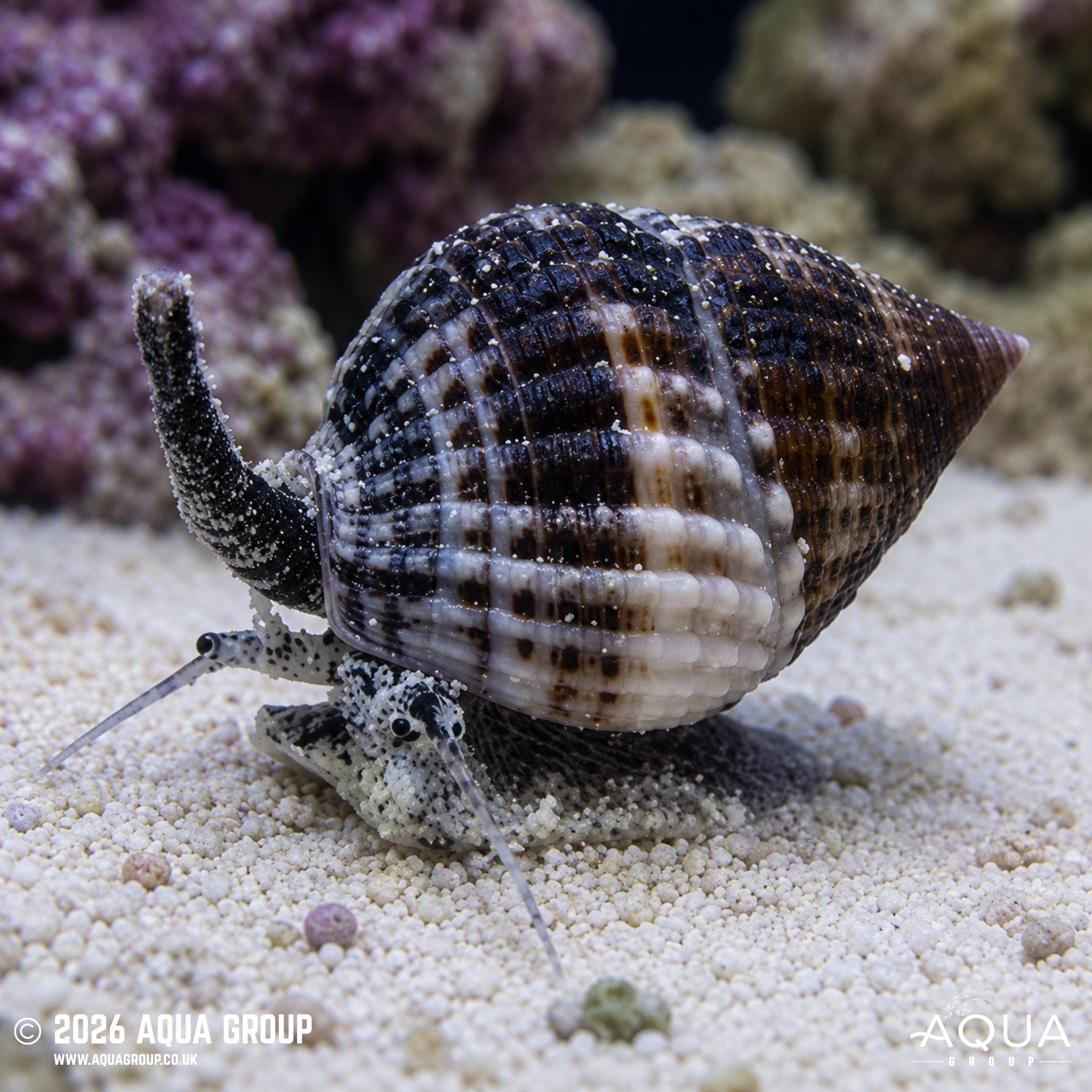
The Nassarius Snail (Nassarius sp.) is a small marine scavenging snail valued for its unusual burrowing behaviour and ability to locate leftover meaty foods within the aquarium substrate. Often called the Nassarius Mud Snail, Nassa Snail or Scavenger Snail, it spends much of its time hidden beneath the sand with only its long siphon visible. When food enters the aquarium, it quickly emerges to search for uneaten food and decaying organic matter, making it a useful member of a carefully balanced marine clean-up crew.
Common Name:
Nassarius Snail, Nassarius Mud Snail, Nassa Snail, Scavenger Snail, Basket Shell
Scientific Name (Latin):
Nassarius sp.
Maximum Size:
Common aquarium species usually reach approximately 1–4 cm in shell length. Exact adult size varies because several different Nassarius species are sold under the same trade name.
Water Type:
Marine
Origin / Natural Habitat:
Species within the genus Nassarius occur across tropical, subtropical and temperate marine regions worldwide.
They are generally associated with sandy, muddy or silty seabeds in coastal waters, lagoons, estuaries and reef margins. Most spend considerable periods buried beneath soft substrate, emerging when they detect carrion or other edible organic material.
Water Parameters:
Temperature: 23–27°C
pH Range: 8.1–8.4
Salinity: 1.023–1.026 SG
Temperament:
Peaceful and non-aggressive towards healthy fish, corals and suitable aquarium invertebrates.
Nassarius Snails are active scavengers and may gather around dead, dying or severely weakened animals. This natural behaviour can sometimes be mistaken for predation, although healthy aquarium livestock is not normally targeted by the commonly traded species.
Diet:
Primarily carnivorous scavengers that feed on carrion, leftover meaty foods and other animal-based organic material found within or across the substrate.
Offer occasional small pieces of mysis shrimp, chopped prawn, mussel, clam or sinking carnivore food when natural leftovers are limited. Place supplementary food directly on the sand where the snails can locate it.
Nassarius Snails are not effective algae grazers and should not be purchased specifically for controlling algae on rockwork or aquarium glass.
Minimum Tank Size:
A minimum aquarium volume of approximately 40 litres is recommended, provided the system is mature, stable and contains an area of suitable soft substrate.
The number of snails should be matched to the available food supply. Overstocking scavenging snails in an excessively clean aquarium can lead to starvation.
Behaviour & Activity:
Nassarius Snails spend much of their time buried beneath the sand, often leaving only their long siphon exposed above the surface.
The siphon allows the snail to detect dissolved food scents within the water. When meaty food enters the aquarium, it may emerge rapidly from the substrate and travel towards the source.
Its movement helps gently disturb the upper surface of the sand, reducing settled debris and improving surface-level circulation. However, it does not deeply turn or fully clean the sand bed.
The snail may also climb aquarium glass and rockwork, particularly during feeding or after changes in water conditions.
Reef Safe:
Reef Safe
Commonly traded Nassarius Snails are generally compatible with corals, clams and healthy ornamental invertebrates. They do not normally consume living coral tissue and spend most of their time scavenging within the substrate.
They may feed on dead or dying snails, worms, crustaceans and other weakened animals. Species-level identification is important because behaviour and maximum size can vary across this large genus.
Special Requirements or Care Notes:
Provide a bed of fine to medium marine sand deep enough for the snail to bury comfortably. Sharp, coarse coral gravel may restrict normal movement or damage the soft foot and siphon.
Introduce only to a fully cycled marine aquarium with stable temperature, salinity and pH. Slow acclimatisation is strongly recommended because marine snails can be sensitive to sudden changes in water chemistry.
Like other marine invertebrates, Nassarius Snails are highly sensitive to copper-based medications. Never expose them to copper treatments or add water from a medicated holding system to the display aquarium.
Do not rely on the snail to survive entirely on waste. In aquariums with minimal feeding or very low fish populations, provide occasional targeted supplementary food.
Avoid keeping with triggerfish, larger puffers, predatory wrasses, tuskfish or other animals likely to crush the shell or extract the snail.
Check apparently empty shells carefully. A snail may remain deeply withdrawn or inactive for a period, particularly following acclimatisation or changes in aquarium conditions.
Because “Nassarius Snail” is a general trade name, shell colour, pattern, adult size and behaviour may vary according to the exact species supplied.
Suitable for:
Beginner fishkeepers
Availability:
Common in trade
All images are a visual representation of the animal you will receive, made to be as accurate as possible. Please note that Mother Nature is a wonderful thing, and variation in patterns and colours will occur — that is part of the unique beauty of these animals.
Order and get 3 reward points
Earn points by signing up for our rewards program