

Description
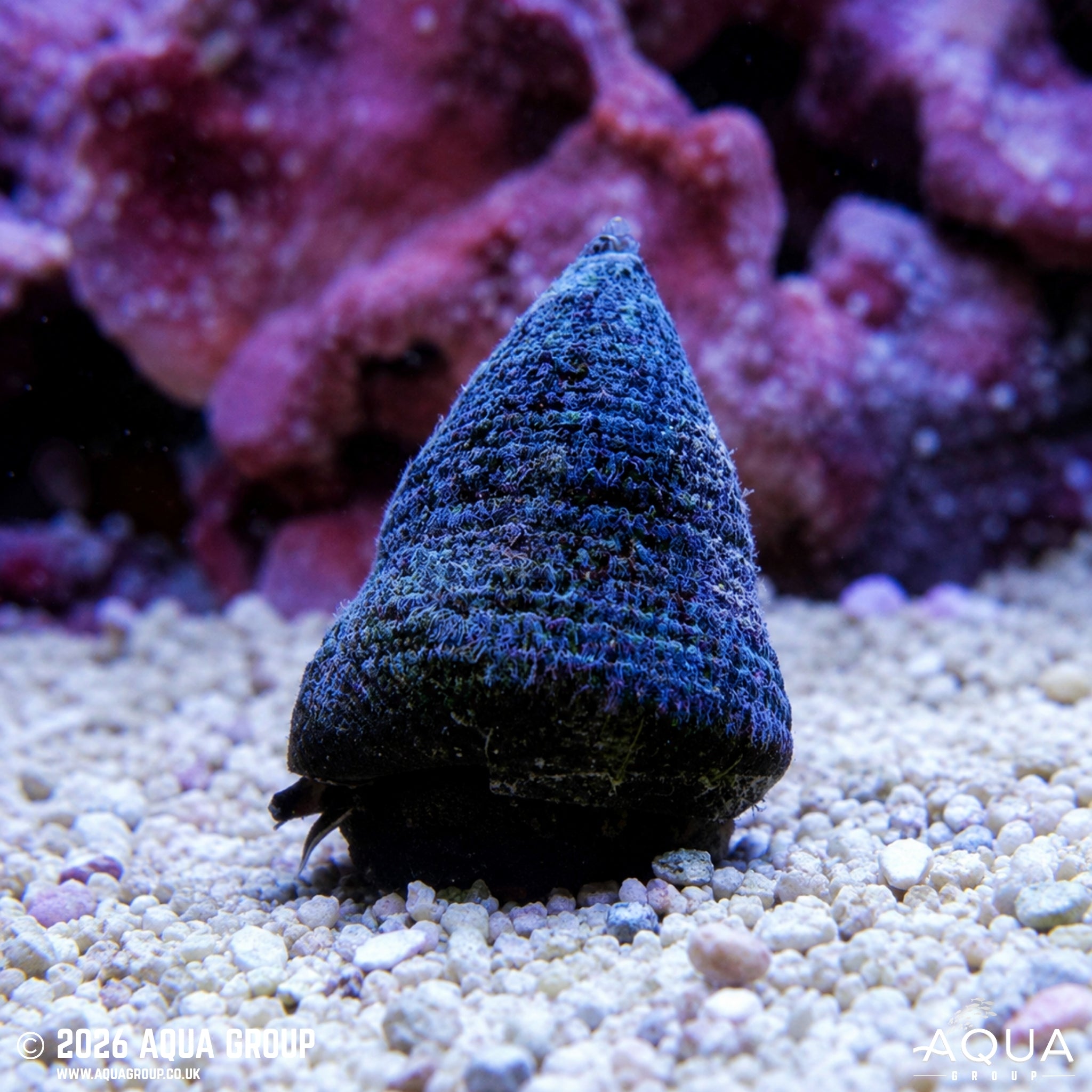
Banded Trochus Snail (Trochus histrio)
The Banded Trochus Snail is a compact and highly useful marine grazing snail recognised for its pyramid-shaped shell with contrasting maroon to reddish bands. Peaceful, reef safe and well suited to established marine aquariums, it spends much of its time grazing film algae, diatoms and other nuisance growth from live rock and aquarium glass. Unlike some top-shell snails, it is also relatively capable of righting itself if overturned, making it a practical addition to a marine clean-up crew.
Common Name:
Banded Trochus Snail, Strawberry Trochus Snail
Scientific Name (Latin):
Trochus histrio
Maximum Size:
Approximately 2–4 cm
Water Type:
Marine
Origin / Natural Habitat:
The Banded Trochus Snail occurs in tropical Indo-West Pacific marine environments and is associated with shallow intertidal and subtidal reef habitats.
It is particularly common on reef flats, rocky areas and hard substrates where turf algae, diatoms, cyanobacteria and other natural grazing material are abundant.
Water Parameters:
Temperature: 24–26°C
pH Range: 8.1–8.4
Salinity: SG 1.024–1.026
Nitrate: Low and stable
Copper: Must be avoided
Temperament:
Peaceful
Banded Trochus Snails are peaceful marine grazers and are generally compatible with suitable reef fish, corals and other clean-up crew inhabitants.
They do not display territorial or predatory behaviour and can be maintained singly or in groups where sufficient natural food is available.
Diet:
Algae Grazer / Herbivore
The Banded Trochus Snail feeds primarily on film algae, diatoms, turf algae and biofilm growing across hard aquarium surfaces.
In mature systems, established live rock provides an important natural food source. If algae becomes limited, supplementary foods such as dried nori, algae wafers and other suitable marine herbivore preparations can be offered.
Minimum Tank Size:
Approximately 60 litres
A mature aquarium with established rockwork and sufficient grazing surfaces is more important than aquarium volume alone.
Behaviour & Activity:
The Banded Trochus Snail spends much of its time steadily grazing across live rock, aquarium glass and other hard surfaces.
It can be active during both daylight and lower-light periods depending on food availability and aquarium conditions.
One useful characteristic of Trochus-type snails is their comparatively good ability to right themselves after becoming overturned, although any individual that appears trapped should still be assisted.
Reef Safe:
Reef Safe
The Banded Trochus Snail is generally considered reef safe and does not normally damage healthy coral tissue.
Its algae-grazing behaviour makes it a particularly useful member of an established reef clean-up crew.
Loose coral frags should still be secured, as grazing snails can occasionally dislodge lightweight pieces while moving across rockwork.
Special Requirements or Care Notes:
Provide a mature marine aquarium containing established live rock and natural algae growth.
Stable salinity and water chemistry are important, and careful acclimation is recommended when introducing marine snails.
Copper-based medications must never be used in an aquarium containing this species.
Monitor natural food availability once nuisance algae has been reduced. Supplementary algae-based foods may be required in particularly clean aquariums.
Although this species is usually capable of righting itself, overturned individuals should still be checked and assisted if necessary.
Avoid housing Banded Trochus Snails with known mollusc predators such as triggerfish, puffers and larger predatory wrasses.
Suitable for:
Beginner
Availability:
Regularly available
All images are a visual representation of the invert you will receive, made to be as accurate as possible. Please note that Mother Nature is a wonderful thing, and variation in patterns and colours will occur — that is part of the unique beauty of these animals.
Order and get 3 reward points
Earn points by signing up for our rewards program