

Description
Pink Scooter Blenny (Synchiropus marmoratus)
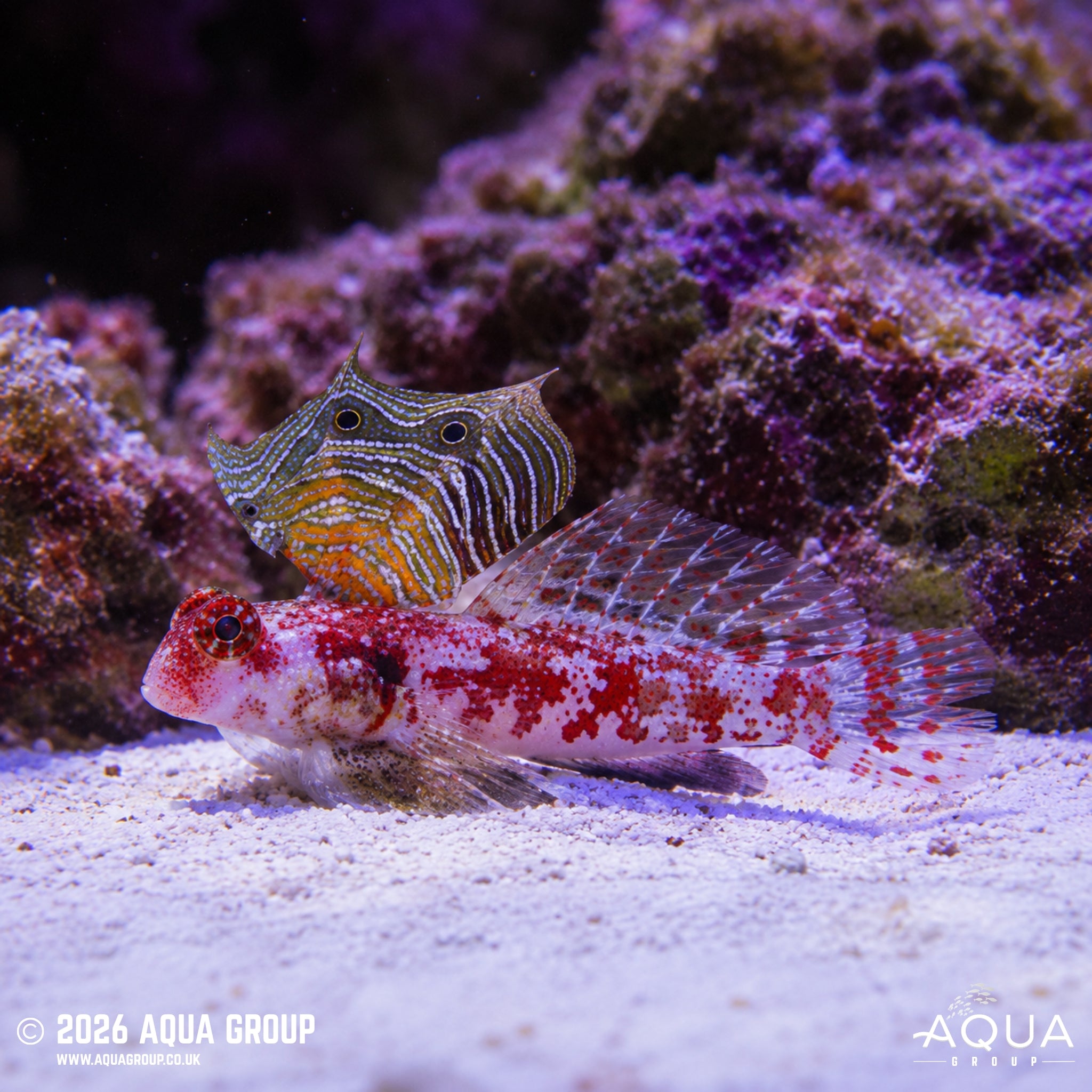
The Pink Scooter Blenny (Synchiropus marmoratus) is a distinctive bottom-dwelling marine dragonet recognised by its marbled grey body, broad head and attractive pink to reddish fins. More accurately known as the Marbled Dragonet, it originates from shallow western Indian Ocean habitats where it moves across soft substrates, algae and seagrass in search of tiny crustaceans. Its unusual scooting movement and intricate pattern make it a fascinating reef aquarium fish, but its specialised feeding requirements mean it should only be introduced to a mature, microfauna-rich system.
Common Name:
Pink Scooter Blenny, Marbled Dragonet, Marbled Scooter Dragonet, Pink Scooter Dragonet
Scientific Name (Latin):
Synchiropus marmoratus
Maximum Size:
Up to approximately 13 cm in total length for males, with females generally reaching around 11 cm.
Water Type:
Marine
Origin / Natural Habitat:
Native to the western Indian Ocean, with records extending southwards to Delagoa Bay in Mozambique.
It inhabits shallow coastal environments at depths of approximately 2–15 metres, particularly soft-bottom areas containing algae or seagrass. The fish remains close to the substrate, where it searches continuously for copepods and other tiny prey.
Water Parameters:
Temperature: 24–27°C
pH Range: 8.1–8.4
Salinity: 1.023–1.026 SG
Temperament:
Peaceful and generally non-aggressive towards unrelated fish. It is best kept with calm tank mates that will not continually outcompete it for food.
Males may become territorial towards other male dragonets, especially in smaller aquariums. A single specimen is the safest choice unless the aquarium is large, mature and capable of supporting more than one specialised microfauna feeder.
Diet:
A specialised carnivore that naturally feeds on copepods, amphipods, tiny crustaceans, worms and other small organisms found across the substrate and rockwork.
A mature aquarium with a strong natural copepod population is essential. Some individuals may learn to accept frozen copepods, enriched brine shrimp, calanus, finely chopped mysis shrimp or small sinking carnivore foods, but prepared foods should not be assumed to replace continuous natural grazing.
Feed small portions several times daily and position food close to the substrate where the fish naturally searches. Target feeding may be required in community aquariums.
Minimum Tank Size:
A minimum aquarium volume of approximately 200 litres is recommended for a single specimen, provided the aquarium is mature and contains abundant established live rock, substrate and natural microfauna.
A larger system is strongly preferred where other pod-feeding fish are present, as competition can quickly reduce the available food supply.
Behaviour & Activity:
A bottom-oriented fish that spends most of the day moving in short hops or “scoots” across sand, rock and algae-covered surfaces.
It uses its enlarged pelvic fins to rest on the substrate and may pause frequently while scanning for tiny prey. Rather than swimming continuously in open water, it usually remains close to the aquarium floor and lower rockwork.
The fish may bury itself partially, settle beneath overhangs or retreat into sheltered areas at night. Males can display an enlarged first dorsal fin during territorial or courtship behaviour.
Reef Safe:
Reef Safe
The Pink Scooter Blenny is generally compatible with corals, clams and established ornamental invertebrates. It does not normally damage coral tissue or attack shrimps, crabs and snails.
It will consume naturally occurring copepods, amphipods and other tiny reef microfauna, so it may compete directly with mandarinfish, pipefish and other specialised pod-feeding species.
Special Requirements or Care Notes:
Introduce only to a mature, fully cycled aquarium with an established population of copepods and other natural microfauna. A newly set-up or sterile aquarium is unsuitable.
A refugium or separate copepod-producing area can help maintain a continuous food supply. Regular additions of live copepods may also be necessary, particularly in smaller aquariums or systems containing competing grazers.
Before purchase, confirm that the fish has a rounded abdomen and is actively feeding. Avoid specimens with a sunken belly, pinched body or weak movement, as these are common signs of prolonged starvation.
Do not assume that the fish will accept frozen or dry foods simply because it investigates them. Observe the animal swallowing food and maintaining body weight over time.
Keep with peaceful tank mates and avoid highly aggressive or fast-feeding species. Large wrasses, hawkfish, lionfish and other predators may also consume or harass it.
Provide mature live rock, a fine sand substrate and sheltered areas with gentle to moderate flow. Strong current across every part of the aquarium can make feeding difficult for this substrate-oriented species.
A secure aquarium cover is recommended. Although it spends most of its time near the bottom, a startled dragonet may jump.
Suitable for:
Experienced fishkeepers
Availability:
Rare or occasional in trade
All images are a visual representation of the fish you will receive, made to be as accurate as possible. Please note that Mother Nature is a wonderful thing, and variation in patterns and colours will occur — that is part of the unique beauty of these animals.
Order and get 25 reward points
Earn points by signing up for our rewards program