

Description
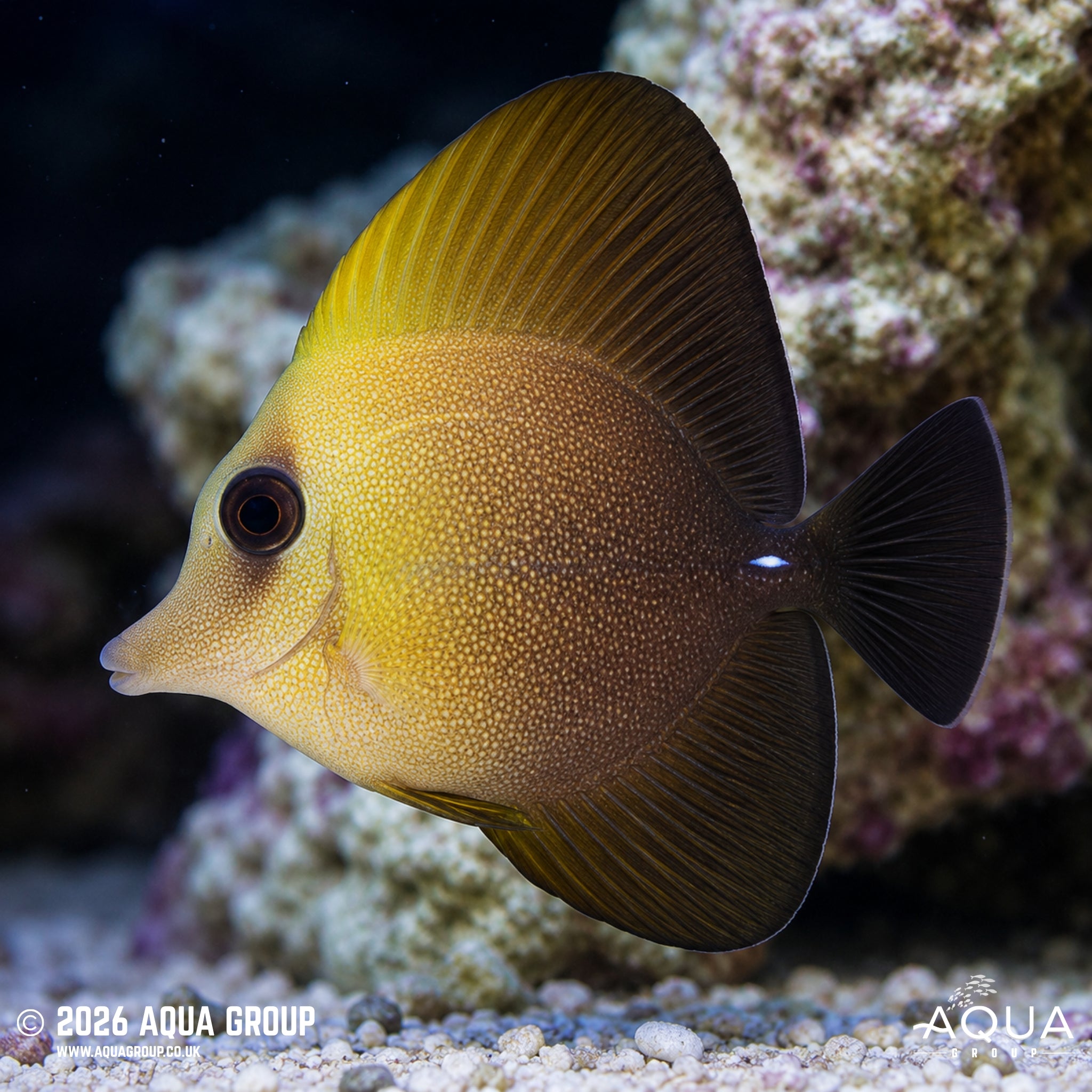
Brown Sailfin Tang (Zebrasoma scopas)
The Brown Sailfin Tang (Zebrasoma scopas) is a hardy and attractive Indo-Pacific surgeonfish recognised by its tall, disc-shaped body, elongated snout and finely patterned brown to olive coloration. Also known as the Scopas Tang, Brown Tang or Twotone Tang, it inhabits coral-rich lagoons and outer reefs where it spends much of the day grazing filamentous algae. Its active browsing behaviour can make it a useful addition to a spacious, mature reef aquarium, although adults may become territorial towards other tangs and similarly shaped fish.
Common Name:
Brown Sailfin Tang, Scopas Tang, Brown Tang, Twotone Tang, Brown Sailfin Surgeonfish, Brushtail Tang
Scientific Name (Latin):
Zebrasoma scopas
Maximum Size:
Most aquarium specimens reach approximately 15–20 cm, although unusually large wild individuals have been recorded at up to 40 cm standard length. Aquarium accommodation should be planned conservatively around a substantial, highly active adult.
Water Type:
Marine
Origin / Natural Habitat:
Widely distributed throughout the tropical Indo-Pacific, including East Africa, the Indian Ocean, Southeast Asia, southern Japan, northern Australia and numerous western and central Pacific islands.
It inhabits coral-rich lagoons, reef flats, rocky reefs and seaward reef slopes. Individuals are usually encountered alone or in small groups, grazing over rock and coral surfaces where short filamentous algae are abundant.
Water Parameters:
Temperature: 24–28°C
pH Range: 8.1–8.4
Salinity: 1.020–1.025 SG
Temperament:
Moderately aggressive and territorial, especially towards other members of the genus Zebrasoma, similarly shaped tangs and fish competing for the same grazing areas.
It is generally tolerant of unrelated, robust marine fish but may intimidate timid or slow-feeding tank mates once established. For most home aquariums, it is safest to keep a single Brown Sailfin Tang unless the system is exceptionally large and carefully planned.
Diet:
Primarily herbivorous, naturally grazing short filamentous algae and associated organic material from reef surfaces.
In the aquarium, offer frequent portions of dried marine algae, nori, spirulina-based flakes, quality herbivore pellets and frozen foods containing marine algae. Small amounts of mysis shrimp, enriched brine shrimp and other marine foods may also be accepted.
Feed several small meals throughout the day and provide mature live rock for continuous grazing. A varied, vitamin-enriched diet is important for maintaining healthy weight, strong coloration and resistance to disease.
Minimum Tank Size:
A minimum aquarium volume of approximately 500 litres is recommended for long-term care, with a tank length of at least 150–180 cm preferred. Larger accommodation is advisable when keeping the fish alongside other tangs or similarly active species.
Behaviour & Activity:
An active daytime swimmer that spends much of its time cruising around the aquarium and grazing algae from rockwork.
The Brown Sailfin Tang uses its elongated snout to reach algae growing in crevices and around coral structures. It normally retreats into a cave or sheltered area at night and may appear noticeably paler or darker while resting or stressed.
Adults may establish a preferred feeding territory and chase newly introduced tangs or similarly shaped fish. Open swimming space, multiple feeding stations and visual barriers within the rockwork can help reduce territorial pressure.
Like all surgeonfish, it carries a sharp defensive spine on each side of the caudal peduncle near the base of the tail.
Reef Safe:
Reef Safe
The Brown Sailfin Tang is generally compatible with corals, clams and established ornamental invertebrates. Its continuous grazing can help manage short algal films on mature live rock.
Healthy coral tissue is not normally targeted. However, an underfed individual may graze persistently around coral bases or investigate surfaces containing algae, so plentiful vegetable-based food should always be available.
Special Requirements or Care Notes:
Introduce only to a mature, fully cycled marine aquarium containing substantial established rockwork and natural grazing surfaces.
Provide strong water movement, excellent oxygenation, efficient filtration and consistently stable water chemistry. Active surgeonfish have high oxygen requirements and are poorly suited to cramped or overcrowded aquariums.
This species may become increasingly territorial as it matures. Avoid combining it with other Zebrasoma tangs in insufficient space. When mixing surgeonfish in a very large aquarium, provide several feeding areas and introduce the most territorial specimen last where practical.
Brown Sailfin Tangs can be susceptible to marine white spot, velvet and other external parasites, particularly after transport or during periods of stress. A carefully managed quarantine period is strongly recommended.
Choose a specimen with a rounded abdomen, clear eyes, intact fins and an active grazing response. Avoid fish that appear pinched behind the head or severely underweight.
Never handle the fish directly. Its sharp caudal spines can cause injury and may become entangled in coarse netting, so a rigid submerged container is preferable when moving an established specimen.
Suitable for:
Intermediate fishkeepers
Availability:
Common in trade
All images are a visual representation of the fish you will receive, made to be as accurate as possible. Please note that Mother Nature is a wonderful thing, and variation in patterns and colours will occur — that is part of the unique beauty of these animals.
Order and get 40 reward points
Earn points by signing up for our rewards program