

Description
Exquisitus Wrasse (Cirrhilabrus exquisitus)
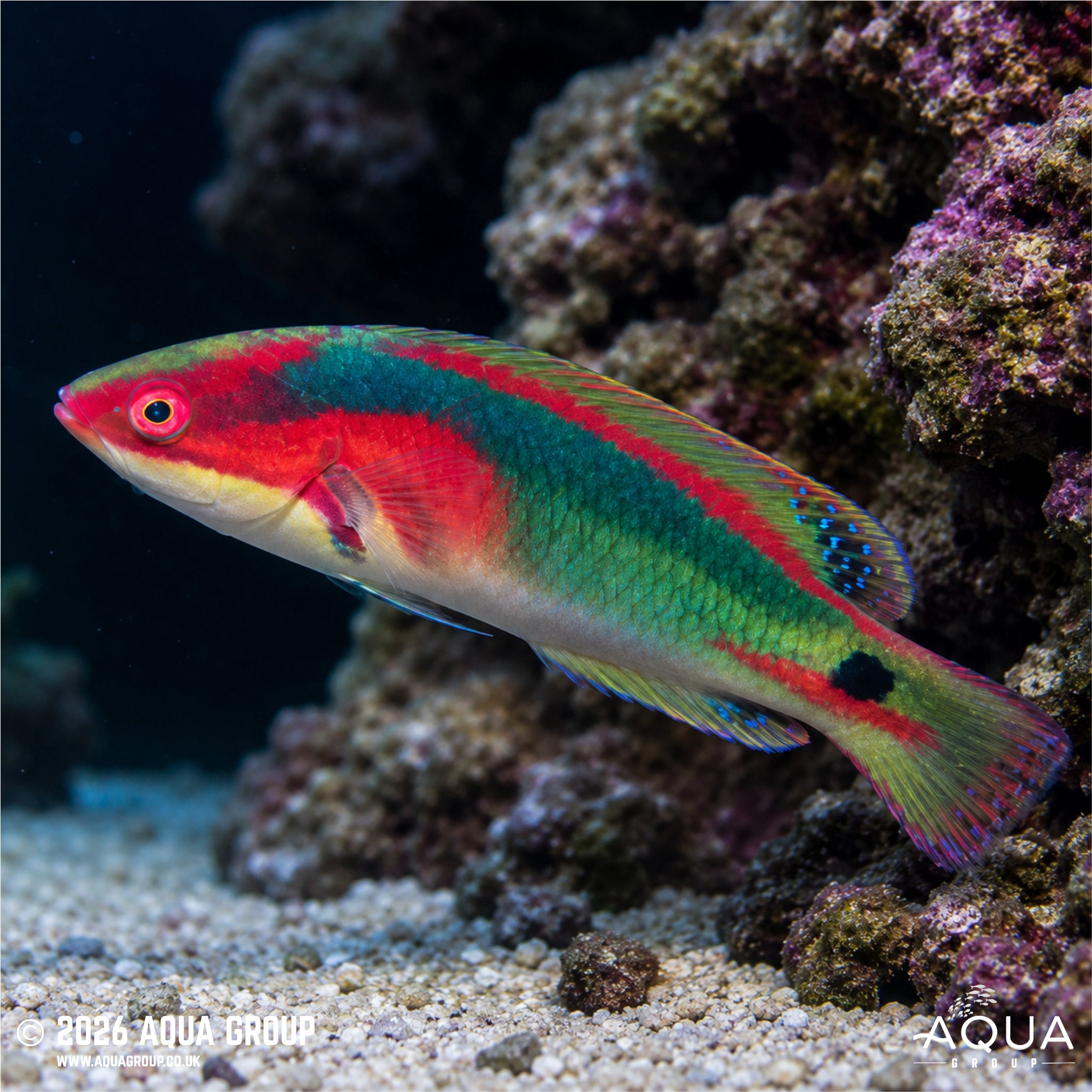
The Exquisitus Wrasse (Cirrhilabrus exquisitus) is a colourful and highly variable Indo-Pacific reef fish admired for its vivid green, blue, red, orange and purple markings. Mature males are particularly striking, while females and juveniles usually display softer reddish or orange coloration. Peaceful, active and generally reef safe, this zooplankton-feeding wrasse is an excellent choice for a mature marine aquarium with compatible tank mates, open swimming space and a tightly secured cover.
Common Name:
Exquisite Fairy Wrasse, Exquisite Wrasse
Scientific Name (Latin):
Cirrhilabrus exquisitus
Maximum Size:
Up to approximately 12 cm in total length. Most aquarium specimens remain slightly smaller, although mature males require sufficient open swimming space due to their active nature.
Water Type:
Marine
Origin / Natural Habitat:
Widely distributed throughout the tropical Indo-Pacific, from East Africa and the western Indian Ocean eastwards through Southeast Asia, northern Australia and numerous western Pacific islands.
It inhabits coral-rich lagoons, sheltered reef areas, reef channels and outer reef slopes. Individuals are commonly found in loose groups above coral, rubble and rocky habitats, where they feed on small planktonic organisms carried through the water column.
Water Parameters:
Temperature: 23–27°C
pH Range: 8.1–8.4
Salinity: 1.020–1.025 SG
Temperament:
Generally peaceful and sociable. The Exquisitus Wrasse is usually compatible with calm community reef fish, but mature males may become territorial towards other fairy wrasses, especially similarly coloured or closely related species.
It may be intimidated by large, aggressive or highly territorial tank mates. A single specimen can be maintained successfully, while keeping several fairy wrasses requires a larger aquarium, careful species selection and close observation.
Diet:
A carnivorous zooplankton feeder that naturally captures copepods, small crustaceans and other drifting organisms from the water column.
In the aquarium, offer a varied diet of mysis shrimp, enriched brine shrimp, copepods, calanus, finely chopped krill and high-quality marine flakes or small pellets. Feed at least twice daily, with several smaller meals particularly beneficial for newly introduced or active specimens.
Vitamin-enriched and naturally pigmented marine foods can help maintain healthy body condition and strong coloration.
Minimum Tank Size:
A minimum aquarium volume of approximately 250 litres is recommended for a single specimen, with a tank length of at least 120 cm preferred. Larger accommodation is advisable when keeping multiple fairy wrasses or other active open-water fish.
Behaviour & Activity:
An active daytime swimmer that spends most of its time in the middle and upper levels of the aquarium, searching the water column for food. Once acclimatised, it is normally confident and highly visible.
Mature males may perform brief display swims in which their colours become more intense and their fins are fully extended. These displays may occur during courtship or when interacting with other wrasses.
At night, the fish normally retreats into a narrow cave or crevice within the rockwork. Unlike many sand wrasses, it does not bury itself and therefore does not require a deep sand bed.
Reef Safe:
Reef Safe
The Exquisitus Wrasse is generally compatible with corals, clams and established ornamental invertebrates. It does not normally nip healthy coral tissue and is not considered a threat to shrimps, crabs or snails.
Very small planktonic crustaceans may naturally be consumed, but this is not usually significant in a normal established reef aquarium.
Special Requirements or Care Notes:
A tightly fitted aquarium cover is essential. Fairy wrasses are exceptionally capable jumpers and may escape through surprisingly small gaps around cables, pipes, overflow boxes and feeding openings.
Provide extensive open swimming space alongside mature live rock containing caves, shaded retreats and narrow sleeping crevices. Newly introduced specimens may hide for several days while acclimatising.
The species is a sequential hermaphrodite. Females may transition into males when social conditions permit, and appearance can change considerably as the fish matures. Colour and pattern also vary between geographical populations, meaning specimens from different collection areas may look noticeably different.
Inspect prospective fish carefully for mouth, jaw or snout damage, as injuries may occur during collection and transport. Choose an alert specimen that swims normally and accepts food.
Avoid highly aggressive tank mates and persistent fin nippers. When mixing fairy wrasses, select species with clearly different colours and patterns, introduce the most assertive male last where practical and monitor closely for repeated chasing.
A carefully managed quarantine period is recommended before introduction to the display aquarium. Maintain excellent oxygenation and stable water quality throughout acclimatisation.
Suitable for:
Beginner to intermediate fishkeepers
Availability:
Common in trade
All images are a visual representation of the fish you will receive, made to be as accurate as possible. Please note that Mother Nature is a wonderful thing, and variation in patterns and colours will occur — that is part of the unique beauty of these animals.
Order and get 45 reward points
Earn points by signing up for our rewards program