

Description
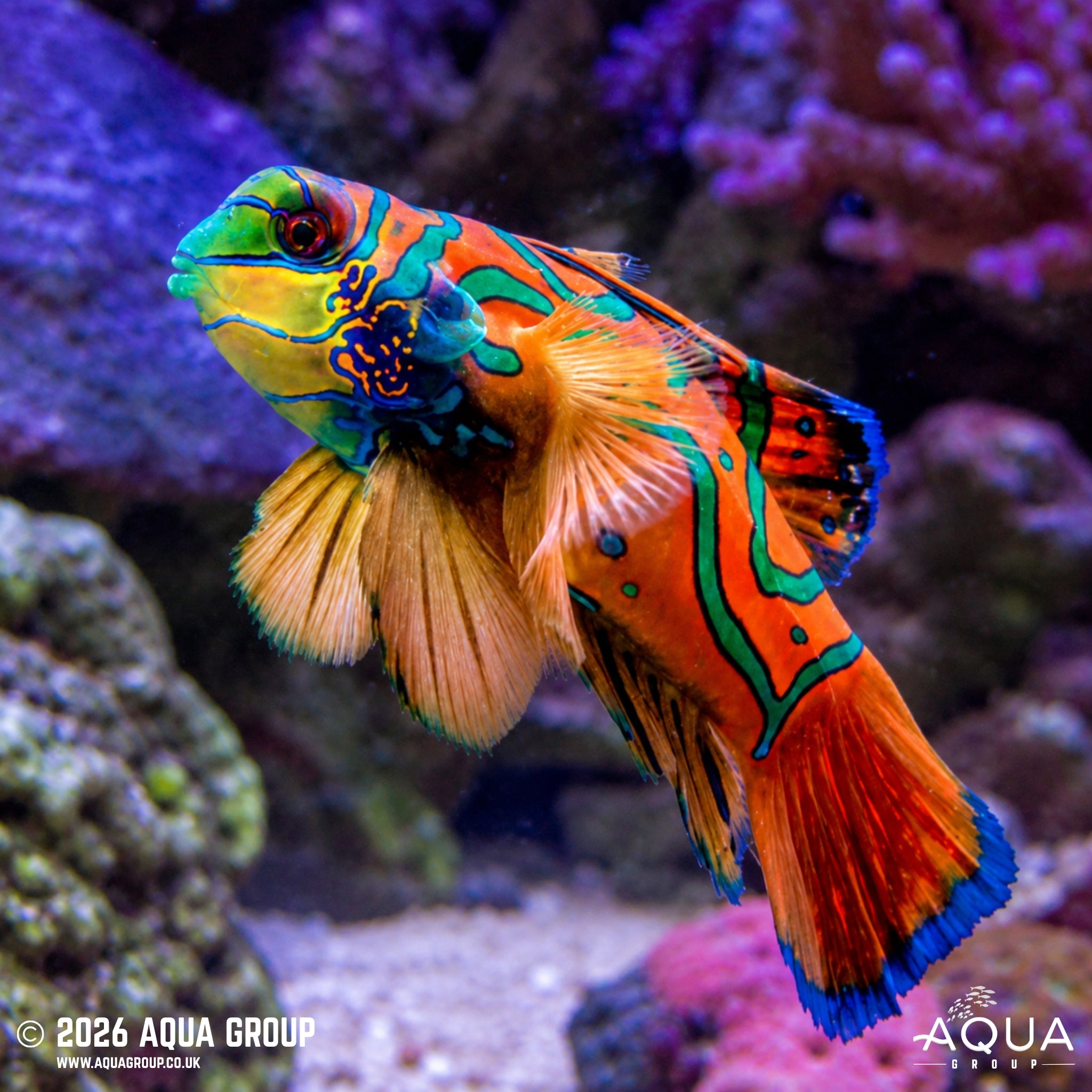
Red Mandarin (Pterosynchiropus splendidus)
The Red Mandarin, Pterosynchiropus splendidus, is a spectacular reef fish admired for its rich red-orange body colour, intricate turquoise-blue markings and elaborate flowing fins. Also known as the Red Mandarin Dragonet, Mandarin Fish or Mandarin Dragonet, this red-dominant colour form spends much of the day gliding across mature live rock in search of copepods and other tiny crustaceans. Although peaceful, coral-safe and exceptionally attractive, it is a specialist feeder that requires an established aquarium with abundant natural microfauna or a reliably feeding captive-bred specimen.
Common Name:
Red Mandarin, Red Mandarin Dragonet, Red Mandarin Fish, Mandarin Dragonet, Mandarin Fish, Mandarin Goby.
Scientific Name (Latin):
Pterosynchiropus splendidus
Maximum Size:
Usually around 6–8 cm when fully grown, with males generally becoming larger and developing a more elongated first dorsal spine than females.
Water Type:
Marine
Origin / Natural Habitat:
The Red Mandarin is a red-dominant colour variation of the Mandarin Dragonet rather than a separate species or recognised geographical strain. Red colouration may occur naturally, while selectively bred captive lines are also available.
Wild Pterosynchiropus splendidus occur throughout the western Pacific, including the Philippines, Indonesia, Malaysia, Papua New Guinea, the Ryukyu Islands and northern Australia. They inhabit sheltered lagoons and coastal coral reefs, particularly areas containing branching coral, rubble and established live rock with abundant copepods and other small invertebrates.
Water Parameters:
Temperature: 24–27°C
pH Range: 8.1–8.4
Hardness or Salinity: Marine salinity 1.023–1.026 specific gravity; stable salinity, strong oxygenation and consistently high water quality are essential.
Temperament:
Peaceful, slow-moving and easily outcompeted at feeding time. Red Mandarins generally ignore unrelated reef fish and are best housed with calm species that will not harass them or rapidly consume all available food.
Males may fight with other male Mandarins or closely related dragonets, particularly in smaller aquariums. A confirmed male and female pair may be maintained together in a sufficiently mature and spacious system.
Diet:
Carnivorous micro-predator. In the wild, Red Mandarins feed continuously throughout the day on copepods, amphipods, tiny worms, small crustaceans and other microfauna collected from live rock and coral rubble.
Wild-caught specimens often require a large and renewable population of live copepods. Captive-bred fish are more likely to accept enriched Artemia, frozen copepods, finely chopped mysis shrimp, small specialist pellets and other prepared foods, but acceptance should always be confirmed before purchase.
Offer several small meals throughout the day and deliver food close to the fish using a pipette, feeding tube or dedicated feeding station. Prepared food should supplement rather than automatically replace a mature natural food supply unless the individual is known to feed reliably and maintain good body condition.
Minimum Tank Size:
A minimum aquarium volume of approximately 200 litres is recommended for a wild-caught or specialist-feeding specimen, with mature live rock and a well-established copepod population. A smaller mature aquarium may support a reliably feeding captive-bred individual, but larger systems provide a safer and more sustainable natural food supply.
Behaviour & Activity:
A slow, deliberate bottom-oriented fish that spends most of the day moving across live rock, coral bases and rubble while pecking at tiny prey. Its large pectoral fins are used to perch and glide between feeding areas rather than for fast open-water swimming.
Red Mandarins may become more active during the evening, when males and females can perform an upward courtship rise into the water column. Males are generally recognised by their larger size and elongated first dorsal spine, although young fish can be difficult to sex accurately.
Reef Safe:
Reef Safe
Red Mandarins do not normally damage corals, anemones, clams or established ornamental invertebrates. They are highly suitable for mixed reef aquariums, although they consume copepods, amphipods and other small organisms forming part of the reef’s natural microfauna.
Special Requirements or Care Notes:
Introduce only to a mature, biologically established aquarium with abundant live rock and a healthy population of copepods and other microfauna. A refugium can help provide additional habitat where copepods can reproduce away from predation.
Confirm that the individual is feeding before purchase. Captive-bred specimens are strongly preferred because they are generally better adapted to aquarium conditions and more likely to recognise frozen or prepared foods. Captive-bred status does not eliminate the need for frequent feeding and careful monitoring.
Avoid keeping Red Mandarins with other specialist copepod feeders unless the aquarium is large and exceptionally productive. Competing species can include other dragonets, scooter blennies, pipefish and certain wrasses. Fast feeders may also consume prepared foods before the Mandarin can reach them.
Monitor the abdomen and body profile closely. A healthy Red Mandarin should appear well filled through the belly and behind the head. A hollow abdomen, prominent head, reduced activity or repeated unsuccessful pecking can indicate inadequate food availability.
Provide gentle to moderate water movement, extensive mature rockwork and protected pump intakes. A secure aquarium cover is recommended, particularly for paired fish that may rise rapidly during courtship. Use caution with medication because dragonets have a reduced scale covering and may react poorly to harsh treatments. Quarantine should be carried out in a mature or suitably provisioned system where feeding can be maintained.
Suitable for:
Experienced fishkeepers
Availability:
Rare or occasional in trade / Captive-bred where available
All images are a visual representation of the fish you will receive, made to be as accurate as possible. Please note that Mother Nature is a wonderful thing, and variation in patterns and colours will occur — that is part of the unique beauty of these animals.
Order and get 50 reward points
Earn points by signing up for our rewards program