

Description
Royal Gramma (Gramma loreto)
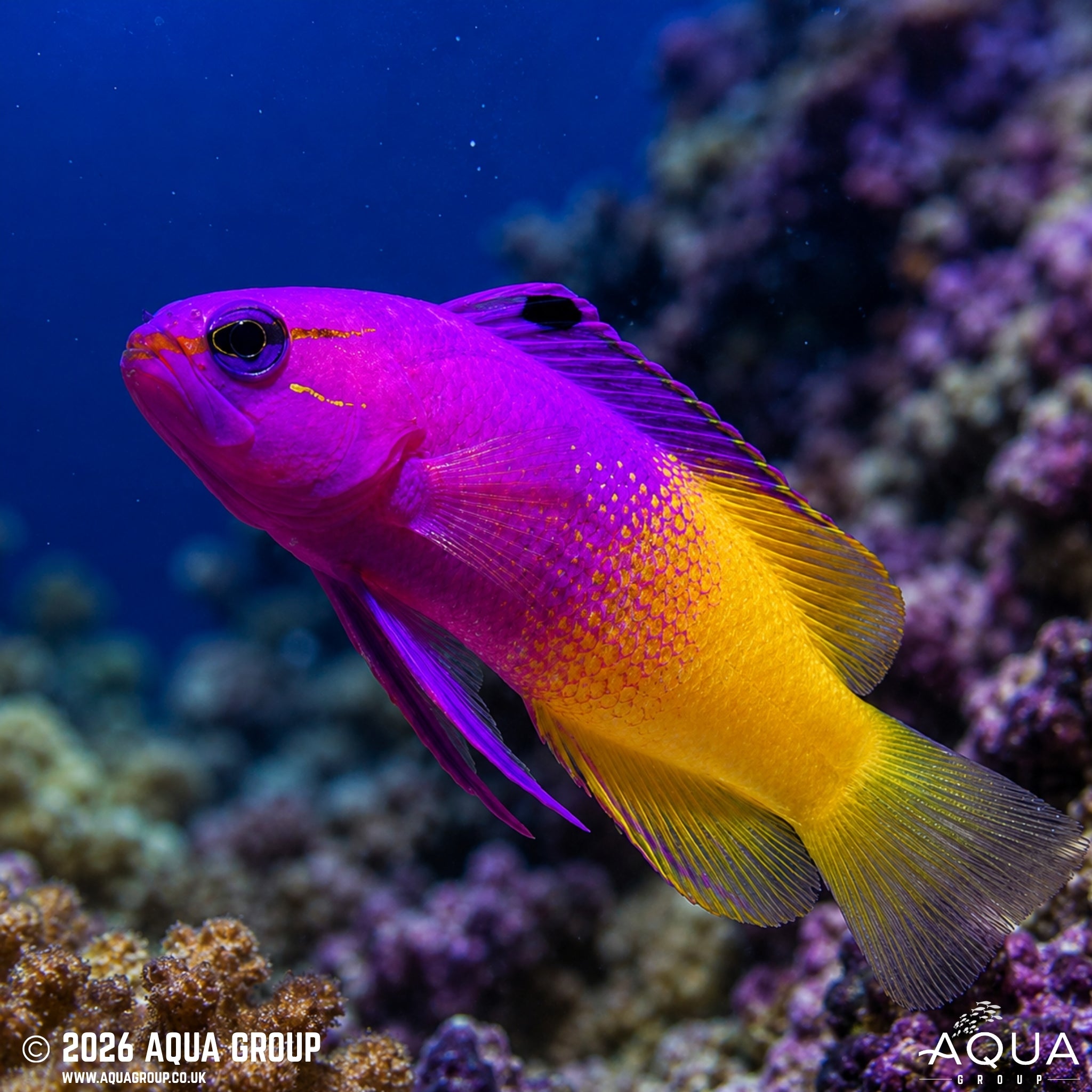
The Royal Gramma is a beautiful, hardy and highly popular marine fish, admired for its striking two-tone colour pattern, with a vivid purple front half blending into a bright yellow-orange rear body. Also known as the Fairy Basslet, this peaceful Caribbean reef fish is a favourite for mature reef aquariums because it stays small, is generally reef safe and spends much of its time hovering around rockwork, caves and shaded overhangs. It is a fantastic choice for keepers looking for a colourful, manageable marine fish with plenty of character.
Common Name:
Royal Gramma. Also commonly referred to as the Fairy Basslet, Royal Gramma Basslet, Gramma Basslet or Loreto Gramma.
Scientific Name (Latin):
Gramma loreto
Maximum Size:
Around 8 cm, making it a small marine fish that is suitable for well-planned reef aquariums with plenty of rockwork and hiding places.
Water Type:
Marine.
Origin / Natural Habitat:
Found in the Western Central Atlantic, including Bermuda, the Bahamas, the Caribbean, Central America and northern South America. In the wild, Royal Grammas are reef-associated fish that are often found around caves, ledges, rock faces and shaded reef structures. They commonly retreat into crevices when alarmed and may swim with their belly facing the rock surface when under ledges.
Water Parameters:
Temperature: 24–27°C
pH Range: 8.1–8.4
Salinity: 1.020–1.025 SG
Temperament:
Generally peaceful, but territorial around its chosen cave or section of rockwork. It is usually suitable for peaceful reef communities, but may show aggression towards similar-shaped fish, other basslets, dottybacks or additional Royal Grammas in smaller aquariums. Best kept with calm to moderately active marine fish that will not bully it.
Diet:
Carnivorous planktivore / micro-predator. In the wild, it feeds on zooplankton, small crustaceans and ectoparasites from other fish. In the aquarium it should be offered a varied diet including frozen mysis, enriched brineshrimp, copepods, cyclops, finely chopped krill, small marine pellets and quality marine flakes. A varied diet will help maintain strong colour, condition and natural feeding behaviour.
Minimum Tank Size:
A practical recommendation is at least 100–120 litres for a single specimen, with larger aquariums preferred for mixed reef communities or if attempting more than one. Plenty of caves, ledges and rockwork are important so the fish can establish a secure territory.
Behaviour & Activity:
This is a cave-associated reef fish that spends much of its time hovering near rockwork, ledges and shaded areas before darting out to feed. It can be shy when newly introduced, but usually becomes bold and visible once settled. Royal Grammas are known for their distinctive upside-down swimming posture under ledges, which is normal behaviour. A secure lid is recommended, as this species can jump if startled.
Reef Safe:
Reef Safe
This species is generally considered safe with corals and most common reef invertebrates. It is not normally a coral-nipping fish and is well suited to reef aquariums. The main considerations are territory around caves and possible aggression towards very similar fish rather than damage to corals or invertebrates.
Special Requirements or Care Notes:
Best kept in a mature marine aquarium with stable water quality, good oxygenation, live rock, caves and shaded retreats. Avoid housing with aggressive dottybacks or very dominant fish that may force it into hiding. It is also worth noting that Royal Grammas can sometimes be confused with the Royal Dottyback, which has a similar purple-and-yellow colour pattern but is usually much more aggressive. Careful acclimation and quarantine are recommended, especially after transport.
Suitable for:
Beginner to intermediate marine fishkeepers
Availability:
Common / occasional in trade, with captive-bred specimens sometimes available.
All images are a visual representation of the fish you will receive, made to be as accurate as possible. Please note that Mother Nature is a wonderful thing, and variation in patterns and colours will occur — that is part of the unique beauty of these animals.
Order and get 30 reward points
Earn points by signing up for our rewards program