

Description
Magnificent Foxface (Siganus magnificus)
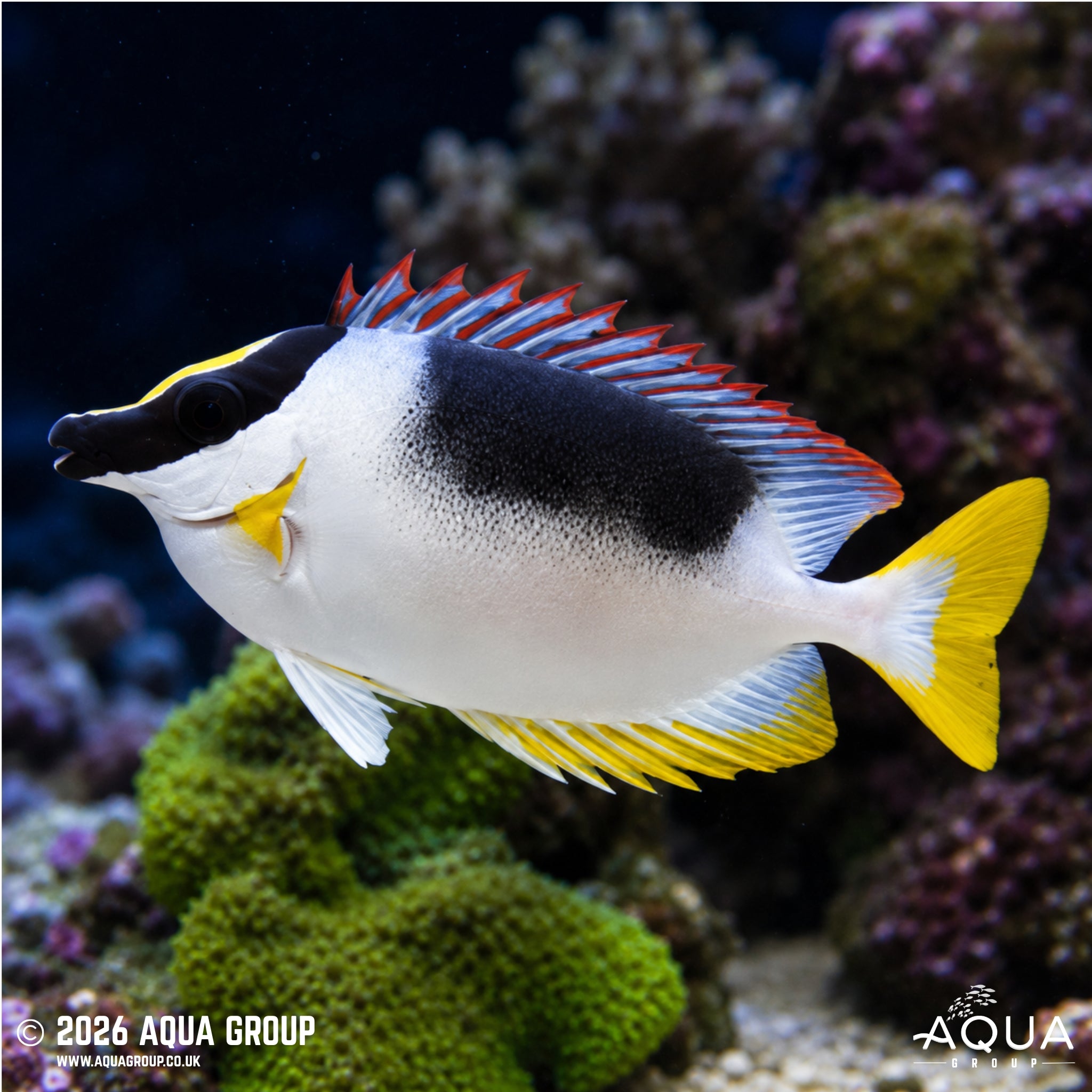
The Magnificent Foxface (Siganus magnificus) is a striking marine rabbitfish recognised by its bold black facial mask, broad white shoulder band and contrasting yellow, brown and white coloration. Also known as the Magnificent Rabbitfish, this uncommon species originates from coral reefs in the eastern Indian Ocean, where adults are often encountered alone or in pairs. Its active algae-grazing behaviour and distinctive appearance make it a desirable centrepiece for a spacious reef or fish-only aquarium, although its venomous fin spines and occasional tendency to nip corals require careful consideration.
Common Name:
Magnificent Foxface, Magnificent Rabbitfish, Magnificent Spinefoot
Scientific Name (Latin):
Siganus magnificus
Maximum Size:
Up to approximately 24 cm standard length. Including the tail, a mature specimen may appear larger and requires generous swimming space.
Water Type:
Marine
Origin / Natural Habitat:
Native to the eastern Indian Ocean, with a relatively restricted range extending from Thailand and the Similan Islands towards Java, Indonesia.
It inhabits coral reefs at depths of approximately 2–30 metres. Adults are commonly observed in pairs, although solitary individuals also occur. Juveniles tend to remain secretive among branching corals and other dense reef structures where they can quickly shelter from predators.
Water Parameters:
Temperature: 24–28°C
pH Range: 8.1–8.4
Salinity: 1.020–1.025 SG
Temperament:
Generally peaceful towards unrelated fish, although established specimens may defend their feeding area or become territorial towards other rabbitfish and similarly shaped herbivores.
The Magnificent Foxface is usually best maintained singly or as an established compatible pair. It should not be housed with highly aggressive fish that may continually harass it, especially in an undersized aquarium.
Diet:
Primarily herbivorous, feeding naturally on algae while also consuming small benthic invertebrates.
In the aquarium, provide frequent portions of dried seaweed, nori, spirulina-based flakes, herbivore pellets and frozen marine foods containing algae. Small amounts of mysis shrimp, enriched brine shrimp and other meaty marine foods may also be accepted.
Mature live rock should be available for continuous grazing. Feed several smaller meals each day, as well-fed rabbitfish are less likely to investigate corals and generally maintain better body condition and coloration.
Minimum Tank Size:
A minimum aquarium volume of approximately 500 litres is recommended for a single adult, with a tank length of at least 150 cm preferred. Larger accommodation is advisable when keeping the fish with other substantial herbivores or as a compatible pair.
Behaviour & Activity:
An active daytime swimmer that spends much of its time grazing algae from rockwork and exploring the middle and lower areas of the aquarium.
The Magnificent Foxface may rapidly change colour when frightened, resting or adapting to its surroundings. A stressed fish can become blotchy or significantly darker, which is a normal defensive response and does not necessarily indicate illness.
At night, it usually retreats into a cave or sheltered area and may adopt a mottled camouflage pattern. When threatened, it raises its venomous dorsal, pelvic and anal spines as a defensive warning.
Reef Safe:
Reef Safe with Caution
The Magnificent Foxface is often successfully maintained in reef aquariums and can be useful for grazing nuisance algae. However, individual specimens may nip soft corals, fleshy large-polyp stony corals, zoanthids or clam mantles, particularly when natural grazing is limited or the fish is underfed.
It is normally compatible with ornamental shrimps, crabs and snails, although very small invertebrates may occasionally be investigated. Coral compatibility cannot be guaranteed and the fish should be monitored closely after introduction.
Special Requirements or Care Notes:
The dorsal, pelvic and anal spines are venomous and can deliver a painful sting. Never handle the fish directly, and take exceptional care during aquarium maintenance, capture and transport. The spines can also become caught in coarse netting, so a rigid container is preferable when moving the fish.
Introduce only to a mature, fully cycled aquarium containing established live rock and natural algae growth. Provide extensive open swimming space alongside caves, overhangs and sheltered resting areas.
Strong oxygenation, good water movement and stable water chemistry are important. Efficient filtration is required because this active fish should be fed regularly and can produce a significant waste load.
Newly imported specimens may be shy and refuse prepared foods initially. Offer several types of marine algae and position food close to a preferred hiding area until the fish begins feeding confidently.
Avoid keeping multiple rabbitfish together unless the aquarium is exceptionally large or the animals are a confirmed compatible pair. Unrelated individuals may fight once established.
A securely covered aquarium is recommended, particularly during acclimatisation. Although not among the most frequent jumpers, a frightened foxface may leap from an uncovered system.
Suitable for:
Intermediate fishkeepers
Availability:
Rare or occasional in trade
All images are a visual representation of the fish you will receive, made to be as accurate as possible. Please note that Mother Nature is a wonderful thing, and variation in patterns and colours will occur — that is part of the unique beauty of these animals
Order and get 95 reward points
Earn points by signing up for our rewards program