

Description
Flame Angel (Centropyge loriculus)
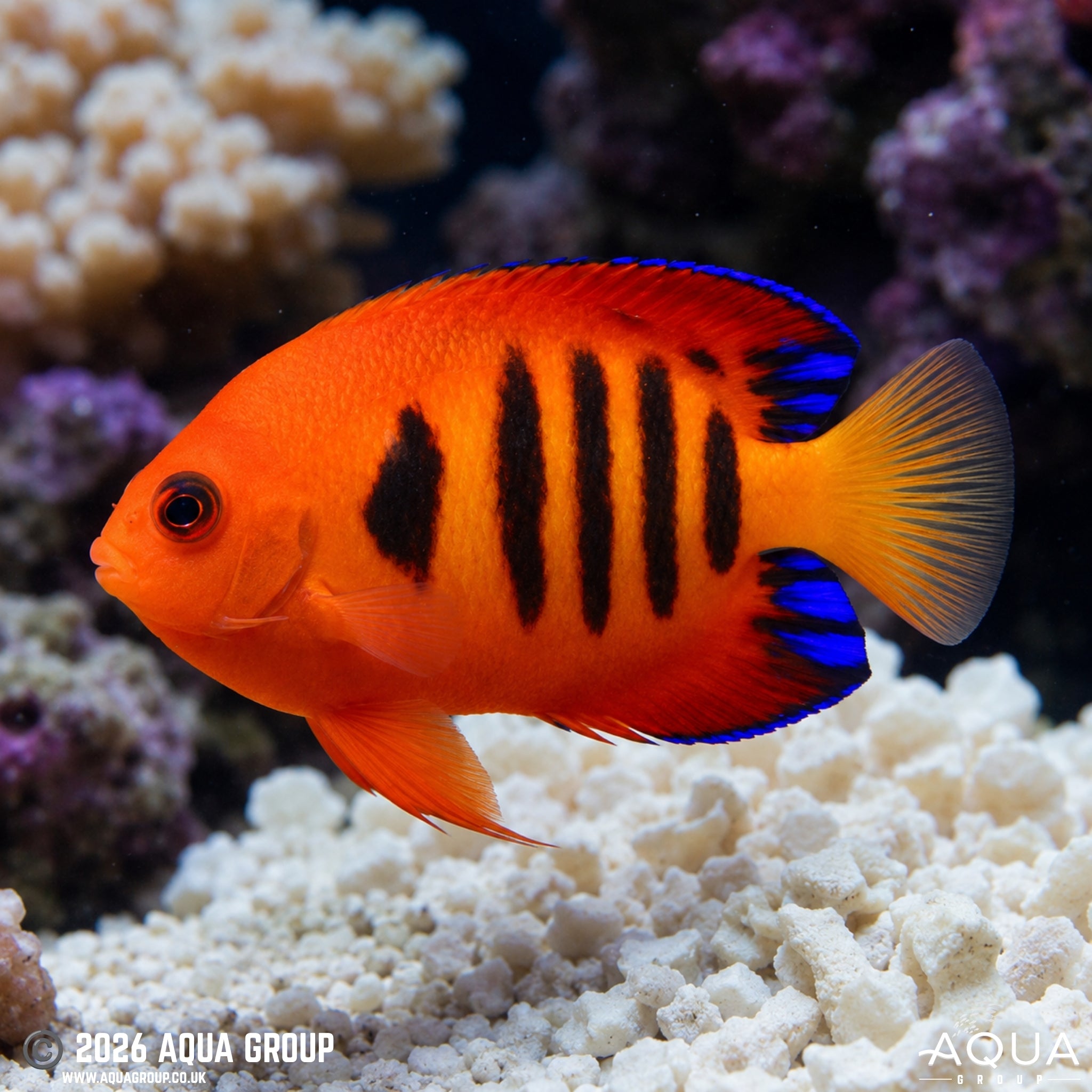
The Flame Angel, Centropyge loriculus, is one of the most iconic dwarf marine angelfish, instantly recognised by its vivid red-orange body, bold black vertical bars and blue-black edging to the dorsal and anal fins. Also known as the Flame Angelfish or Flame Dwarf Angel, this Pacific reef species is a stunning feature fish for mature marine aquariums. It is active, colourful and full of personality, but should be treated as reef safe with caution because some individuals may nip at corals or clam mantles.
Common Name:
Flame Angel, Flame Angelfish, Flame Dwarf Angelfish, Flame Dwarf Angel.
Scientific Name (Latin):
Centropyge loriculus
Maximum Size:
Up to around 15 cm in the wild, though many aquarium specimens are closer to 10–12 cm.
Water Type:
Marine
Origin / Natural Habitat:
Pacific Ocean reef regions, especially tropical areas of Oceania, including island reef systems such as the Marshall Islands, Line Islands, Cook Islands and surrounding central and western Pacific localities. Naturally found on clear lagoon reefs and seaward reefs, usually staying close to shelter, rockwork and coral structure where it can graze and retreat quickly.
Water Parameters:
Temperature: 24–27°C
pH Range: 8.1–8.4
Hardness or Salinity: SG 1.020–1.025
Temperament:
Semi-aggressive. Flame Angels are usually confident and manageable in suitably sized aquariums, but they can become territorial, especially towards other dwarf angelfish, similarly shaped fish or new additions. Best kept with peaceful to moderately robust marine fish rather than very timid species.
Diet:
Omnivorous grazer with a strong algae-feeding element. In the wild, it feeds heavily on algae and reef-surface growths. In the aquarium, offer a varied diet of marine algae sheets, spirulina flakes, herbivore pellets, frozen mysis, enriched brineshrimp, finely chopped seafood and high-quality angelfish preparations. A mature aquarium with established live rock for grazing is strongly recommended.
Minimum Tank Size:
A minimum of 250 litres is recommended for a single Flame Angel, with larger aquariums preferred for reef systems or if keeping with other assertive fish. Provide mature live rock, caves, overhangs and plenty of territory breaks.
Behaviour & Activity:
An active daytime grazer that spends much of its time weaving through rockwork, picking at algae films and exploring caves or crevices. It can be secretive when first introduced but usually becomes bold once settled. In nature, Flame Angels may form small haremic groups, but in most home aquariums a single specimen is safest unless the system is very large and carefully planned. A secure lid is recommended, as startled marine fish can jump.
Reef Safe:
Reef Safe with Caution
Often kept successfully in reef aquariums, but individual behaviour varies. Some Flame Angels ignore corals, while others may nip fleshy LPS corals, soft corals, zoanthids, SPS polyps or clam mantles. Keeping the fish well fed and providing natural grazing can reduce risk, but it cannot remove it completely.
Special Requirements or Care Notes:
Best added to a mature marine aquarium with plenty of live rock and established grazing surfaces. Avoid keeping multiple dwarf angelfish together unless the aquarium is large with multiple territories. Monitor carefully in reef aquariums, especially around fleshy corals, zoanthids and clams. Colour intensity may vary by collection region and individual condition. Captive-bred specimens are occasionally available and are often a strong choice where offered.
Suitable for:
Intermediate fishkeepers
Availability:
Common in trade / Captive-bred where relevant
All images are a visual representation of the fish you will receive, made to be as accurate as possible. Please note that Mother Nature is a wonderful thing, and variation in patterns and colours will occur — that is part of the unique beauty of these animals.
Order and get 170 reward points
Earn points by signing up for our rewards program