

Description
Cream Angelfish (Apolemichthys xanthurus)
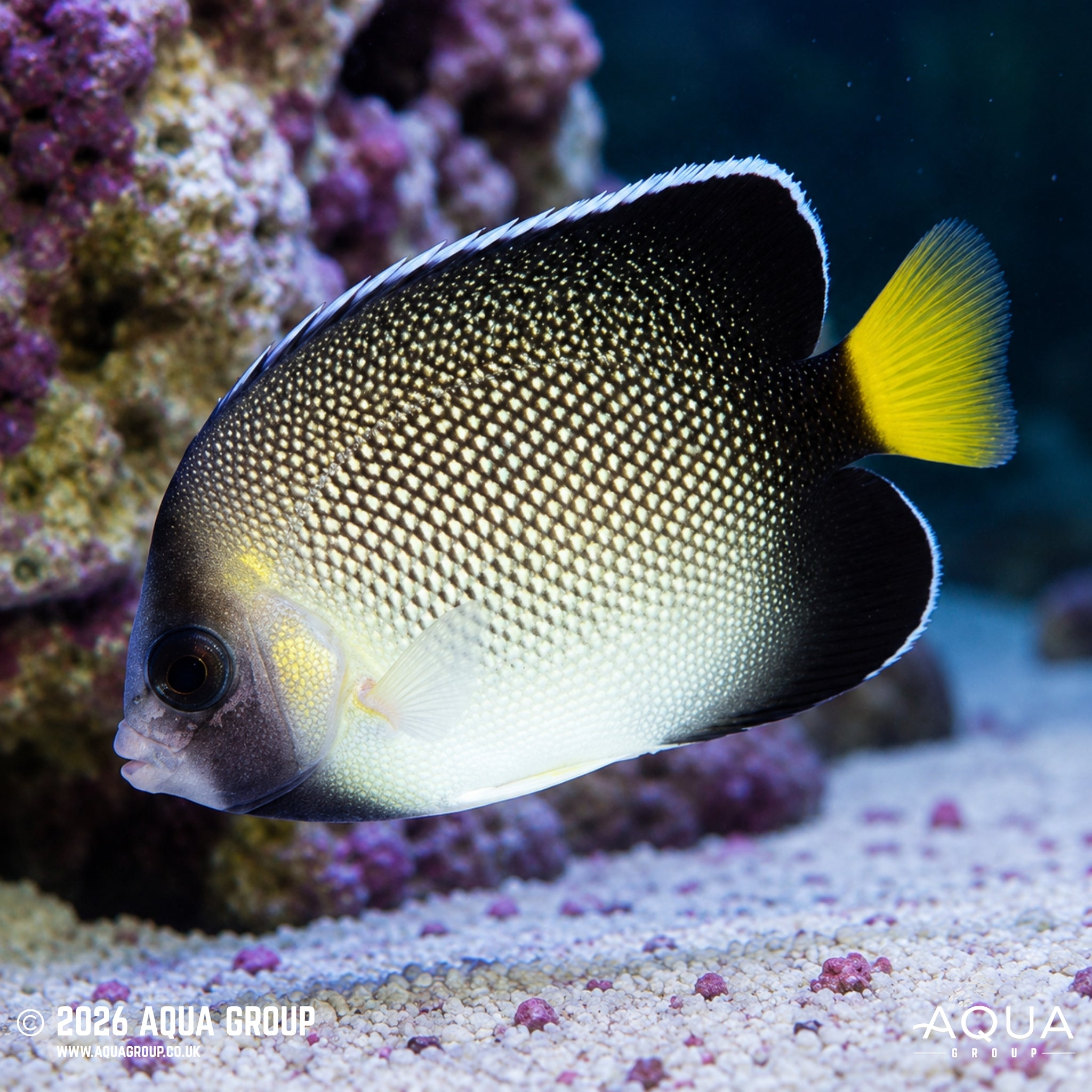
The Cream Angelfish (Apolemichthys xanthurus) is an attractive Indian Ocean marine angelfish recognised by its pale cream to grey body, dark-edged scales, black facial mask and bright yellow tail. Also known as the Indian Yellowtail Angelfish or Xanthurus Angelfish, it inhabits coral and rocky reef environments where it browses sponges, algae and small benthic organisms. Generally less aggressive than some larger angelfish, it can make an impressive centrepiece for a spacious fish-only marine aquarium, although its tendency to nip corals and clam mantles makes it unsuitable for most conventional reef systems.
Common Name:
Cream Angelfish, Indian Yellowtail Angelfish, Yellowtail Angelfish, Xanthurus Angelfish
Scientific Name (Latin):
Apolemichthys xanthurus
Maximum Size:
Approximately 20 cm in total length. Aquarium specimens may remain slightly smaller, but sufficient permanent swimming space should be provided for a full-sized adult.
Water Type:
Marine
Origin / Natural Habitat:
Native to the northern Indian Ocean, including coastal areas around India, Sri Lanka, the Maldives and nearby island groups.
It inhabits coral-rich and rocky reefs, generally at depths of approximately 5–25 metres. Individuals are commonly associated with caves, ledges and areas of substantial reef structure, where they browse across rock surfaces and retreat quickly into shelter when disturbed.
Water Parameters:
Temperature: 23–27°C
pH Range: 8.1–8.4
Salinity: 1.020–1.025 SG
Temperament:
Semi-aggressive and territorial, particularly towards other marine angelfish and similarly shaped species.
The Cream Angelfish is often relatively reserved when first introduced but usually becomes increasingly confident and assertive once established. It may intimidate small, timid or slow-feeding fish and is generally best kept as the only Apolemichthys angelfish in the aquarium.
Diet:
An omnivorous grazer that naturally feeds on sponges, algae, tunicates and other small benthic organisms growing across reef surfaces.
In the aquarium, offer a varied diet containing specialist sponge-based marine angelfish foods, mysis shrimp, enriched brine shrimp, finely chopped prawn, krill, mussel and squid. Marine algae, spirulina-based foods and dried seaweed should also be included regularly.
Feed several small portions each day. A varied diet containing both marine animal matter and vegetable-based foods is important for maintaining healthy body condition, colour and long-term nutritional health.
Minimum Tank Size:
A minimum aquarium volume of approximately 450 litres is recommended for a single adult, with a tank length of at least 150 cm preferred.
A larger aquarium is advisable when the fish is maintained with other substantial or territorial marine species.
Behaviour & Activity:
Initially shy and likely to remain close to caves or overhangs, particularly after transport. Once acclimatised, the Cream Angelfish becomes an active daytime swimmer that explores rockwork and regularly picks at reef surfaces in search of food.
It normally occupies the middle and lower areas of the aquarium and requires a combination of open swimming room and substantial rock structures. Several large caves should be available so the fish can retreat without being trapped or challenged by tank mates.
Adults may defend a preferred section of rockwork and become more territorial as they settle into the aquarium.
Reef Safe:
Not Reef Safe
The Cream Angelfish is likely to nip stony corals, soft corals, zoanthids and clam mantles. It may also investigate sponges, tunicates and other sessile invertebrates as part of its normal feeding behaviour.
Although individual behaviour varies, it should not be considered safe for a valuable mixed reef aquarium. It is best maintained in a spacious fish-only or fish-only-with-live-rock system.
Special Requirements or Care Notes:
Introduce only to a mature, fully cycled marine aquarium containing extensive established rockwork. Natural sponge growth, algae and biofilm can help newly introduced specimens begin feeding and settle more successfully.
Provide strong filtration, good oxygenation and stable water chemistry. Angelfish are sensitive to deteriorating water quality and should not be added to newly established systems.
Offer food at least two or three times daily, as this species naturally browses throughout the day. Ensure that more aggressive or faster-feeding tank mates do not prevent it from receiving adequate nutrition.
Avoid keeping it with other Apolemichthys angelfish or similarly coloured marine angels unless the aquarium is exceptionally large. Territorial disputes can be severe once an individual becomes established.
Inspect prospective specimens for a full body profile, clear eyes, intact fins and normal breathing. Avoid fish with a pinched abdomen or individuals that repeatedly refuse all offered foods.
A carefully managed quarantine period is recommended before introduction to the display aquarium, as marine angelfish may be vulnerable to white spot, velvet and flukes following collection and transport.
Suitable for:
Intermediate fishkeepers
Availability:
Occasional in trade
All images are a visual representation of the fish you will receive, made to be as accurate as possible. Please note that Mother Nature is a wonderful thing, and variation in patterns and colours will occur — that is part of the unique beauty of these animals.
Order and get 35 reward points
Earn points by signing up for our rewards program