

Description
Longhorn Cowfish (Lactoria cornuta)
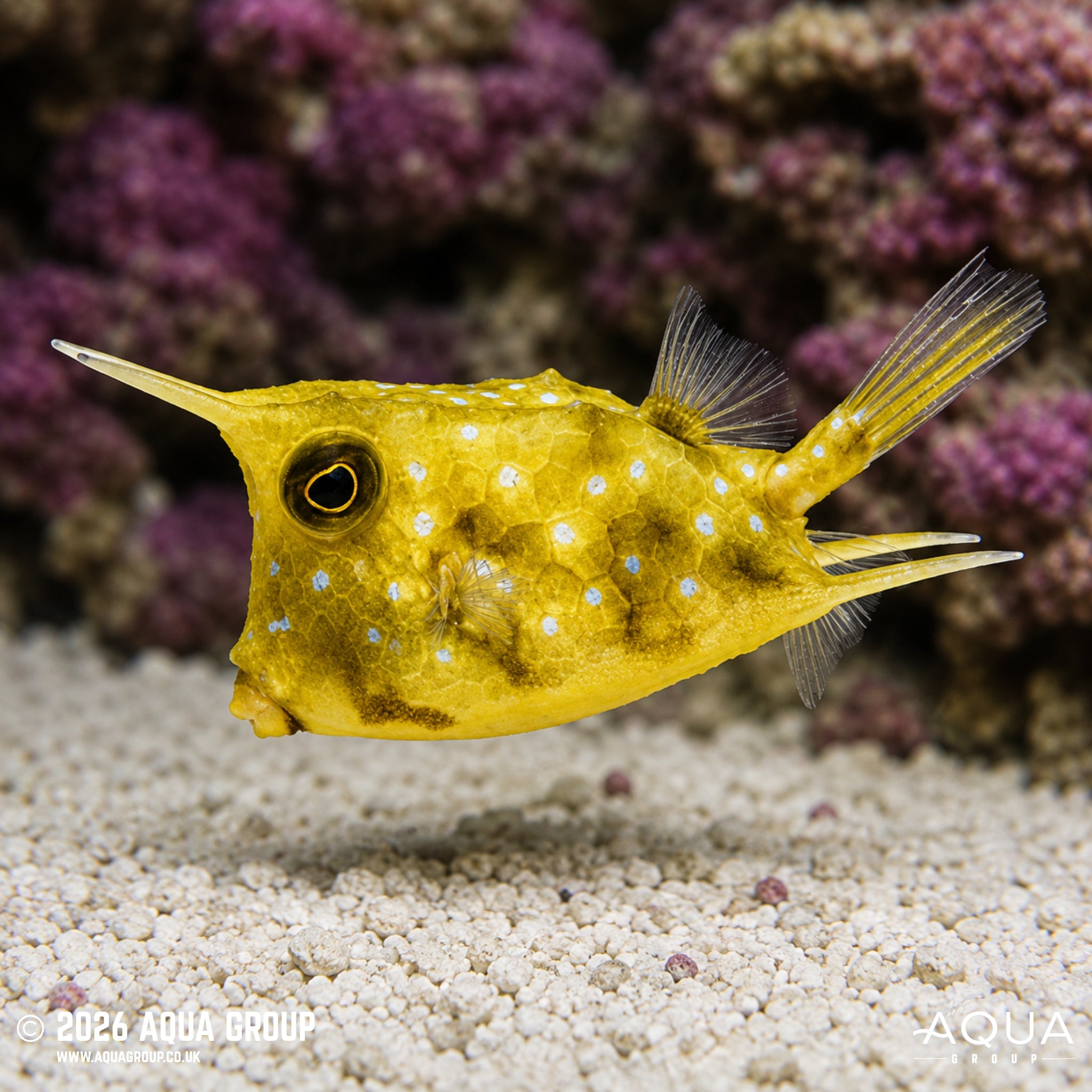
The Longhorn Cowfish (Lactoria cornuta) is one of the most distinctive marine aquarium fish, recognised by its rigid box-shaped body, protruding horn-like projections and yellow to olive coloration decorated with blue or white spotting. Also known as the Horned Boxfish or Longhorn Boxfish, it originates from sheltered tropical Indo-Pacific reefs, lagoons and coastal habitats. Its inquisitive personality and unusual swimming style make it a fascinating centrepiece fish, but its large adult size, specialist feeding needs, vulnerability to aggressive tank mates and ability to release a defensive toxin mean it is suitable only for experienced marine fishkeepers.
Common Name:
Longhorn Cowfish, Long-Horned Cowfish, Horned Boxfish, Longhorn Boxfish, Cowfish
Scientific Name (Latin):
Lactoria cornuta
Maximum Size:
Up to approximately 46 cm in total length. Juveniles are often sold at a small size, but they develop into substantial adults and must be provided with suitable permanent accommodation from the outset.
Water Type:
Marine
Origin / Natural Habitat:
Widely distributed throughout the tropical Indo-Pacific, from the Red Sea and East African coast across the Indian Ocean to Southeast Asia, southern Japan, northern Australia and numerous Pacific islands.
Juveniles are commonly associated with sheltered lagoons, estuaries, seagrass beds and shallow sandy habitats. Adults also occur around coral and rocky reefs, rubble areas and deeper coastal waters, usually remaining close to the seabed while searching for food.
Water Parameters:
Temperature: 24–27°C
pH Range: 8.1–8.4
Salinity: 1.020–1.025 SG
Temperament:
Generally peaceful towards unrelated fish but unsuitable for a typical peaceful community because of its eventual size, feeding behaviour and specialised care requirements.
The Longhorn Cowfish is a slow, deliberate swimmer and can be intimidated or outcompeted by fast, aggressive tank mates. It may also consume very small fish and mobile invertebrates as it matures. Avoid triggers, aggressive puffers, large wrasses and persistent fin-nipping species that may harass or injure it.
Diet:
An omnivorous bottom feeder that naturally consumes small crustaceans, worms, molluscs, sponges, algae and other benthic organisms.
In the aquarium, offer a varied diet of chopped prawn, mysis shrimp, krill, mussel, clam, cockle, squid and specialist marine omnivore foods. Marine algae, spirulina-based preparations and dried seaweed should also be included regularly.
Hard-shelled marine foods can help provide natural feeding enrichment. Feed several small portions throughout the day, ensuring food reaches the cowfish before faster tank mates consume it.
Minimum Tank Size:
A minimum aquarium volume of approximately 1,000 litres is recommended for long-term care, with a long, wide footprint and extensive open swimming space. A substantially larger system is preferable for a fully grown adult or when it is maintained with other large marine fish.
Behaviour & Activity:
A slow-moving, inquisitive daytime fish that propels itself mainly with gentle movements of the dorsal, anal and pectoral fins. Its rigid body prevents the flexible swimming style seen in most reef fish.
Once settled, the Longhorn Cowfish may learn to recognise its keeper, follow movement outside the aquarium and approach the surface at feeding time. Some individuals may spit water above the surface while anticipating food.
It normally explores the lower and middle areas of the aquarium, investigating sand, rockwork and equipment for edible material. Provide open swimming space together with broad caves and sheltered resting areas.
Reef Safe:
Not Reef Safe
The Longhorn Cowfish may consume ornamental shrimps, crabs, snails, worms, small molluscs and other mobile invertebrates. It may also nip soft corals, stony corals, tube worms, sponges and clam mantles while searching for food.
Its feeding behaviour, adult size and potential to disturb unsecured structures make it better suited to a large fish-only or fish-only-with-live-rock aquarium than a conventional mixed reef system.
Special Requirements or Care Notes:
Longhorn Cowfish can release a powerful defensive toxin through the skin when subjected to extreme stress. In a closed aquarium, this may seriously harm or kill the cowfish and other fish. The risk is uncommon under stable conditions but must be treated seriously.
Avoid aggressive tank mates, sudden environmental changes, rough capture and unnecessary handling. Powerful activated carbon, efficient protein skimming and prepared emergency water-change capacity are strongly recommended. If toxin release is suspected, immediately remove the affected fish where safe, begin a large water change, add fresh activated carbon and maximise aeration.
Provide powerful biological filtration, excellent oxygenation and stable water chemistry. Cowfish are messy feeders and can create a significant waste load, particularly as they grow.
Water movement should be moderate rather than excessively forceful, especially for small juveniles. The species is not a strong swimmer and may struggle in relentless high flow without calmer resting areas.
Protect exposed heater elements, pump intakes and sharp equipment. The horns can become caught in coarse netting or narrow gaps, so a large rigid submerged container is preferable when moving the fish.
Do not expose the cowfish to air unnecessarily. Transfers should be carried out calmly while keeping the animal submerged whenever practical.
Introduce only after confirming that the specimen is alert and feeding confidently. Avoid fish with a pinched abdomen, cloudy eyes, damaged horns, rapid breathing or poor control of their swimming.
A carefully managed quarantine period is recommended. Medication must be used conservatively because boxfish may be sensitive to harsh treatments and deteriorating water quality.
Suitable for:
Expert only
Availability:
Occasional in trade
All images are a visual representation of the fish you will receive, made to be as accurate as possible. Please note that Mother Nature is a wonderful thing, and variation in patterns and colours will occur — that is part of the unique beauty of these animals.
Order and get 40 reward points
Earn points by signing up for our rewards program