

Description
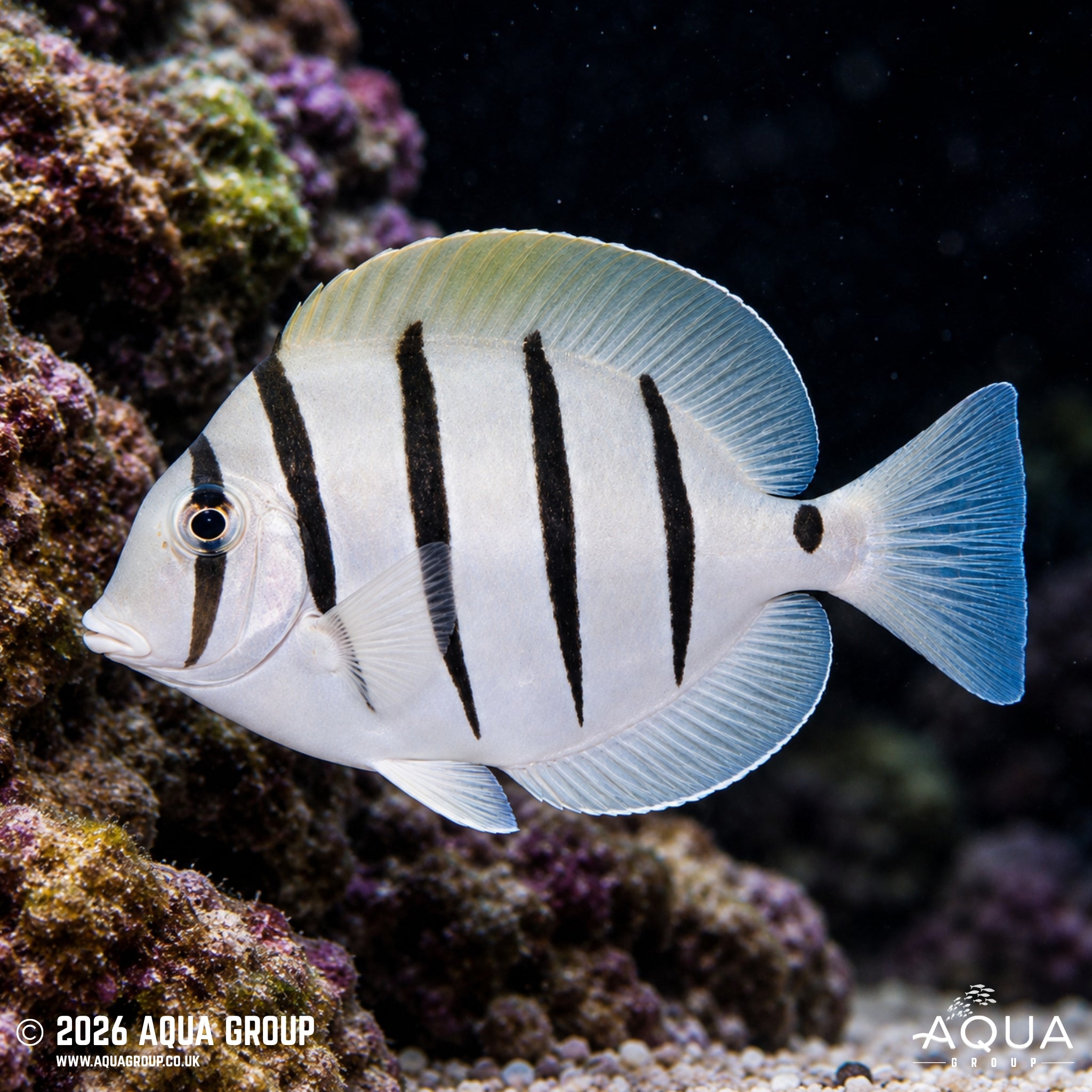
Convict Tang (Acanthurus triostegus)
The Convict Tang (Acanthurus triostegus) is a distinctive marine surgeonfish named for the bold black vertical bars crossing its pale silver-grey body. Also known as the Convict Surgeonfish or Manini, it is widely distributed across tropical Indo-Pacific reef habitats, where large groups graze continuously over algae-covered rock and shallow reef flats. It is generally less territorial than many other Acanthurus tangs, but it remains an active, specialist grazer requiring a mature, spacious and highly oxygenated marine aquarium.
Common Name:
Convict Tang, Convict Surgeonfish, Manini, Striped Surgeonfish
Scientific Name (Latin):
Acanthurus triostegus
Maximum Size:
Up to approximately 27 cm in total length. Aquarium specimens are commonly smaller, but the enclosure should be designed around the species’ full adult size and highly active swimming behaviour.
Water Type:
Marine
Origin / Natural Habitat:
Widely distributed throughout the tropical Indo-Pacific, including East Africa, the Indian Ocean, Southeast Asia, Japan, Australia, numerous Pacific islands and the eastern Pacific.
The species is especially associated with shallow lagoons, reef flats, rocky shorelines, surge zones and seaward reefs. It frequently forms large feeding schools that move across open reef surfaces while grazing short algal growth.
Water Parameters:
Temperature: 23–27°C
pH Range: 8.1–8.4
Salinity: 1.020–1.025 SG
Temperament:
Generally peaceful to moderately assertive. The Convict Tang is often less aggressive than many other surgeonfish, particularly towards unrelated species, but territorial disputes can still occur with other tangs or similarly shaped grazing fish.
Although it naturally forms schools, keeping a group successfully in captivity requires a very large aquarium, abundant food and the simultaneous introduction of compatible specimens. A single individual is the safer choice for most home aquariums.
Diet:
Primarily herbivorous, feeding naturally on short filamentous algae and fine algal growth covering rocks and reef surfaces.
In the aquarium, provide frequent portions of dried marine algae, nori, spirulina-based flakes, herbivore pellets and high-quality frozen foods containing marine algae. Small quantities of mysis shrimp, enriched brine shrimp and other marine foods may also be accepted, but vegetable-based foods should form the majority of the diet.
Feed several small portions throughout the day and ensure mature rockwork is available for continuous grazing. A varied diet enriched with marine vitamins can help maintain healthy body condition and support resistance to disease.
Minimum Tank Size:
A minimum aquarium volume of approximately 500 litres is recommended for a single adult, with a tank length of at least 180 cm strongly preferred. Larger accommodation is required when keeping it with other tangs or attempting to maintain a group.
Behaviour & Activity:
An extremely active daytime swimmer that spends much of its time travelling across the aquarium and grazing on rockwork. In nature, Convict Tangs often gather in large schools, allowing them to move into defended feeding territories and crop algae efficiently.
In captivity, a single specimen generally remains visible and active throughout the day. It requires extensive open swimming space, strong water movement and multiple caves or rock crevices for shelter at night.
Like all surgeonfish, it has sharp defensive spines near the base of the tail. These can cause injury and may become caught in coarse aquarium nets.
Reef Safe:
Reef Safe
The Convict Tang is generally compatible with corals, clams and ornamental invertebrates. Its constant grazing can be beneficial in a mature reef aquarium by helping to control short algal films on rockwork.
Healthy coral tissue is not normally targeted. However, an underfed specimen may graze very closely around coral bases or repeatedly investigate surfaces containing algae, so regular feeding remains important.
Special Requirements or Care Notes:
The Convict Tang should be introduced only to a mature, fully cycled aquarium with established algae and plentiful natural grazing surfaces. Newly established or sterile aquariums may not supply enough food between meals.
Excellent oxygenation, strong water movement and stable water quality are essential. This active reef fish is poorly suited to cramped, low-flow or heavily enclosed aquascapes.
Convict Tangs can arrive thin after collection and transport. Select specimens with a rounded body profile and avoid fish with a noticeably pinched abdomen. Offer frequent algae-rich meals immediately after introduction and monitor the fish closely until it is feeding confidently.
As with other surgeonfish, this species can be susceptible to marine white spot, velvet and other external parasites. A carefully managed quarantine period is strongly recommended before introduction to the main aquarium.
Avoid housing it with highly aggressive tangs unless the aquarium is exceptionally large. When mixing surgeonfish, provide visual barriers, several feeding areas and extensive swimming room. Introducing tangs at the same time may help reduce established territorial behaviour, although compatibility can never be guaranteed.
Groups should not be attempted simply because the species schools in nature. Large wild schools move across vast feeding areas, and a normal home aquarium cannot reproduce that amount of space or food availability.
Suitable for:
Intermediate fishkeepers
Availability:
Occasional in trade
All images are a visual representation of the fish you will receive, made to be as accurate as possible. Please note that Mother Nature is a wonderful thing, and variation in patterns and colours will occur — that is part of the unique beauty of these animals.
Order and get 45 reward points
Earn points by signing up for our rewards program