

Description
Blue Eye Kole Tang (Ctenochaetus binotatus)
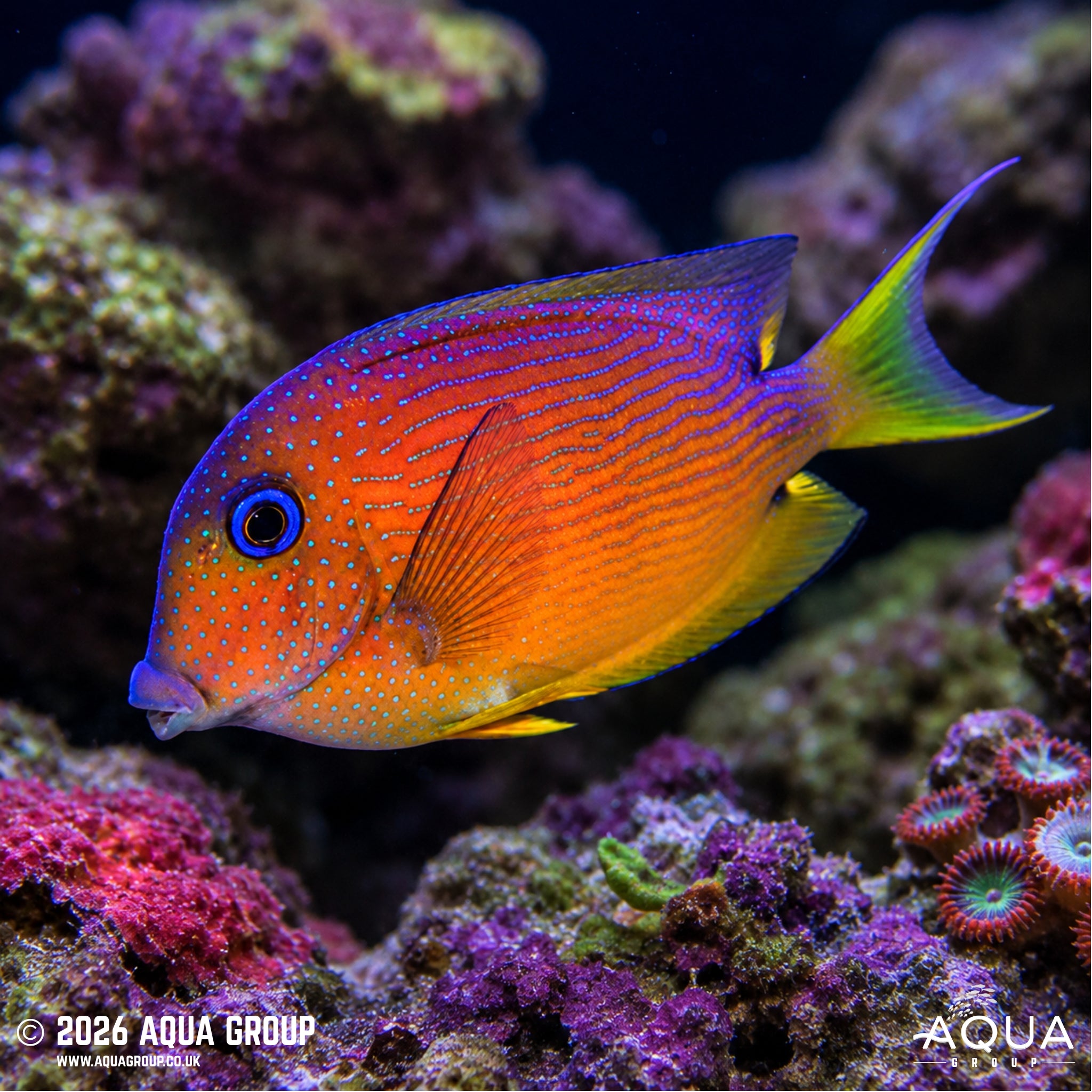
The Blue Eye Kole Tang (Ctenochaetus binotatus) is an attractive bristletooth surgeonfish recognised by its vivid blue-ringed eyes, finely lined brown body, spotted head and two dark markings near the rear of the dorsal and anal fins. Also known as the Two Spot Bristletooth Tang or Twospot Surgeonfish, it originates from coral and rubble reefs across the tropical Indo-Pacific. This active grazer is valued for continuously browsing detritus and fine algal films from mature rockwork, making it an appealing and useful addition to a spacious, established reef aquarium.
Common Name:
Blue Eye Kole Tang, Blue-Eyed Bristletooth Tang, Two Spot Bristletooth Tang, Twospot Bristletooth, Twospot Surgeonfish
Scientific Name (Latin):
Ctenochaetus binotatus
Maximum Size:
Up to approximately 22 cm in total length. Aquarium specimens are often seen at around 15–20 cm, but accommodation should be planned around the maximum recorded adult size.
Water Type:
Marine
Origin / Natural Habitat:
Widely distributed throughout the tropical Indo-Pacific, from East Africa eastwards to the Tuamotu Islands, north to southern Japan and south to New Caledonia and central New South Wales, Australia.
It inhabits coral and rubble areas on deeper lagoons and seaward reefs. Adults are commonly encountered alone, spending much of the day grazing over rock and coral surfaces covered with detritus, diatoms and microscopic algae.
Water Parameters:
Temperature: 24–27°C
pH Range: 8.1–8.4
Salinity: 1.020–1.025 SG
Temperament:
Generally peaceful towards unrelated fish, but territorial behaviour may be shown towards other tangs, surgeonfish and species with a similar body shape or feeding niche. Aggression often increases once the fish becomes established.
It is normally best kept as the only Ctenochaetus species in an average home aquarium. In very large systems, multiple tangs may sometimes be maintained successfully when introduced carefully and provided with abundant space, food and separate grazing territories.
Diet:
Primarily a detritivore and microalgal grazer. Its specialised bristle-like teeth are adapted to combing fine films of detritus, diatoms and unicellular algae from hard surfaces rather than consuming long strands of coarse algae.
A mature aquarium with plentiful established rockwork is extremely important. Supplement natural grazing with spirulina-based flakes or pellets, quality marine herbivore foods, dried seaweed and nori. Small portions of mysis shrimp, enriched brine shrimp and other marine foods may also be accepted.
Feed several small portions daily, particularly in newer aquariums where natural grazing material may be limited. A varied, algae-rich diet supports healthy body condition, immune function and colour.
Minimum Tank Size:
A minimum aquarium volume of approximately 450 litres is recommended for long-term care, with a tank length of at least 150 cm strongly preferred. Larger accommodation is advisable when keeping the fish with other tangs or active marine species.
Behaviour & Activity:
An active daytime swimmer and constant browser that spends much of its time moving between rock surfaces in search of edible films. It generally occupies the middle and lower areas of the aquarium but requires extensive open swimming space as well as mature live rock.
The species is usually solitary and may select a cave or crevice as a night-time retreat. It can become increasingly confident once settled and may spend long periods methodically cleaning rockwork and aquarium surfaces.
Like all surgeonfish, it possesses sharp defensive spines near the base of the tail. These should be treated with care during capture, transport and aquarium maintenance.
Reef Safe:
Reef Safe
The Blue Eye Kole Tang is generally compatible with corals, clams and ornamental invertebrates. Its natural grazing behaviour is beneficial in many reef aquariums because it removes fine algal and detrital films from rock surfaces.
It may occasionally graze close to coral bases or pick at surfaces containing algae, but healthy coral tissue is not normally targeted. Adequate feeding is important, as underfed individuals may become overly persistent around corals or compete heavily with other grazing fish.
Special Requirements or Care Notes:
Introduce only to a mature, fully cycled aquarium containing substantial established rockwork. Sterile or newly set-up systems may not provide enough continuous grazing material, even when prepared foods are offered.
Provide strong water movement, excellent oxygenation, efficient filtration and stable water chemistry. Surgeonfish can be sensitive to poor water quality and rapid environmental changes.
A secure aquarium cover is recommended, particularly while the fish is acclimatising. Provide caves and overhangs large enough for the fish to enter without damaging its fins.
This species may be susceptible to marine white spot and other external parasites, especially following transport or when stressed. A carefully managed quarantine period is strongly recommended before introduction to the display aquarium.
Avoid housing it with aggressive tangs in undersized systems. When mixing surgeonfish, provide generous space, abundant feeding stations and visual barriers, and introduce the least aggressive individual first where practical.
Do not attempt to catch the fish by hand. Its caudal peduncle carries sharp, scalpel-like defensive spines that can cause injury and may become caught in coarse netting.
Suitable for:
Intermediate fishkeepers
Availability:
Occasional in trade
All images are a visual representation of the fish you will receive, made to be as accurate as possible. Please note that Mother Nature is a wonderful thing, and variation in patterns and colours will occur — that is part of the unique beauty of these animals.
Order and get 40 reward points
Earn points by signing up for our rewards program