
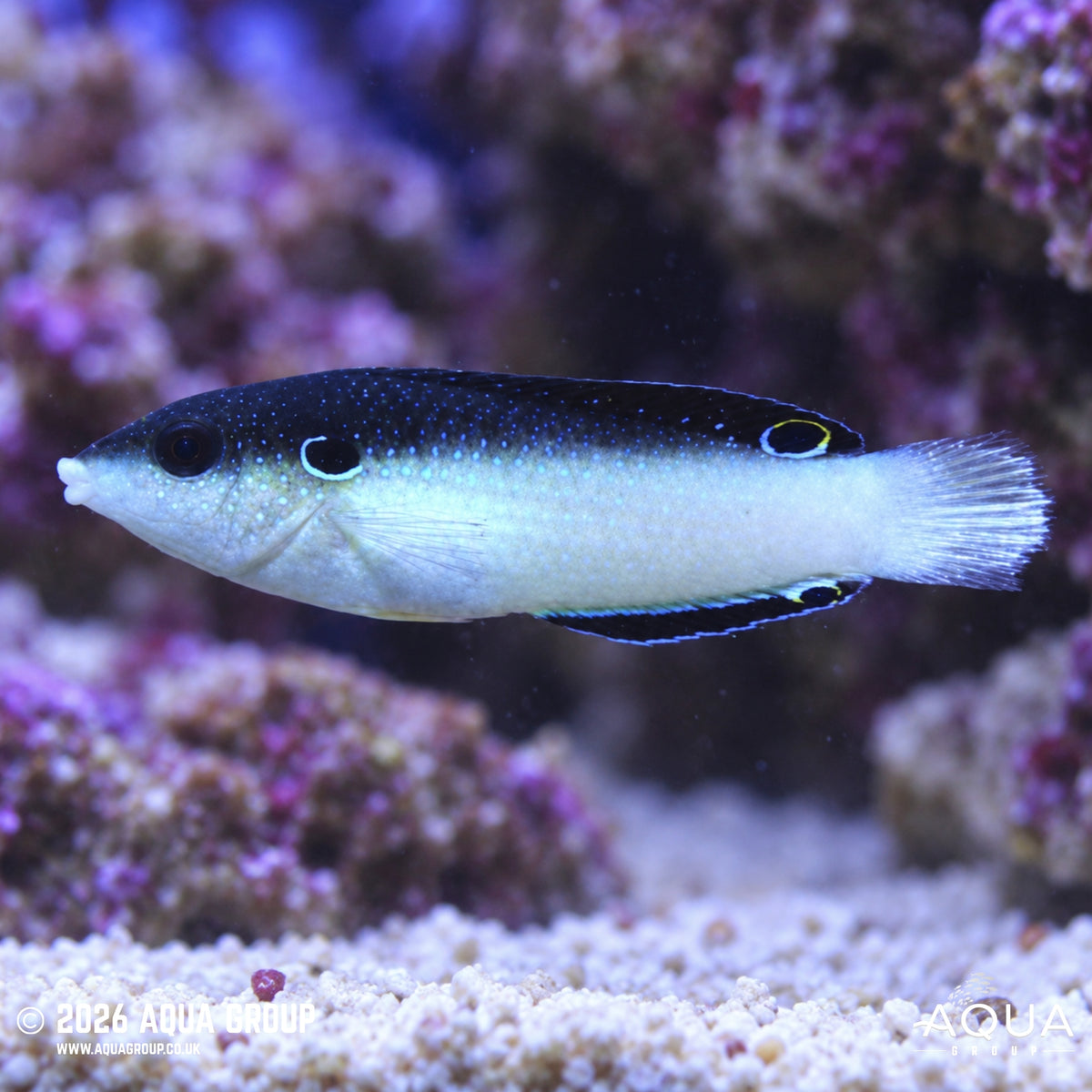

Description
New Guinea Anempses Wrasse (Anempses neoguinaicus)
The New Guinea Anempses Wrasse is a striking and highly active marine wrasse admired for its intricate patterning, elegant body shape and vivid colouration. Like other Anampses wrasses, juveniles and adults can differ considerably in appearance, with mature fish developing stronger contrast and more elaborate markings. Beautiful but relatively demanding, this species is best suited to mature reef aquariums with a deep fine sandbed, secure lid, established rockwork and experienced care.
Common Name:
New Guinea Anempses Wrasse
Scientific Name (Latin):
Anempses neoguinaicus
Maximum Size:
Approximately 15 cm
Water Type:
Marine
Origin / Natural Habitat:
The New Guinea Anempses Wrasse is associated with tropical Indo-Pacific reef environments, including coral-rich reef slopes, lagoons and areas containing a mixture of rockwork and sandy substrate.
It spends much of the day actively searching reef surfaces and substrate for small invertebrate prey before burying itself in sand at night or when threatened.
Water Parameters:
Temperature: 24–26°C
pH Range: 8.1–8.4
Salinity: SG 1.024–1.026
Nitrate: Low and stable
Ammonia/Nitrite: 0 ppm
Temperament:
Peaceful to Semi-Aggressive
The New Guinea Anempses Wrasse is generally peaceful towards unrelated marine fish but may become territorial towards similar wrasses, particularly as it matures.
It is best housed with peaceful to moderately assertive tankmates that will not intimidate it or prevent it from feeding.
Diet:
Carnivore / Micro-predator
The New Guinea Anempses Wrasse naturally feeds on small crustaceans, worms and other reef-associated invertebrates.
In the aquarium, offer a varied diet including frozen mysis, enriched brine shrimp, copepods, finely chopped prawn, krill and other suitably small meaty marine foods.
Several small feeds throughout the day are beneficial, particularly while the fish is becoming established.
Minimum Tank Size:
Approximately 300 litres
A mature aquarium with plenty of open swimming space, secure rockwork and a deep fine sandbed is recommended.
Behaviour & Activity:
The New Guinea Anempses Wrasse is an active daytime swimmer that spends much of its time exploring rockwork and searching the substrate for food.
It requires a soft, fine sandbed deep enough to bury itself completely for sleeping and when startled.
Newly introduced specimens may remain hidden beneath the sand for extended periods while acclimating.
A tightly fitted aquarium lid is essential, as Anampses wrasses are powerful and accomplished jumpers.
Reef Safe:
With Caution
The New Guinea Anempses Wrasse is generally safe with healthy corals and does not normally feed on coral tissue.
However, small ornamental crustaceans, worms and other tiny mobile invertebrates may be hunted as part of its natural feeding behaviour.
For this reason, it is best considered reef safe with caution.
Special Requirements or Care Notes:
This species is best suited to a mature, biologically established marine aquarium.
A deep bed of fine, soft sand is essential because the fish buries itself for sleeping, protection and acclimation.
Avoid coarse or sharp substrate that could damage the fish while it burrows.
A mature population of natural microfauna can be highly beneficial, particularly for newly introduced specimens that may initially be reluctant to accept prepared foods.
Careful acclimation and close feeding observation are important, as Anampses wrasses can be sensitive to transport stress and changes in environment.
Avoid aggressive or highly competitive feeders that may prevent the wrasse from obtaining enough food.
A secure lid covering all openings is essential.
Stable water chemistry, good oxygenation and excellent water quality are particularly important for long-term success.
Suitable for:
Experienced
Availability:
Availability can vary depending on season, collection area and supplier.
All images are a visual representation of the fish you will receive, made to be as accurate as possible. Please note that Mother Nature is a wonderful thing, and variation in patterns and colours will occur — that is part of the unique beauty of these animals.
Order and get 60 reward points
Earn points by signing up for our rewards program