

Description
Bicolour Angelfish (Centropyge bicolor)
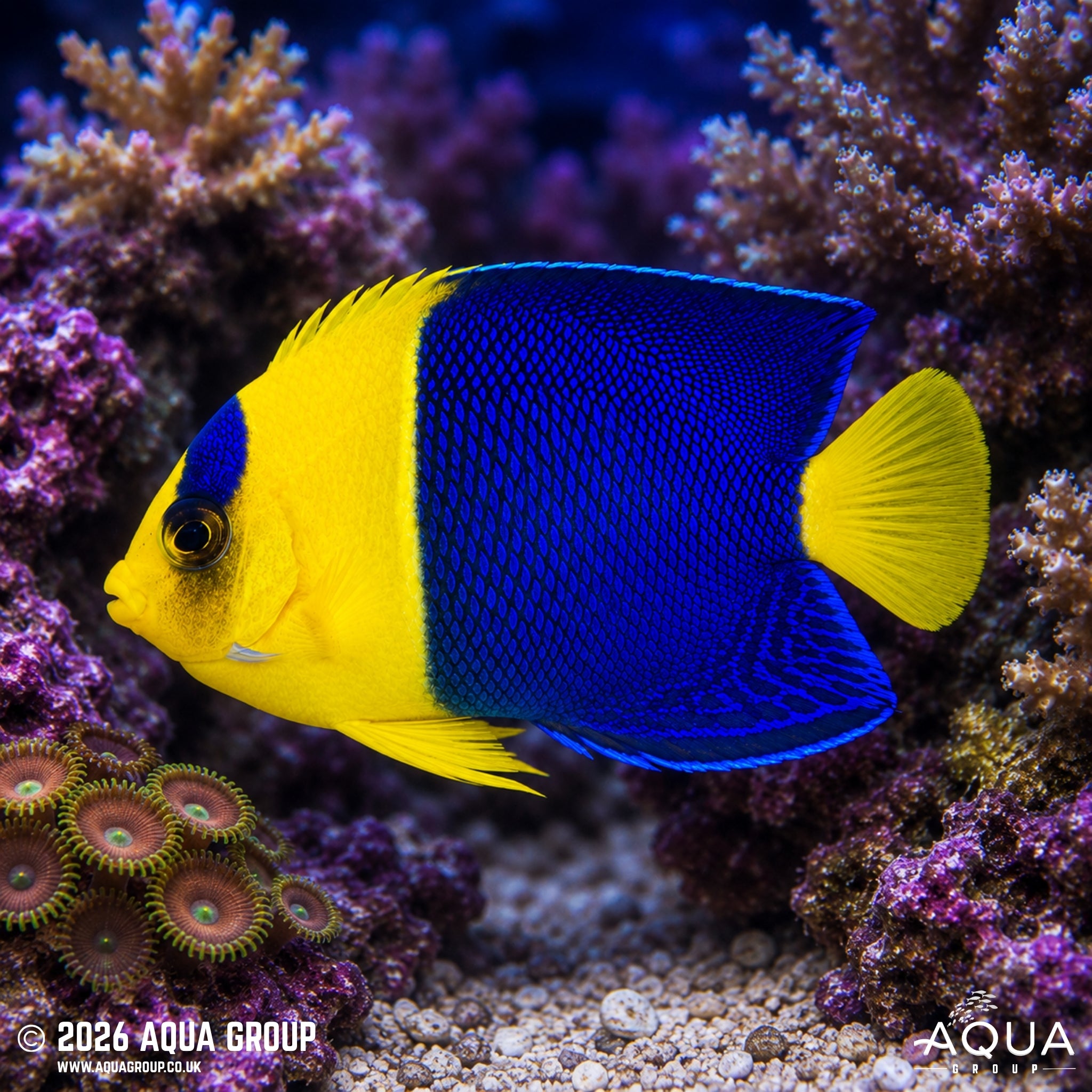
The Bicolour Angelfish, Centropyge bicolor, is a bold and attractive dwarf marine angelfish, instantly recognised by its bright yellow front half, deep blue rear body, yellow tail and blue facial markings around the eye. Also known as the Bicolor Angelfish, Blue and Gold Angelfish or Oriole Angelfish, this species brings strong colour, movement and classic dwarf angel personality to mature marine aquariums. It can make a beautiful feature fish, but it should be treated as reef safe with caution, as individual fish may nip at some corals, sessile invertebrates or clam mantles.
Common Name:
Bicolour Angelfish, Bicolor Angelfish, Blue and Gold Angelfish, Oriole Angelfish, Pacific Rock Beauty, Two-Coloured Angelfish, Bicolour Dwarf Angelfish.
Scientific Name (Latin):
Centropyge bicolor
Maximum Size:
Up to around 15 cm, making it one of the larger dwarf angelfish species and requiring good rockwork and swimming space.
Water Type:
Marine
Origin / Natural Habitat:
Found across the Indo-Pacific, including reef regions from East Africa across the Indian Ocean and into the Western Pacific. In the wild, Bicolour Angelfish inhabit lagoon reefs, channels, protected seaward reef slopes, drop-offs, coral areas and rubble zones. They are usually seen moving close to shelter, often in pairs or small groups, darting between hiding places while grazing and searching for small natural foods.
Water Parameters:
Temperature: 24–27°C
pH Range: 8.1–8.4
Hardness or Salinity: SG 1.020–1.025
Temperament:
Semi-aggressive. Bicolour Angelfish are usually manageable in suitably sized aquariums, but they can become territorial once settled, especially towards other dwarf angelfish, similarly shaped fish or newly added timid species. Best kept with peaceful to moderately robust marine fish rather than very delicate tank mates. Avoid keeping multiple dwarf angelfish together unless the aquarium is large and carefully planned.
Diet:
Omnivorous grazer. In the wild, this species feeds on algae, small crustaceans, worms and reef-surface growths. In the aquarium, offer a varied diet including marine algae sheets, spirulina flakes, herbivore pellets, frozen mysis shrimp, enriched brineshrimp, finely chopped seafood, copepod-based foods and high-quality angelfish preparations. A mature aquarium with established live rock for grazing is strongly recommended, and regular feeding can help reduce unwanted picking at corals or invertebrates.
Minimum Tank Size:
A practical minimum of around 300 litres is recommended for a single specimen, with larger aquariums preferred for reef systems or if keeping with other assertive fish. Provide mature live rock, caves, overhangs, grazing surfaces and plenty of territory breaks.
Behaviour & Activity:
An active daytime grazer that spends much of its time moving through rockwork, picking at algae films and exploring caves, ledges and crevices. It can be shy when first introduced and may dart between hiding places until settled. Once confident, it often becomes a bold and visible feature fish. Bicolour Angelfish appreciate mature aquascapes with natural grazing surfaces and multiple secure hiding areas. A secure lid is recommended, as startled marine fish can jump.
Reef Safe:
Reef Safe with Caution
Bicolour Angelfish can be kept in some reef aquariums, but individual behaviour varies. Some specimens may ignore corals, while others may nip at fleshy LPS corals, SPS polyps, soft corals, zoanthids, sponges, sessile invertebrates or clam mantles. Keeping the fish well fed and providing mature live rock for grazing can reduce risk, but it cannot remove it completely.
Special Requirements or Care Notes:
Best added to a mature marine aquarium with plenty of established live rock and natural grazing surfaces. This species can be less forgiving than some hardier dwarf angels, especially if stressed, underfed or placed into a newly set up aquarium. Avoid aggressive dwarf angelfish, very similar species and overly competitive tank mates. Monitor carefully in reef aquariums, especially around fleshy corals, zoanthids and clams. Stable water quality, regular feeding and a quiet introduction period are strongly recommended.
Suitable for:
Intermediate fishkeepers
Availability:
Regularly available in the marine aquarium trade / Availability can vary depending on size, supplier and import season
All images are a visual representation of the fish you will receive, made to be as accurate as possible. Please note that Mother Nature is a wonderful thing, and variation in patterns and colours will occur — that is part of the unique beauty of these animals.
Order and get 35 reward points
Earn points by signing up for our rewards program