

Description
Scott’s Fairy Wrasse – Australian Form (Cirrhilabrus scottorum “Australian”)
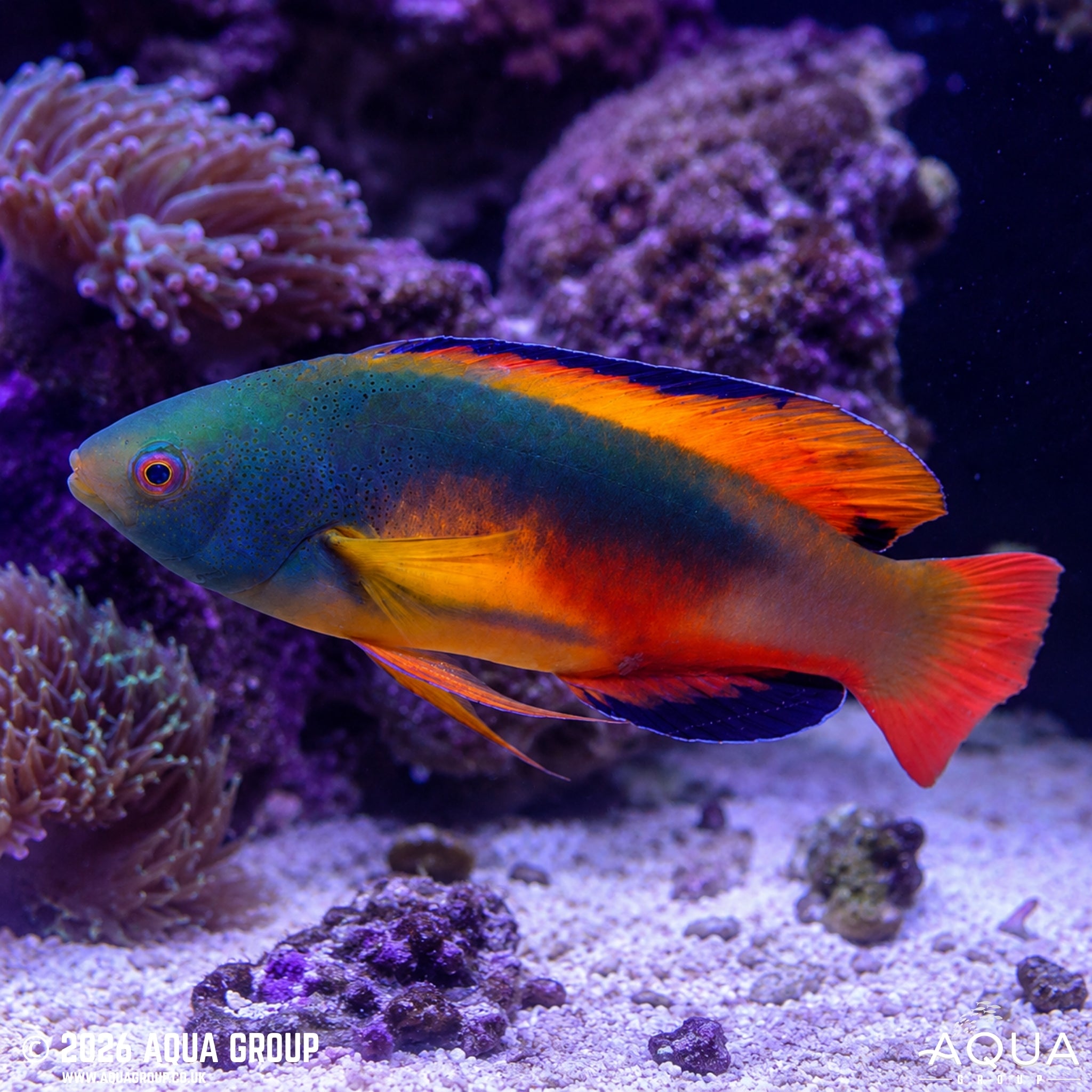
The Australian Scott’s Fairy Wrasse is a premium reef-safe marine wrasse, prized for its rich green, blue, pink, red and yellow colouration, fine facial speckling and active open-water swimming behaviour. Australian forms are especially desirable in the trade, often showing strong blue-green and red tones compared with some other regional variants. This is a colourful, active and generally reef-safe wrasse for a mature marine aquarium, but it needs a secure lid, regular feeding and carefully chosen tank mates.
Common Name:
Scott’s Fairy Wrasse. Also commonly referred to as Australian Scott’s Fairy Wrasse, Scott’s Wrasse, Scotts’ Fairy Wrasse or Scottorum Fairy Wrasse.
Scientific Name (Latin):
Cirrhilabrus scottorum “Australian”
Maximum Size:
Around 13 cm, making it one of the larger fairy wrasses. Mature males are usually larger and much more colourful than females.
Water Type:
Marine.
Origin / Natural Habitat:
Found across the Pacific Ocean, with Australian records from the Great Barrier Reef, Coral Sea and surrounding reef systems. It is also recorded from locations such as Fiji, Tonga and other South Pacific reef regions. In the wild, it is associated with coral reefs, outer reef slopes, lagoons, channels and rubble areas, usually swimming above reef structure and feeding in the water column. FishBase records the species from coral reef habitats, while Fishes of Australia describes it as a variably coloured fairy wrasse found in Australian waters.
Water Parameters:
Temperature: 24–27°C
pH Range: 8.1–8.4
Salinity: 1.020–1.025 SG
Temperament:
Generally peaceful to semi-aggressive. It is usually suitable for a mixed reef aquarium, but males can become assertive towards similar fairy wrasses, especially other males or similarly coloured species. It is best kept with peaceful to moderately active marine fish and should not be housed with aggressive wrasses or dominant fish that may prevent it from feeding.
Diet:
Carnivorous planktivore. In the aquarium it should be offered a varied diet including frozen mysis, enriched brineshrimp, copepods, cyclops, finely chopped krill, plankton-based foods and high-quality marine pellets or flakes once accepted. Small feeds several times per day are ideal because this is an active wrasse with a naturally frequent feeding style. Reef App lists suitable foods including small crustaceans and zooplankton, and notes that the species needs a varied diet.
Minimum Tank Size:
A practical recommendation is at least 350–400 litres for a single specimen, with larger aquariums preferred for harems, multiple wrasses or busy reef communities. Reef App gives a minimum volume of 400 litres, while several marine trade references recommend large aquariums because of its active swimming behaviour.
Behaviour & Activity:
This is an active mid-water reef wrasse that spends much of the day swimming above and around live rock. Males may display brighter colour and flashing behaviour when settled, especially around females or rival wrasses. Like most fairy wrasses, it is an excellent jumper, so a tight-fitting mesh lid is essential. Open aquariums are not suitable.
Reef Safe:
Reef Safe
This species is generally considered safe with corals and most ornamental invertebrates. It does not normally nip corals, though it may eat tiny crustaceans and natural microfauna as part of its normal feeding behaviour. The main reef consideration is wrasse-to-wrasse aggression and jumping risk rather than coral damage.
Special Requirements or Care Notes:
Best kept in a mature marine aquarium with stable water quality, strong oxygenation, live rock, open swimming room and peaceful tank mates. A secure mesh lid is essential, as fairy wrasses are known jumpers. Avoid keeping multiple male fairy wrasses in smaller aquariums unless the keeper has experience with wrasse compatibility. Australian Scott’s Fairy Wrasse specimens are often highly valued for their colour, so careful acclimation, quarantine and low-stress introduction are strongly recommended.
Suitable for:
Intermediate marine fishkeepers
Availability:
Rare / occasional in trade, with Australian specimens often sold as premium imports
All images are a visual representation of the fish you will receive, made to be as accurate as possible. Please note that Mother Nature is a wonderful thing, and variation in patterns and colours will occur — that is part of the unique beauty of these animals.
Order and get 95 reward points
Earn points by signing up for our rewards program