
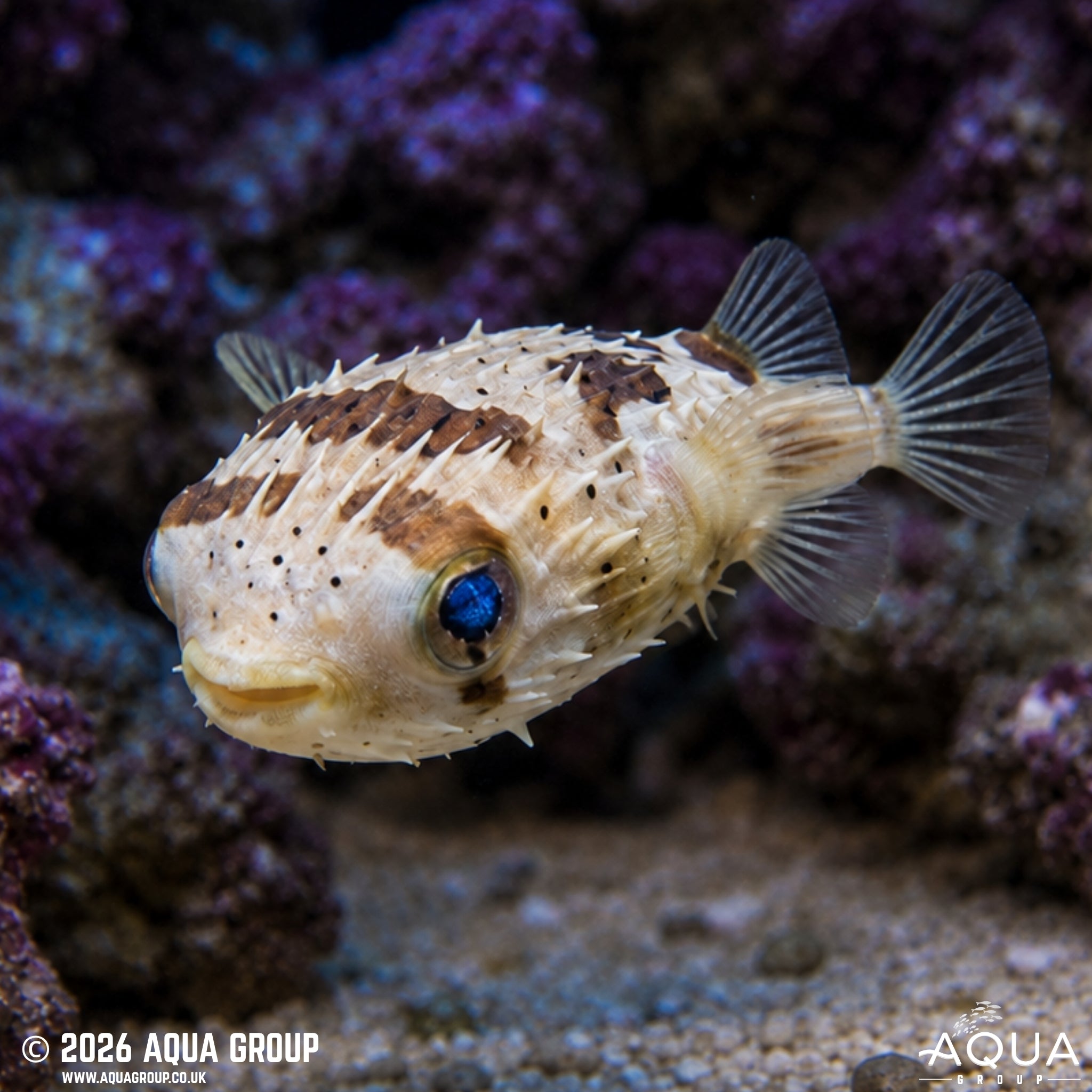

Description
Porcupine Puffer (Diodon holocanthus)
The Porcupine Puffer, Diodon holocanthus, is a charismatic marine pufferfish with large expressive eyes, a rounded body, dark spotting and long defensive spines that become prominent when the fish inflates. Also known as the Longspined Porcupinefish, Spiny Puffer, Balloonfish or Porcupinefish, this species is admired for its intelligence and bold personality. It can make an engaging feature fish in a large fish-only marine aquarium, but it is predatory, not reef safe and requires careful long-term planning due to its size, teeth and diet.
Common Name:
Porcupine Puffer, Porcupine Pufferfish, Longspined Porcupinefish, Spiny Puffer, Balloonfish, Porcupinefish.
Scientific Name (Latin):
Diodon holocanthus
Maximum Size:
Up to around 50 cm in the wild, though many aquarium specimens are reported closer to 25–30 cm. It should still be planned for as a large, heavy-bodied marine predator.
Water Type:
Marine
Origin / Natural Habitat:
Circumtropical, occurring in warm marine waters worldwide, including tropical Atlantic, Indian and Pacific regions. Naturally found around shallow reefs, rocky areas, coral reefs, muddy or soft-bottom habitats and open substrate areas. Juveniles may associate with floating Sargassum, while adults are usually benthic and often more solitary.
Water Parameters:
Temperature: 24–27°C
pH Range: 8.1–8.4
Hardness or Salinity: SG 1.020–1.025
Temperament:
Generally personable but predatory and potentially nippy. Porcupine Puffers are not usually aggressive in a chasing sense, but they may bite tank mates, investigate equipment and eat small fish or invertebrates. Best kept with robust, suitably sized marine fish that will not bully it or fit into its mouth.
Diet:
Carnivorous predator with strong teeth. In the wild, it feeds at night on hard-shelled prey such as molluscs, sea urchins, hermit crabs and crabs. In the aquarium, offer a varied diet of shell-on prawn, mussel, clam, cockle, krill, squid, marine fish flesh and quality carnivore pellets. Hard-shelled marine foods are important to help wear down the beak-like teeth and reduce the risk of overgrowth.
Minimum Tank Size:
A minimum of 600 litres is recommended for long-term care, with larger aquariums strongly preferred. This species needs swimming space, heavy filtration, strong oxygenation and room to turn comfortably as it matures.
Behaviour & Activity:
A curious, intelligent and interactive fish that often recognises feeding routines and investigates its surroundings. It is a relatively slow swimmer compared with many reef fish, using its fins to hover and manoeuvre around rockwork. Provide sturdy caves, open swimming areas and secure aquascaping. Puffers may inflate when severely stressed, but this should never be encouraged, as it can be dangerous for the fish.
Reef Safe:
Not Reef Safe
Not suitable for standard reef aquariums. It may eat or damage shrimps, crabs, snails, urchins, clams, tube worms and other ornamental invertebrates, and may nip corals or sessile reef life. Its size, strong bite, waste production and feeding behaviour make it best suited to fish-only or fish-only-with-live-rock systems.
Special Requirements or Care Notes:
Requires regular hard foods to help prevent tooth overgrowth. Use a container rather than a net where possible, as puffers may inflate when stressed and can trap air if lifted from water. Porcupinefish can contain toxins, so they should not be housed with predators likely to attack or consume them, and any dead specimen should be removed promptly. Maintain excellent water quality, avoid copper-based treatments in systems with invertebrates, and take care during maintenance as large puffers can bite fingers, tubing and equipment.
Suitable for:
Experienced fishkeepers
Availability:
Common in trade
All images are a visual representation of the fish you will receive, made to be as accurate as possible. Please note that Mother Nature is a wonderful thing, and variation in patterns and colours will occur — that is part of the unique beauty of these animals.
Order and get 60 reward points
Earn points by signing up for our rewards program