

Description
Oriental Sweetlips (Plectorhinchus vittatus)
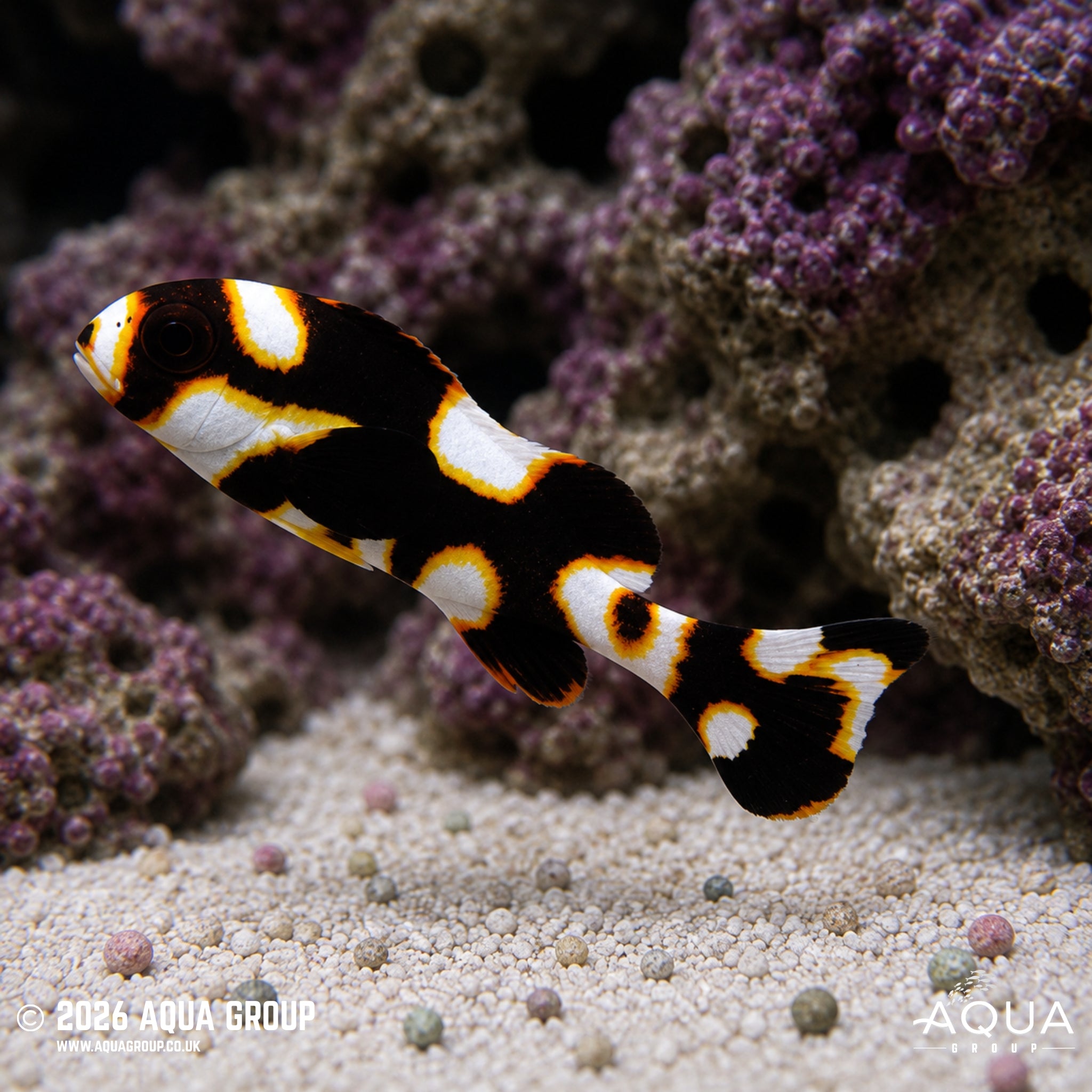
The Oriental Sweetlips, Plectorhinchus vittatus, is a dramatic Indo-Pacific reef fish renowned for the remarkable transformation between its juvenile and adult colouration. Juveniles display an eye-catching pattern of irregular black and white bands, often with yellow highlights, and swim with an exaggerated undulating motion that may help imitate a toxic flatworm. As the fish matures, it develops a substantial body, thick fleshy lips, horizontal dark stripes and yellow fins marked with black spots. Also known as the Oriental Blubberlips or Indian Ocean Oriental Sweetlips, this impressive nocturnal predator is best suited to exceptionally large, mature fish-only or FOWLR aquariums managed by experienced fishkeepers.
Common name:
Oriental Sweetlips, Oriental Blubberlips, Indian Ocean Oriental Sweetlips, Oriental Grunt.
Scientific Name (Latin):
Plectorhinchus vittatus
Maximum Size:
Capable of reaching approximately 60 cm in total length, although adults of around 40 cm are more commonly recorded. This species grows into a deep-bodied, powerful fish and should not be selected based only on its much smaller juvenile size.
Water Type:
Marine
Origin / Natural Habitat:
Indo-West Pacific, ranging from East Africa and the western Indian Ocean through Indonesia, Thailand, the Philippines, northern Australia and surrounding western and central Pacific regions. Oriental Sweetlips inhabit coastal coral reefs, rocky reefs, lagoons and seaward reef areas at depths of approximately 2–25 metres. Juveniles are usually solitary and favour clear, sheltered lagoon habitats, while adults may occur alone or rest in small groups around reef structure during the day.
Water Parameters:
Temperature: 24–28°C
pH Range: 8.1–8.4
Hardness or Salinity: Marine salinity 1.023–1.026 specific gravity; stable alkalinity, excellent oxygenation, powerful biological filtration and consistently high water quality are essential.
Temperament:
Generally peaceful towards fish that are too large to swallow, but predatory and potentially intimidating due to its eventual size. Smaller fish, shrimps, crabs and other edible animals may be consumed, particularly after dark. Adults may become territorial in confined accommodation, and they should not be housed with aggressive species likely to harass them or prevent them from feeding.
Diet:
Nocturnal carnivore that naturally feeds on benthic invertebrates and other animal prey, including crustaceans, worms, molluscs and small fish. In the aquarium, offer a varied diet of enriched mysis shrimp, prawns, krill, mussels, clam, squid, chopped marine fish and quality carnivore pellets. Juveniles can be reluctant to recognise prepared foods and may require live marine shrimp or moving foods to initiate feeding. Transition them gradually onto frozen and prepared marine foods. Feed juveniles small portions at least twice daily, including meals under subdued lighting, while larger adults can receive controlled meals several times per week.
Minimum Tank Size:
A minimum aquarium volume of approximately 1,000 litres is recommended for long-term care, with a large footprint, substantial swimming room and oversized filtration. A fully grown adult may require a significantly larger custom-built marine aquarium or public-aquarium-scale accommodation.
Behaviour & Activity:
Juveniles swim with a distinctive rolling and undulating motion, frequently moving close to caves, overhangs and reef structure. Adults are calmer during daylight hours and may rest beneath ledges or beside large rock formations, becoming more active during the evening and at night when they search for food. Provide extensive open swimming space alongside large caves and shaded retreats. Newly introduced juveniles may hide frequently and can lose condition rapidly if they do not begin feeding.
Reef Safe:
Reef Safe with Caution
Oriental Sweetlips do not normally consume coral tissue, but they are unsafe with ornamental shrimps, crabs, worms, molluscs and smaller fish. Large adults may also dislodge unsecured corals or rockwork through their movements, while their heavy feeding and waste production can make maintaining reef-quality water conditions challenging.
Special Requirements or Care Notes:
This species has demanding long-term requirements and a poor survival record when purchased as a very small juvenile that is not already feeding reliably. Confirm that the fish accepts suitable aquarium foods before purchase whenever possible. Introduce it only to a mature, stable aquarium with strong filtration, high oxygen levels and several sheltered areas. Use subdued lighting or offer food near dusk while the fish acclimates. Tank mates should be peaceful, robust and too large to swallow. Rockwork must be firmly secured, and a strong, well-fitted aquarium cover is recommended. Plan for the adult size before purchase, as juveniles can eventually become far too large for conventional home reef aquariums.
Suitable for:
Expert only
Availability:
Occasional in trade
All images are a visual representation of the fish you will receive, made to be as accurate as possible. Please note that Mother Nature is a wonderful thing, and variation in patterns and colours will occur — that is part of the unique beauty of these animals.
Order and get 40 reward points
Earn points by signing up for our rewards program