

Description
Red Stripe Mimic Tang (Acanthurus tristis)
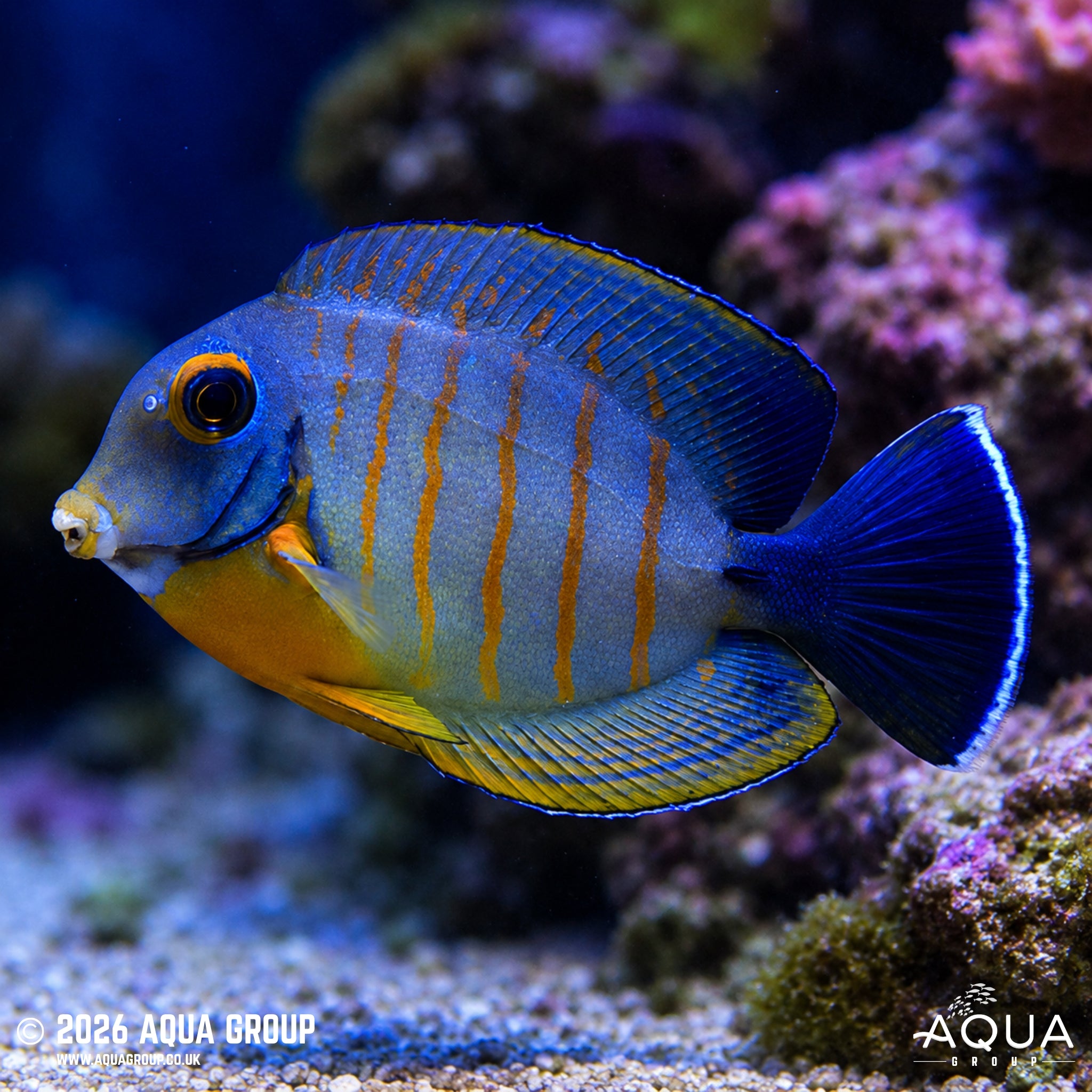
The Red Stripe Mimic Tang (Acanthurus tristis) is an unusual Indian Ocean surgeonfish best known for its dramatic change in appearance as it matures. Juveniles closely mimic the Red Stripe or Eibli Angelfish, displaying a pale cream body with narrow orange vertical bars, a dark tail and blue edging around the fins. Adults gradually transform into a more subdued grey-brown surgeonfish with darker facial markings and pale fin margins. Active, intelligent and useful for grazing marine algae, this attractive tang is best suited to a large, mature reef or fish-only aquarium managed by an experienced marine fishkeeper.
Common Name:
Red Stripe Mimic Tang, Eibli Mimic Tang, Eibli Surgeonfish, Indian Ocean Mimic Surgeonfish, Indian Mimic Tang
Scientific Name (Latin):
Acanthurus tristis
Maximum Size:
Approximately 25 cm in total length. Juveniles are commonly offered at a much smaller size, but they develop into powerful, highly active adult surgeonfish requiring substantial permanent accommodation.
Water Type:
Marine
Origin / Natural Habitat:
Native to the tropical Indian Ocean, including the Bay of Bengal, Andaman Sea, Maldives, Chagos Archipelago and parts of southern Indonesia extending towards Bali.
It inhabits coral-rich lagoons, sheltered reefs and seaward reef areas where juveniles live among the same habitats as the similarly coloured Eibli Angelfish. Adults graze across reef surfaces and rocky areas containing algae and organic films.
Water Parameters:
Temperature: 24–28°C
pH Range: 8.1–8.4
Salinity: 1.020–1.025 SG
Temperament:
Moderately aggressive and territorial, particularly towards other tangs, surgeonfish and similarly shaped grazing species.
Juveniles may initially appear relatively peaceful, but territorial behaviour can strengthen considerably as the fish matures. It should usually be kept as the only Acanthurus species unless the aquarium is exceptionally large and carefully planned.
It is generally less troublesome towards unrelated, robust fish that occupy different areas of the aquarium, but timid or slow-feeding tank mates may be intimidated by a dominant adult.
Diet:
Primarily herbivorous, naturally grazing algae and organic material from reef surfaces.
In the aquarium, offer dried marine algae, nori, spirulina-based flakes, quality herbivore pellets and frozen foods containing marine algae. Small quantities of mysis shrimp, enriched brine shrimp and other protein-rich marine foods may also be accepted.
Provide several small meals each day alongside mature live rock for continuous grazing. Regular vegetable-based feeding is essential for maintaining healthy weight, digestion, colour and immune function.
Minimum Tank Size:
A minimum aquarium volume of approximately 600 litres is recommended for long-term care, with a tank length of at least 180 cm strongly preferred.
A larger aquarium is necessary when housing the fish with other tangs or similarly active marine species. Open swimming length and width are more important than aquarium height alone.
Behaviour & Activity:
An active daytime swimmer that spends much of its time cruising around the aquarium and grazing algae from rockwork.
Juveniles display a remarkable form of mimicry, closely resembling the Red Stripe Angelfish, Centropyge eibli. Their pale body, orange vertical stripes and dark tail gradually disappear as the fish develops its darker adult coloration.
Adults may establish and defend a preferred feeding area. Provide extensive open swimming space together with caves, overhangs and visual barriers that allow subordinate fish to move out of sight.
Like all surgeonfish, the Red Stripe Mimic Tang carries sharp defensive spines on the caudal peduncle near the base of the tail.
Reef Safe:
Reef Safe
The Red Stripe Mimic Tang is generally compatible with corals, clams and established ornamental invertebrates. Its grazing behaviour can help reduce short algal films growing across mature live rock.
Healthy coral tissue is not normally targeted. However, an underfed specimen may graze persistently around coral bases or investigate surfaces containing algae, so plentiful vegetable-based food should always be provided.
Special Requirements or Care Notes:
Introduce only to a mature, fully cycled marine aquarium with stable water quality and extensive established rockwork for grazing.
Provide strong water movement, excellent oxygenation and efficient filtration. Active surgeonfish have a high oxygen demand and can deteriorate quickly in poorly maintained or overcrowded systems.
A secure aquarium cover is recommended, particularly while the fish is acclimatising. Include several caves and sheltered sleeping areas within stable rockwork.
The Red Stripe Mimic Tang may become increasingly territorial as it matures. It is usually best added after more peaceful fish but before exceptionally aggressive tank mates. Avoid combining it with similarly shaped Acanthurus tangs in insufficient space.
As with many surgeonfish, it can be susceptible to marine white spot, velvet and other external parasites following transport or stress. A carefully managed quarantine period is strongly recommended.
Select a specimen with a full abdomen, clear eyes, intact fins and an active grazing response. Avoid individuals that appear thin behind the head or have a severely pinched stomach.
Never handle the fish directly. The sharp caudal spines can cause injury and may become entangled in conventional netting. A suitable rigid container is preferable when moving an established specimen.
Suitable for:
Experienced fishkeepers
Availability:
Rare or occasional in trade
All images are a visual representation of the fish you will receive, made to be as accurate as possible. Please note that Mother Nature is a wonderful thing, and variation in patterns and colours will occur — that is part of the unique beauty of these animals.
Order and get 35 reward points
Earn points by signing up for our rewards program