

Description
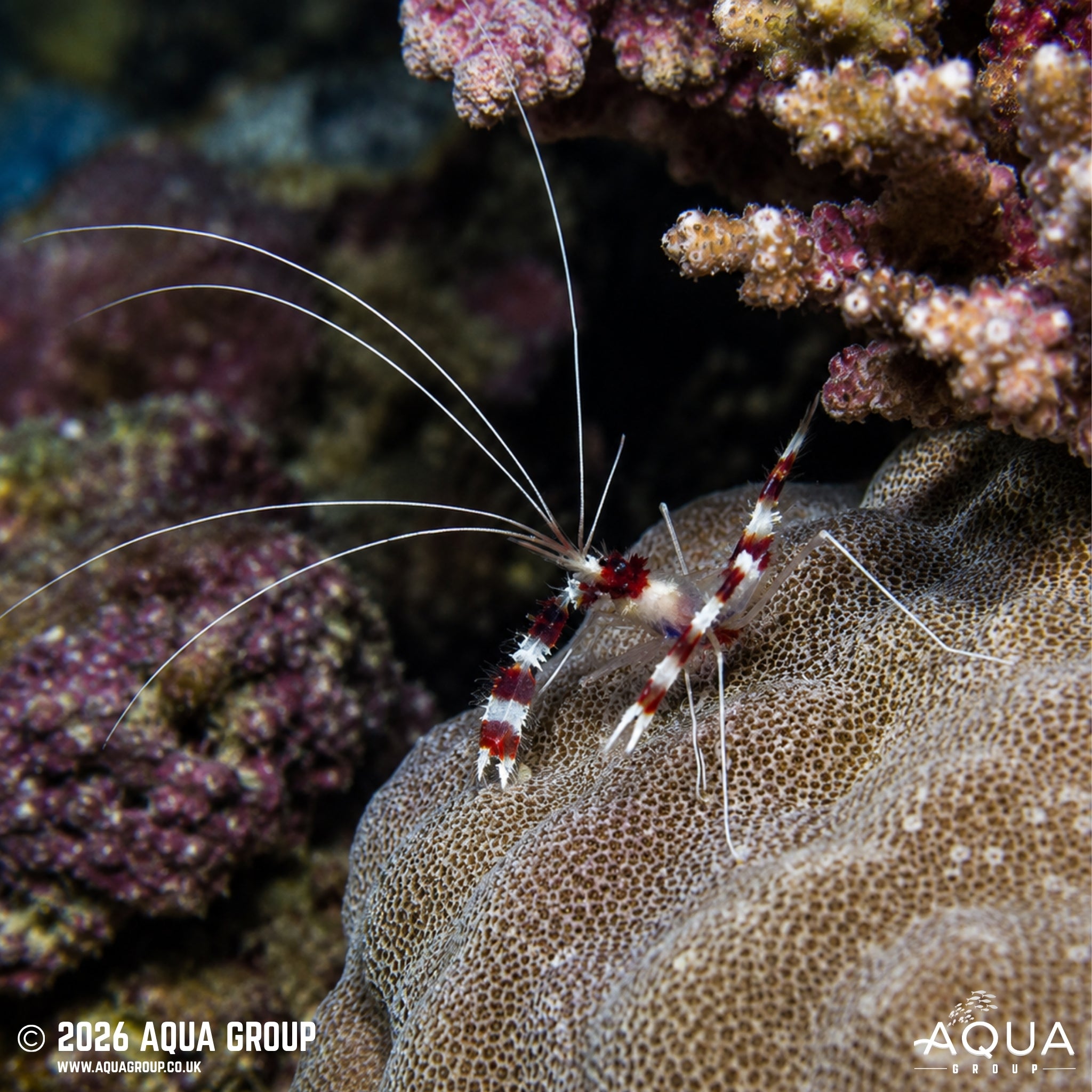
Boxing Shrimp (Stenopus hispidus)
The Boxing Shrimp, Stenopus hispidus, is a bold and instantly recognisable marine shrimp, admired for its red-and-white banded body, long white antennae and oversized clawed arms that give it its “boxing” appearance. Also commonly known as the Coral Banded Shrimp or Banded Cleaner Shrimp, this species is a long-standing favourite in marine aquariums thanks to its striking appearance, scavenging behaviour and occasional cleaning interactions with fish. It is reef safe with caution, but can be territorial towards other shrimp and very small tank mates.
Common Name:
Boxing Shrimp, Boxer Shrimp, Coral Banded Shrimp, Banded Coral Shrimp, Banded Cleaner Shrimp, Red Banded Coral Shrimp.
Scientific Name (Latin):
Stenopus hispidus
Maximum Size:
Around 6–8 cm body length, not including the long antennae and extended claws.
Water Type:
Marine
Origin / Natural Habitat:
Found widely across tropical reef regions, including the Indo-Pacific, Red Sea, Atlantic and Caribbean. In the wild, Boxing Shrimp are usually associated with coral reefs, rocky crevices, caves, ledges and reef overhangs. They often remain close to a chosen shelter, extending their long white antennae into the open and sometimes acting as part of a natural cleaning station for passing fish.
Water Parameters:
Temperature: 24–27°C
pH Range: 8.1–8.4
Hardness or Salinity: SG 1.023–1.026
Temperament:
Semi-aggressive for a shrimp. Boxing Shrimp are usually safe with suitably sized reef fish, but they can be territorial towards other shrimp, small crustaceans and sometimes very small or weakened fish. They are best kept singly or as a confirmed male/female pair. Avoid keeping multiple unrelated specimens together unless the aquarium is very large with separate territories.
Diet:
Omnivorous scavenger and opportunistic cleaner. In the aquarium, Boxing Shrimp will take leftover foods, small meaty particles and organic matter from around the rockwork. Offer supplementary foods such as frozen mysis shrimp, enriched brineshrimp, finely chopped prawn, mussel, clam, marine pellets and other small meaty foods. Although they may clean fish, they should not be relied upon as a complete parasite treatment.
Minimum Tank Size:
A practical minimum of around 75–100 litres is recommended for a single specimen, with larger aquariums preferred for pairs or mixed reef communities. Provide mature rockwork, caves, overhangs and shaded areas where the shrimp can establish a secure territory.
Behaviour & Activity:
A characterful and often territorial shrimp that spends much of its time around caves, ledges or rock crevices. It may hold its large claws forward in a defensive boxing-style posture and wave its long antennae into the water column. Once settled, it often becomes more visible during feeding time and may scavenge actively around the rockwork. Like other shrimp, it will moult as it grows and may hide for a short period after moulting while the new shell hardens.
Reef Safe:
Reef Safe with Caution
Boxing Shrimp do not normally damage corals, clam mantles or sessile invertebrates. However, they may bother very small shrimp, tiny crabs, small worms or weakened tank mates, and they can sometimes steal food from corals during target feeding. They are best suited to reef aquariums where tank mates are chosen carefully and enough space is provided.
Special Requirements or Care Notes:
Best added to a mature, stable marine aquarium with peaceful to moderately robust tank mates. Shrimp are sensitive to sudden salinity changes, poor water quality and copper-based medications, so careful acclimation is important. Avoid copper treatments in systems containing shrimp or other invertebrates. Provide secure hiding places for moulting and avoid housing with shrimp-eating fish such as larger hawkfish, triggers, puffers, lionfish or aggressive wrasses.
Suitable for:
Beginner to Intermediate fishkeepers
Availability:
Common in trade / Availability can vary depending on size, supplier and import season
All images are a visual representation of the shrimp you will receive, made to be as accurate as possible. Please note that Mother Nature is a wonderful thing, and variation in size, colour and markings will occur — that is part of the unique beauty of these animals.
Order and get 15 reward points
Earn points by signing up for our rewards program